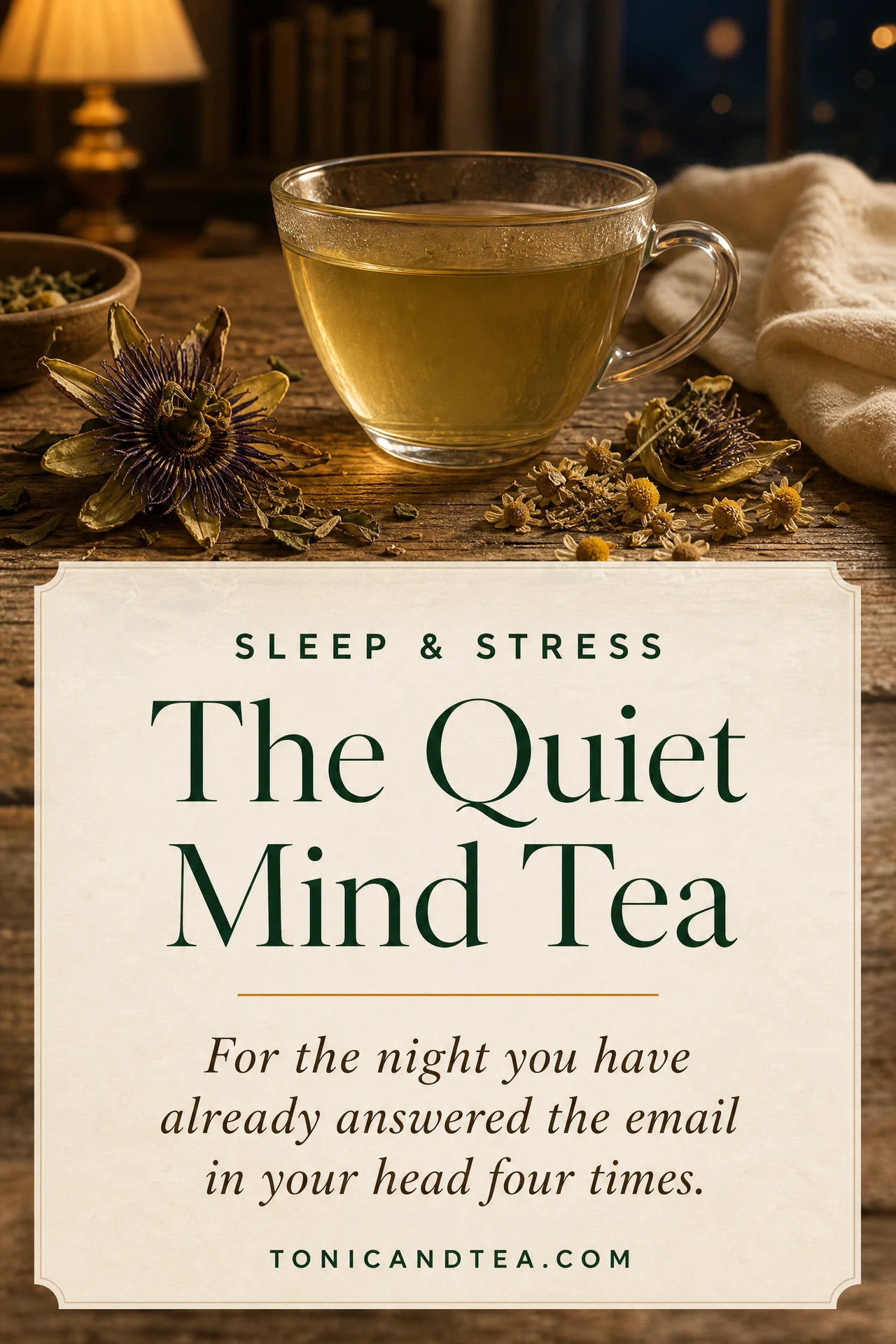
The Quiet Mind Tea
There's a tea for the night your mind won't quiet. A deeply grounding blend of passionflower, chamomile, and lemon balm for when you've already answered the email in your head four times.
There’s a tea for the night your mind won’t quiet. You know the exact hour it happens, the precise moment the shift occurs. The house has finally settled into stillness, the dishes are put away, the doors are locked, and the only sound is the low, steady hum of the refrigerator in the dark. You lie down, pulling the covers up, fully expecting the heavy, welcome pull of sleep to take you under. But instead, the projector in your mind clicks on with a blinding flash. Suddenly, you are replaying a minor, inconsequential conversation from Tuesday afternoon, drafting an email you have no intention of sending until Monday morning, and meticulously cataloging every small failure, every missed opportunity, and every awkward silence of the past month. It is the Sunday night when you have already answered the email in your head four times, and the harder you try to force rest, the further it retreats into the shadows, leaving you stranded in the wide-awake dark.
This is not the kind of exhaustion that can be fixed by simply closing your eyes and counting backward from one hundred. It is a wired, vibrating fatigue—the distinct feeling of a nervous system that has been running on fumes, caffeine, and adrenaline for far too long. It is the physical manifestation of carrying too much, of being the anchor for everyone else while your own ship is quietly taking on water. When you reach this place, you do not need a heavy, blunt-force sedative that will leave you groggy, hollow, and disconnected by morning. You need a gentle hand on your shoulder. You need the plants that herbalists have long reached for to coax a racing mind back into the safety of the body. You need a ritual that signals to your nervous system that the day’s work is truly done, a quiet surrender to the night.
We turn to this blend when the noise of the world refuses to fade, when the boundaries between the day's demands and the night's rest have blurred into an exhausting continuum. It is a gathering of the garden’s most comforting allies, anchored by the profound, grounding weight of passionflower. When the mind is caught in a relentless loop of its own making, spinning stories out of thin air, this is the cup we brew. It is a tangible reminder that you do not have to carry the weight of tomorrow while you are still trying to survive today. If you are navigating the unpredictable, often turbulent tides of perimenopause, when sleep frequently becomes a fragile and elusive thing, this tea becomes a trusted companion on the bedside table. It is a balm for the weary, a quiet rebellion against the modern demand to always be on, always be producing, always be worrying.
The Ritual
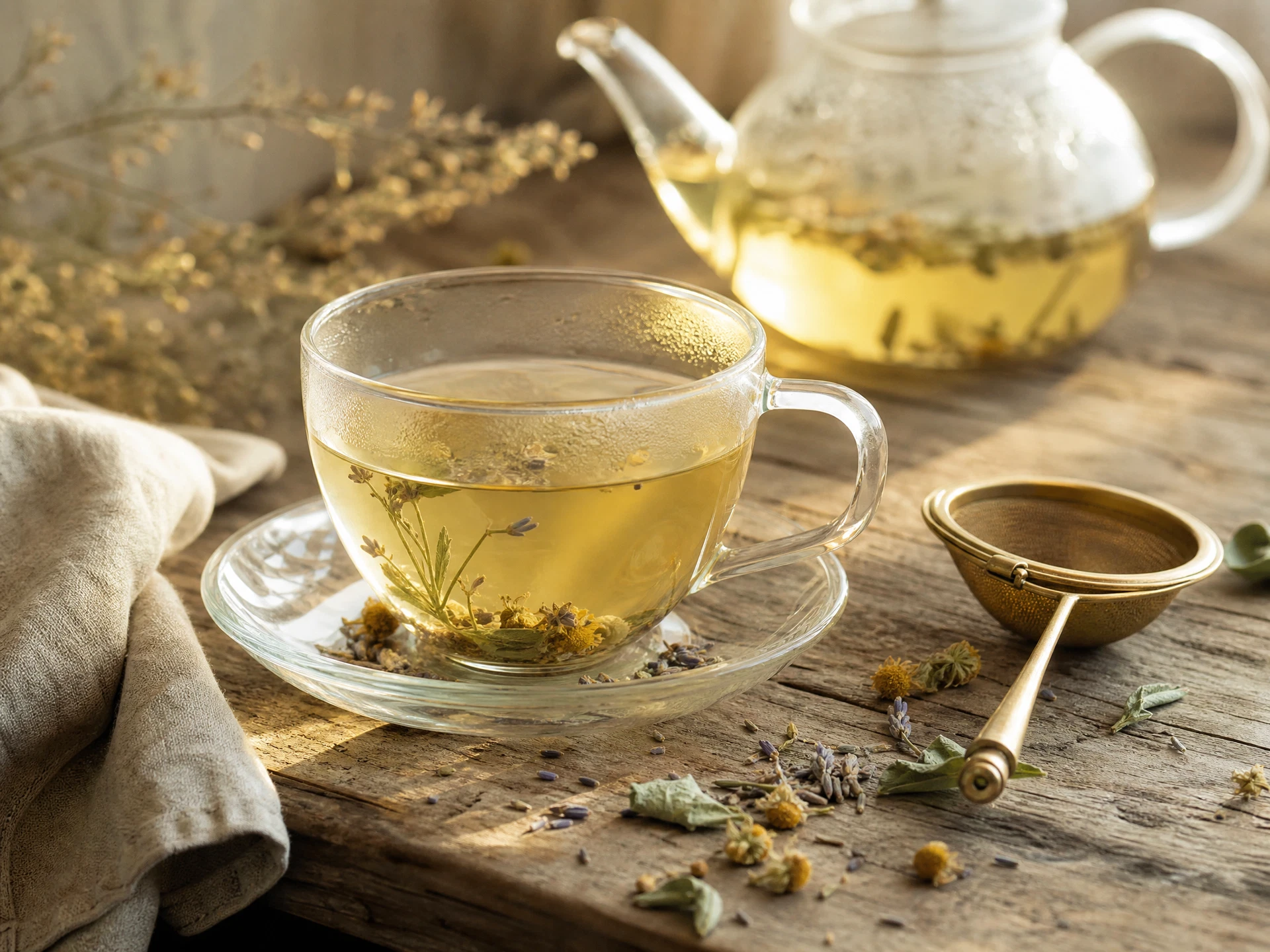
The act of making this tea is the first step in the medicine, and it is a step that cannot be rushed. When you feel the familiar, high-frequency hum of anxiety beginning to vibrate behind your ribs, do not try to push through it. Step away from the glowing screens, close the laptop, and leave the lists exactly where they are. Walk into the kitchen and turn on the kettle. Let the sound of the water coming to a boil be the only thing you focus on. As you measure the dried flowers into your pot, take a moment to notice their textures and colors—the delicate, sun-like yellow centers of the chamomile, the dusty, muted purple of the lavender buds, the wild, tangled vines of the passionflower, and the bright, crinkled leaves of the lemon balm.
Pour the water over the herbs and watch as they unfurl, releasing their oils and their essence into the steam. Cover the vessel immediately. This is a crucial step; the volatile oils that carry the medicine of these aromatic plants will escape into the air if left uncovered, filling the room with scent but leaving the tea lacking in potency. Let it steep for a full ten minutes. Use this time to do absolutely nothing. Stand by the counter, feel the radiating warmth of the mug against your palms, and breathe in the fragrant, herbaceous steam that escapes when you finally lift the lid.
Drink this tea an hour before you intend to sleep. Take it to a quiet corner of the house, perhaps with a book that demands nothing of you, or simply sit in the dim light of a single lamp. Let the warmth travel down your throat and settle deep in your chest, a liquid blanket for a frayed nervous system. With every sip, consciously release the tension you are holding in your jaw, drop your shoulders away from your ears, and let the day go. It is already written. Tomorrow will hold itself. You are allowed to rest now.
Making It Yours
Herbalism is an intimate, deeply personal practice, and the plants will speak to everyone differently. This blend is designed to be profoundly soothing, but you must always trust your own palate and your own body's responses. If the floral notes of the lavender feel too forward or perfumed for your liking, you can easily halve the amount. Lavender is a potent ally, but it can quickly overpower a cup if you are sensitive to its distinct aroma.
If you find that the tea is too bitter—a common occurrence if chamomile is steeped for a minute too long or if the water was too fiercely boiling—you might stir in a small spoonful of raw honey. The sweetness not only softens the sharp edges of the brew but also carries its own grounding, nourishing properties. For those who prefer a brighter, more uplifting cup, a squeeze of fresh lemon juice will elevate the citrus notes of the lemon balm, making the tea feel a bit more lively without sacrificing its underlying calming nature.
You can easily scale this recipe to make a larger batch of the dry blend to keep in your pantry, ensuring you are never without it when the need arises. Simply maintain the ratios: equal parts chamomile and lemon balm, a slightly smaller measure of passionflower, and just a whisper of lavender. Store the mixed herbs in an amber glass jar, tucked away from direct sunlight and heat, and you will always have this quiet comfort ready for the nights when the mind refuses to rest.
Best for
The recipe
The Quiet Mind Tea
What you'll need
1 teaspoon Dried chamomile flowers
Whole flowers preferred over dust
1 teaspoon Dried lemon balm
Bright green, fragrant leaves
1/4 teaspoon Dried lavender buds
Culinary grade
How to make it
- 1
Bring two cups of water to a rolling boil, then remove from heat and let it settle for a moment.
- 2
Place the passionflower, chamomile, lemon balm, and lavender into a teapot or a large mug with a strainer.
- 3
Pour the hot water over the herbs, ensuring they are fully submerged.
- 4
Cover immediately with a lid or a small plate to trap the volatile oils.
- 5
Let the tea steep undisturbed for a full ten minutes.
- 6
Strain the herbs, pressing gently to extract the last drops of medicine.
- 7
Sip slowly in a quiet room, an hour before you intend to sleep.
The reasoning
Why This Works
Herbalists have long reached for passionflower when the mind is caught in a loop. It is traditionally used to support a nervous system that feels frayed and overworked, gently coaxing a racing mind back into the body. It doesn't force sleep; rather, it helps quiet the internal chatter so that rest can naturally follow.
Chamomile and lemon balm are the comforting anchors of this blend. Chamomile is a classic nervine, valued for its ability to soften tension in both the mind and the digestion, which are so often linked when we are stressed. Lemon balm brings a gentle, uplifting brightness, traditionally used to ease a heavy heart and soothe a restless spirit. Together with a whisper of lavender, they create a synergy that signals to the body that the day's demands are over.
Before You Brew This
This blend is deeply calming, which means it demands respect. Because passionflower is a potent nervine, do not drink this tea if you are pregnant, preparing for surgery, or taking prescription sedatives or MAOIs. If you are on blood thinners or have a ragweed allergy, chamomile may not be your ally. Lemon balm can occasionally interact with thyroid medication. As always, if your anxiety is persistent or overwhelming, please involve your own practitioner—you deserve real, comprehensive support, not just a cup of tea.
Want more like this?
Pull up a chair.
Start with our free guide, 7 Tonics Every Woman Should Know, then a letter each week — recipes, plant wisdom, and what we're brewing as the season turns.
Coming, eventually
The Quiet Mind Tea, pre-blended
One day this will come measured out in a tin, from us. It doesn't yet. Tell us where to write when it does.