 teas
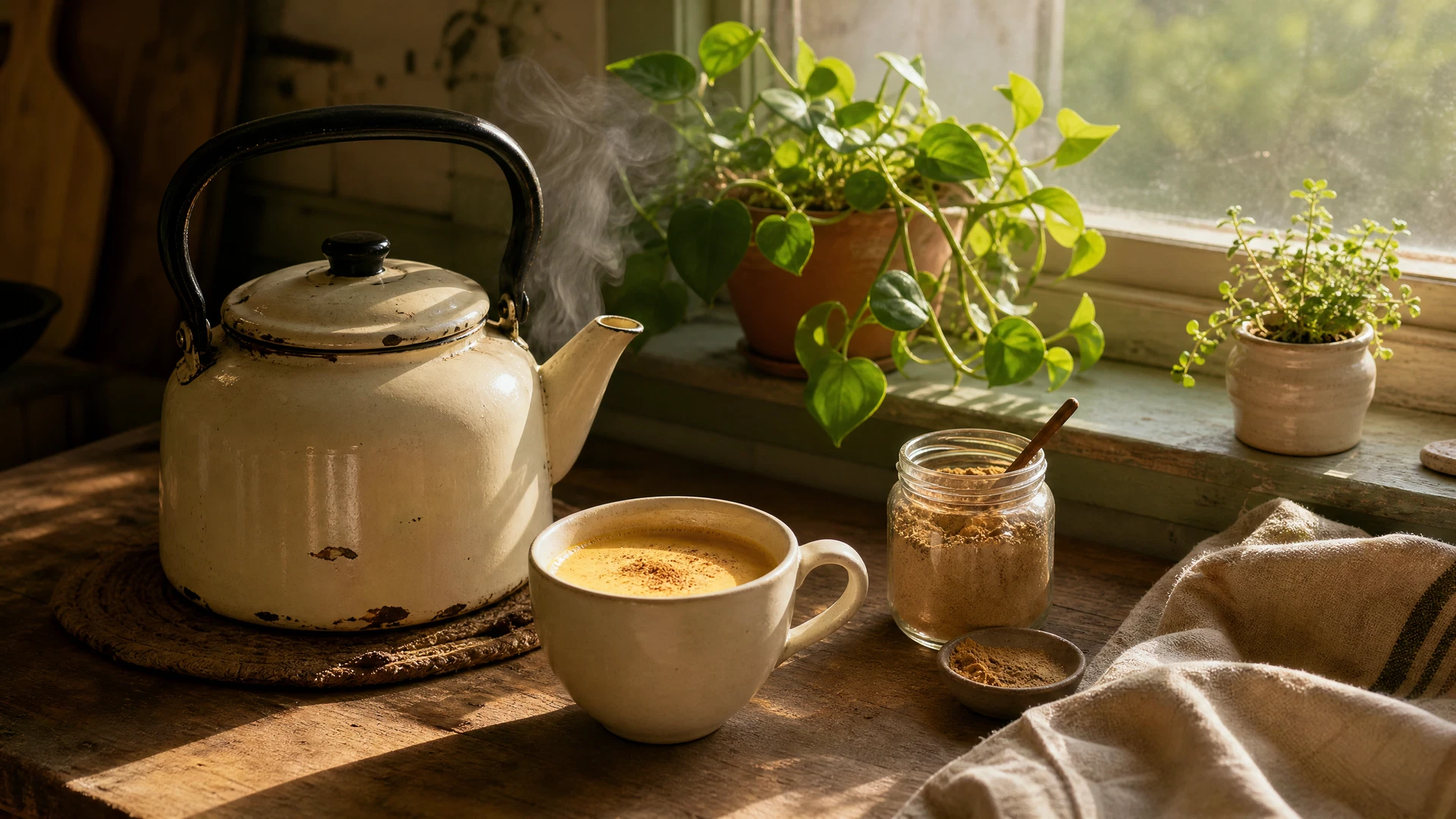
teasCooling Sage & Mint Tea
For the meeting where the heat rises before you can excuse yourself. Sage, spearmint, and lemon balm turn into a cool, green cup that is as good over ice as it is warm.
Perimenopause 12 minutes
The earth already made the medicine

For the night your mind won't quiet, and the mornings you need to return to yourself.
First, the truth
When you lie awake at night, it is easy to feel like your body has betrayed you. But in reality, your body is doing exactly what it was designed to do: it is trying to keep you safe.
If you cannot fall asleep because your mind is racing, your nervous system is likely caught in sympathetic overdrive. Throughout the day, every deadline, every frustrating conversation, and every ping on your phone sends a tiny signal to your brain that you are under threat. Your body responds by releasing adrenaline and cortisol, keeping you alert and ready to react. If you do not have a way to discharge that energy, your nervous system stays locked in this "fight or flight" state long after the sun goes down. Your brain literally believes it is not safe to sleep.
If, instead, you fall asleep but wake up reliably around 3 AM, a different physiological process is at play. During the night, your blood sugar naturally dips. If it drops too low, your body perceives this as an emergency and releases a surge of cortisol to prompt your liver to release stored glucose. That sudden spike in cortisol is what jolts you awake, often with a racing heart. For women in their late thirties and forties, this 3 AM waking is also deeply tied to perimenopause. As estrogen and progesterone levels begin to fluctuate, the body's ability to regulate temperature and manage stress hormones becomes less stable, leading to night sweats and sudden awakenings.
While occasional sleeplessness is a normal part of being human, chronic sleep deprivation is not something you should simply endure. If you are experiencing persistent insomnia, severe anxiety, or panic attacks, or if your lack of sleep is making it difficult to function during the day, it is time to involve a medical professional. These symptoms warrant real investigation to rule out underlying conditions like thyroid disease, severe hormonal imbalances, or clinical anxiety disorders.
The house is finally still, the emails are answered, the doors are locked, and you are exhausted in a way that settles deep into your bones. You lie down, pull the covers up, and close your eyes. And then, the noise begins. The conversation you had at noon replays itself. The mental list of tomorrow's obligations unfurls like a receipt that never ends. Your body is heavy, but your mind is running a marathon in the dark.
We have all been there. The modern world demands a relentless pace, asking us to be endlessly available, endlessly productive, and endlessly resilient. When the sun goes down, we expect our bodies to simply switch off, as if we are machines that can be unplugged. But we are not machines. We are living, breathing ecosystems, and our nervous systems carry the momentum of the day long after the day is done.
When we talk about sleep and stress, we are really talking about the rhythm of your nervous system. For centuries, herbalists have known that you cannot force the body into rest; you must invite it. You must build a bridge between the frantic energy of the day and the quiet surrender of the night. This is where the plants come in. They do not knock you out or override your biology. Instead, they offer a steady hand, guiding you back to your own natural rhythms.
Almost nobody explains this, but there are two very different kinds of sleep problems, and they call for entirely different approaches. Understanding which one you are experiencing is the first step in finding the right herbal companion.
The first is the inability to fall asleep. This is a mind problem. You are tired, perhaps even exhausted, but your thoughts are racing. You are caught in a loop of worry, planning, or simply processing the events of the day. Your nervous system is stuck in a sympathetic state—the classic "fight or flight" mode—and it believes you need to stay alert to survive. For this, we look to herbs that soothe the mind and gently coax the nervous system back into a state of safety. A comforting tea for racing thoughts can be the anchor you need.
The second kind of sleeplessness is the 3 AM waking. You fall asleep easily enough, but you wake up in the middle of the night, your heart perhaps beating a little too fast, your mind suddenly wide awake. This is often a body problem. It is frequently tied to a drop in blood sugar, which triggers a release of cortisol—the stress hormone—to bring your blood sugar back up. That cortisol spike wakes you up. Alternatively, if you are in your late thirties or forties, this waking can be a hallmark of perimenopause, as shifting hormones change the way your body regulates temperature and stress. For this, we do not just need herbs that calm the mind; we need herbs that support the body's resilience and hormonal balance.
In traditional herbal practice, the plants we reach for to support sleep and stress belong to a category called nervines. These are herbs that have a specific affinity for the nervous system. They are not sedatives in the pharmaceutical sense. They do not force a chemical shutdown. Instead, they nourish, tone, and relax the nervous tissue.
Think of your nervous system like a guitar string. When you are under chronic stress, that string is pulled too tight. It vibrates at the slightest touch, creating a high, frantic note. Nervines help to gently loosen the tuning peg, bringing the string back to its proper tension so it can resonate with a deep, clear sound.
Some nervines are deeply relaxing, helping to quiet a racing mind and prepare the body for sleep. Passionflower is one of our most beloved allies for this. Herbalists have long reached for it when a person is caught in circular thinking, unable to let go of the day's worries. It is the classic herb for the mind that will not stop talking.
Other nervines are more nourishing and grounding, building resilience over time. Ashwagandha is a traditional Ayurvedic root that has been valued for centuries for its ability to help the body adapt to stress. It does not put you to sleep immediately, but over weeks and months, it helps to lower the baseline of tension in your body, making true rest possible.
For the deep, restorative rest that feels like a heavy blanket on a cold night, we often turn to reishi. This medicinal mushroom has a long history of use in traditional practices for calming the spirit and grounding the energy. It is the foundation of our Deep Sleep Reishi Cocoa, a rich, earthy evening ritual.
And for the woman who finds herself waking at 3 AM, throwing off the covers in a sudden sweat, black cohosh is an herb that traditional practitioners have turned to for generations. It is often woven into blends like our Perimenopause Peace Tea to support the body through the profound shifts of midlife.
We must be honest about something: the herbs are only half of the medicine. The other half is the ritual.
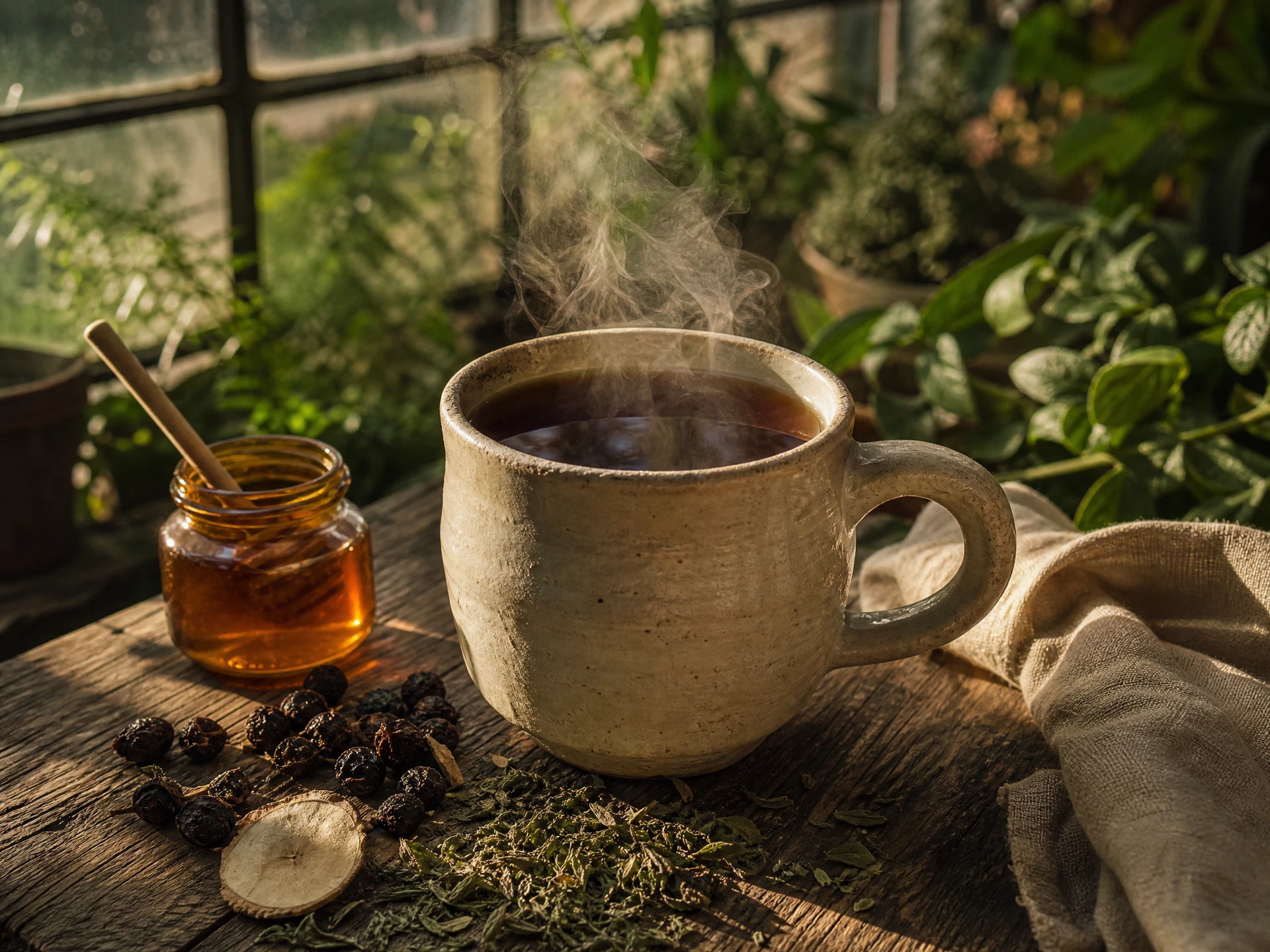
When you decide to make a cup of herbal tea for anxiety or stress, you are doing something radical. You are interrupting the momentum of your day. The act of putting the kettle on, listening to the water come to a boil, and watching the steam rise is a signal to your body that the work is done.
The ten minutes you spend waiting for the herbs to steep are not wasted time; they are the active ingredient. In those ten minutes, you are not answering an email. You are not folding laundry. You are simply waiting. You pour the water into the same favorite cup. You feel the warmth of the ceramic against your palms. You breathe in the aromatic steam before you take your first sip.
This ritual tells your nervous system that you are safe. It creates a boundary between the demands of the world and the sanctuary of your bed. You cannot expect a single cup of tea to undo a decade of chronic stress, but you can trust it to hold space for you, night after night, until your body remembers how to rest.
There is a profound beauty in turning to the earth for support, but we must also honor the limits of herbalism. Plants are gentle, steady companions, but they are not a substitute for comprehensive care when you are truly struggling.
If you are experiencing persistent anxiety that interferes with your daily life, panic attacks that leave you breathless, or insomnia that stretches on for weeks and leaves you dangerously depleted, please know that you do not have to carry that alone. These are signs that your body is asking for a deeper level of support.
We encourage you to involve a trusted healthcare professional—a doctor, a therapist, or a clinical herbalist—who can help you navigate these challenges. Seeking medical care is not a failure of your wellness journey; it is a profound act of self-advocacy. The herbs will still be here, waiting in your kitchen, ready to support you alongside whatever other care you need.
Rest is not a luxury; it is a biological imperative. It is the time when your body repairs tissue, consolidates memories, and clears away the metabolic waste of the day. When you are deprived of it, everything else becomes harder.
But rest is also a practice. It is something you must cultivate, night after night. Whether you are simmering a pot of Nervous System Reset Broth on a Sunday afternoon to prepare for the week ahead, or brewing a strong cup of chamomile and passionflower at midnight, you are taking a step toward reclaiming your own peace.
The earth already made the medicine. We just help you find it. Pull up a chair, wrap your hands around a warm mug, and let the quiet in.
Start here
teasFor the meeting where the heat rises before you can excuse yourself. Sage, spearmint, and lemon balm turn into a cool, green cup that is as good over ice as it is warm.
 lattes
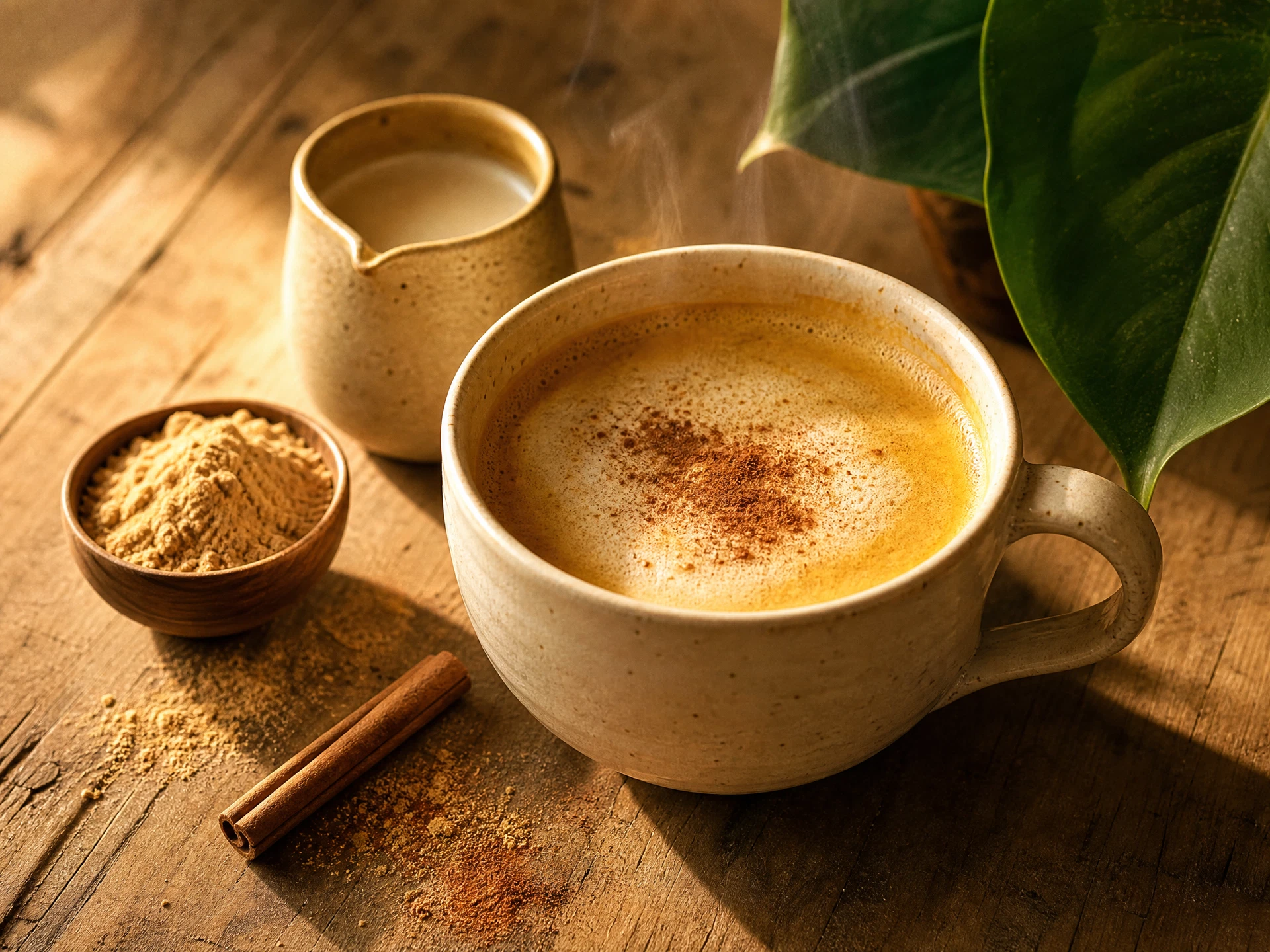
A deeply grounding evening ritual for the week before your period. Warm coconut milk, blooming turmeric, and evening primrose oil offer targeted comfort for breast tenderness and the short fuse.
 teas
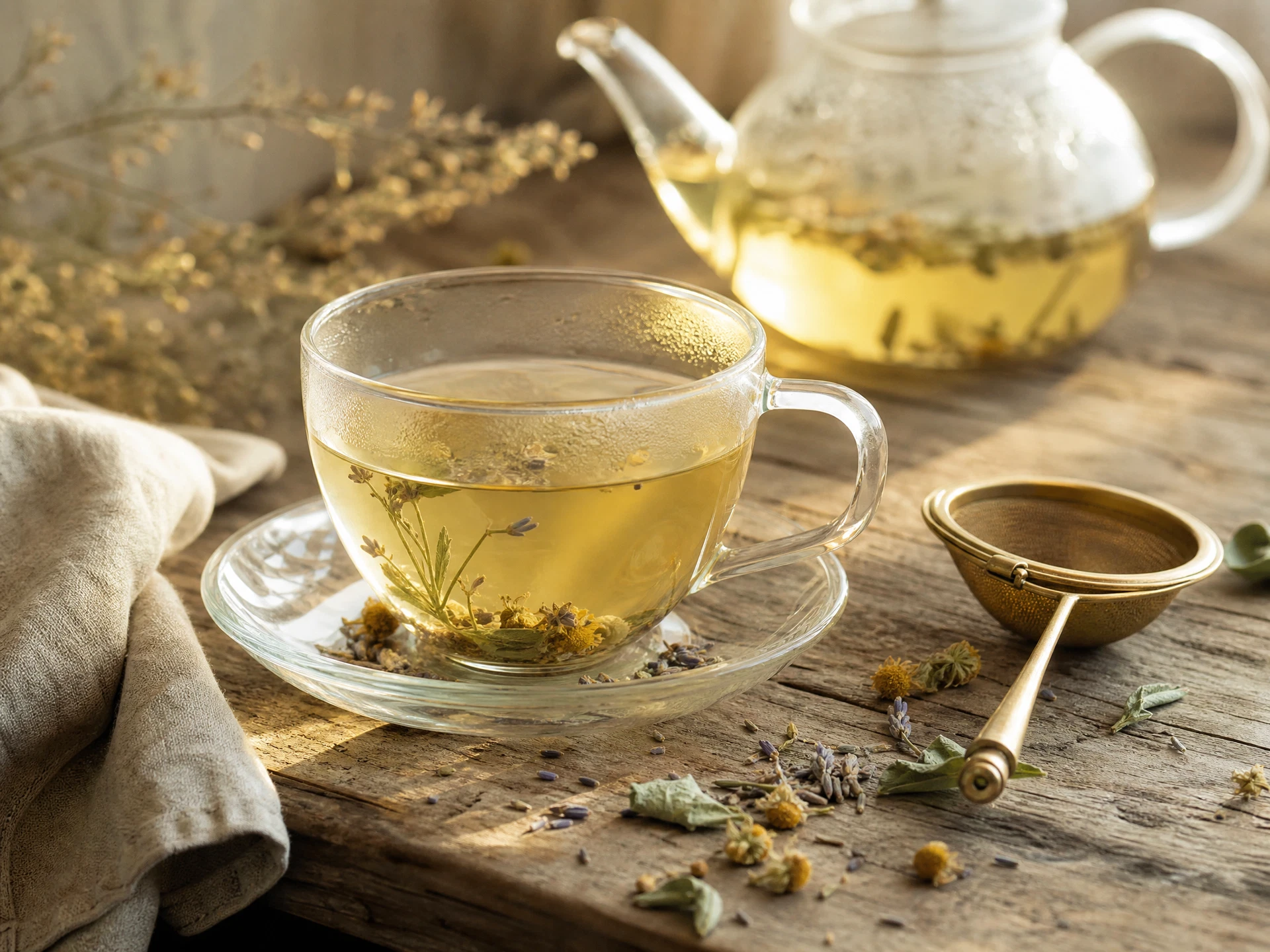
teasThere's a tea for the night your mind won't quiet. A deeply grounding blend of passionflower, chamomile, and lemon balm for when you've already answered the email in your head four times.
 elixirs
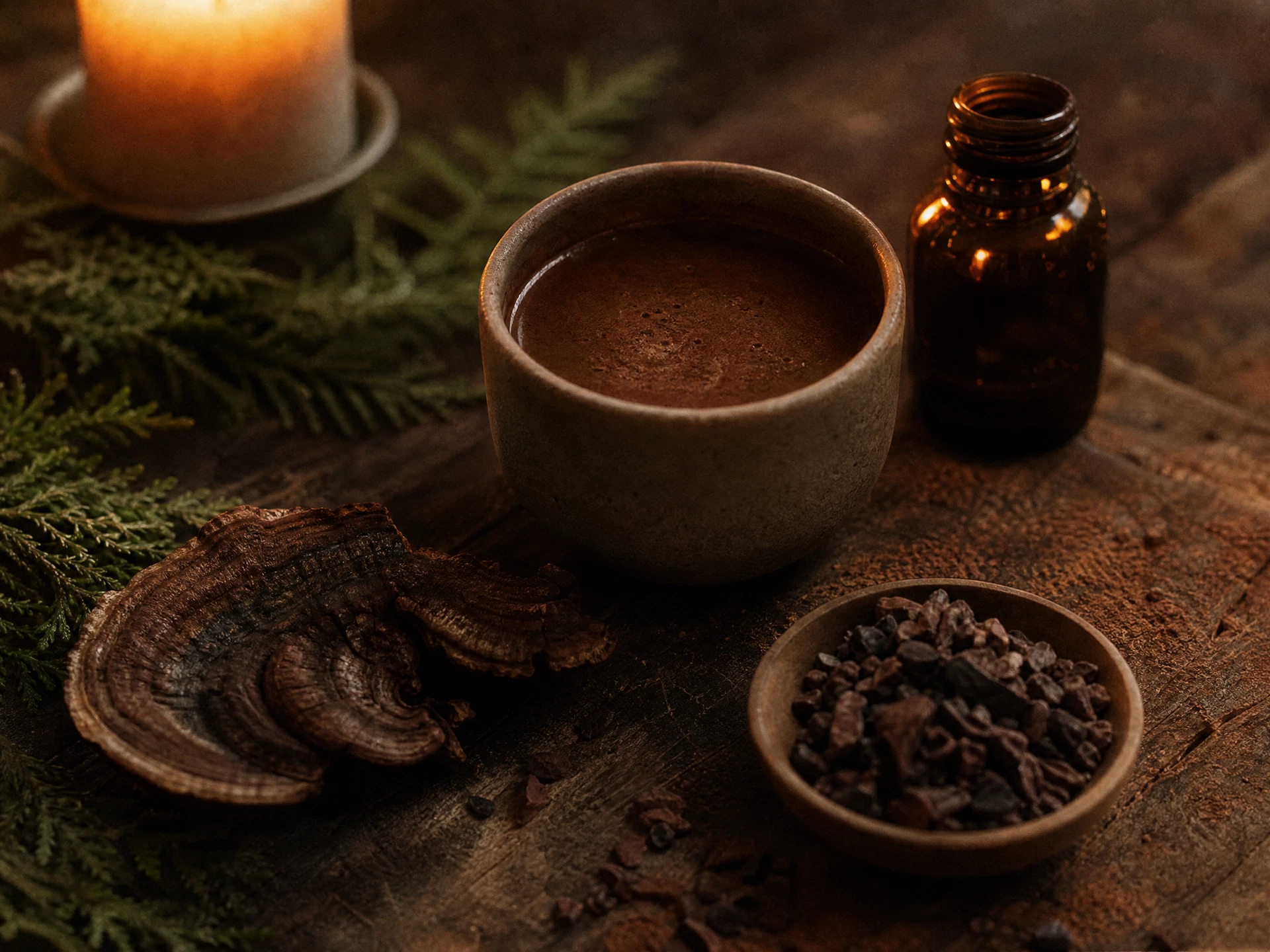
A rich, dark cup of raw cacao anchored by the deep earthiness of roots and mushrooms. The morning after you gave too much of yourself away, this is the slow-burning fire that carries you to lunch without the crash.
elixirsA heavy blanket for the nervous system, crafted for the woman who falls asleep easily but wakes at 3 AM. Earthy reishi and potent valerian anchor this deeply grounding, slightly bitter cocoa.
 tonics
A quiet revival for the afternoon crash. This golden brew gathers your scattered focus and hands it back to you, finishing the day with grace rather than grit.
Know your plants

Withania somnifera
A deeply grounding adaptogenic root that helps the body find its footing when the ground feels unsteady. Traditionally used to quiet a racing mind, steady the nervous system, and restore energy that has been drained by chronic stress.
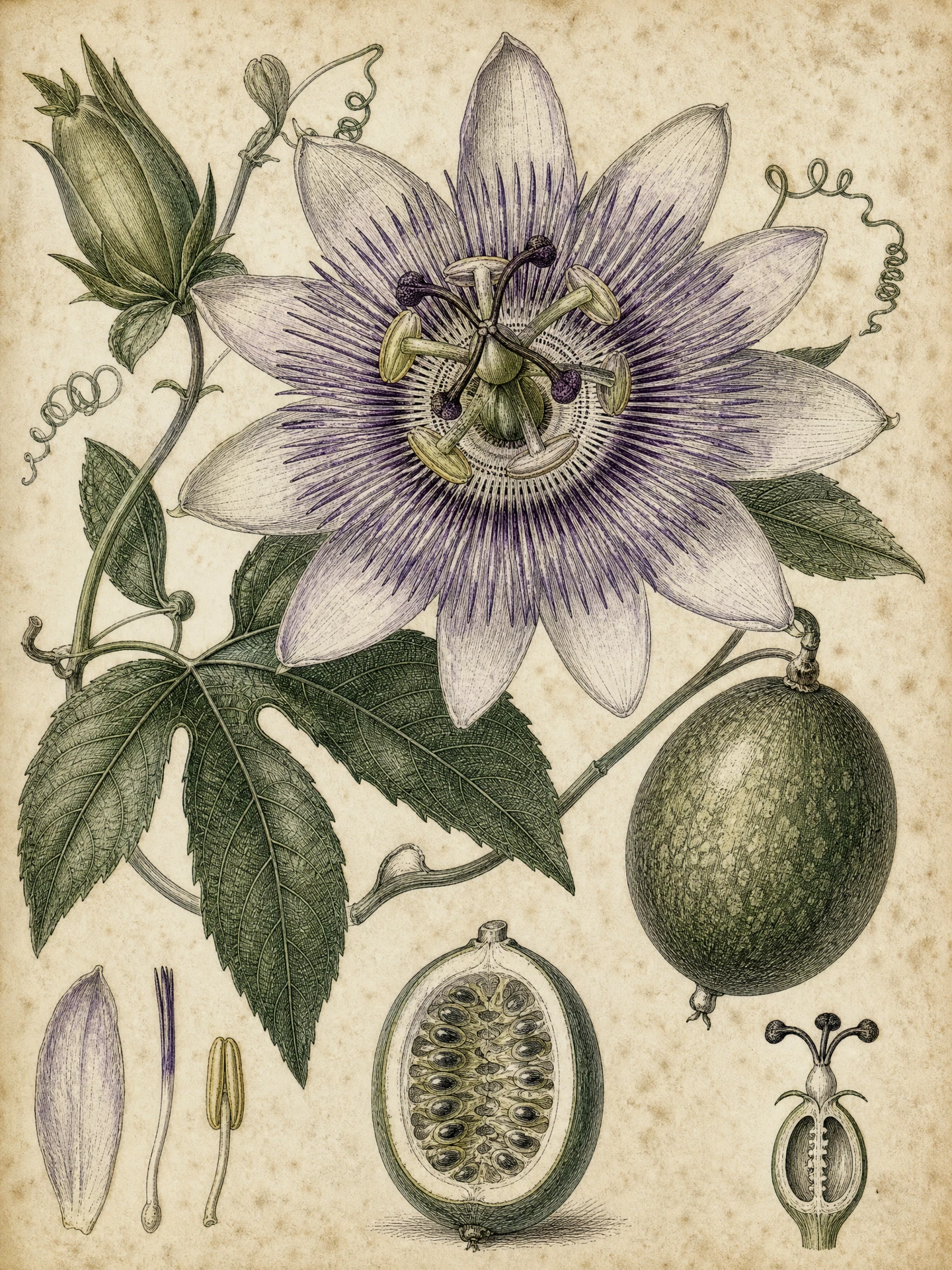
Passiflora incarnata
An extraordinary vine with a complex, otherworldly blossom, passionflower is the herbalist's choice for a mind that will not stop talking. It gently turns down the volume on looping thoughts and nervous tension, inviting a state of natural ease. A deeply supportive, gentle nervine for the restless and the weary.
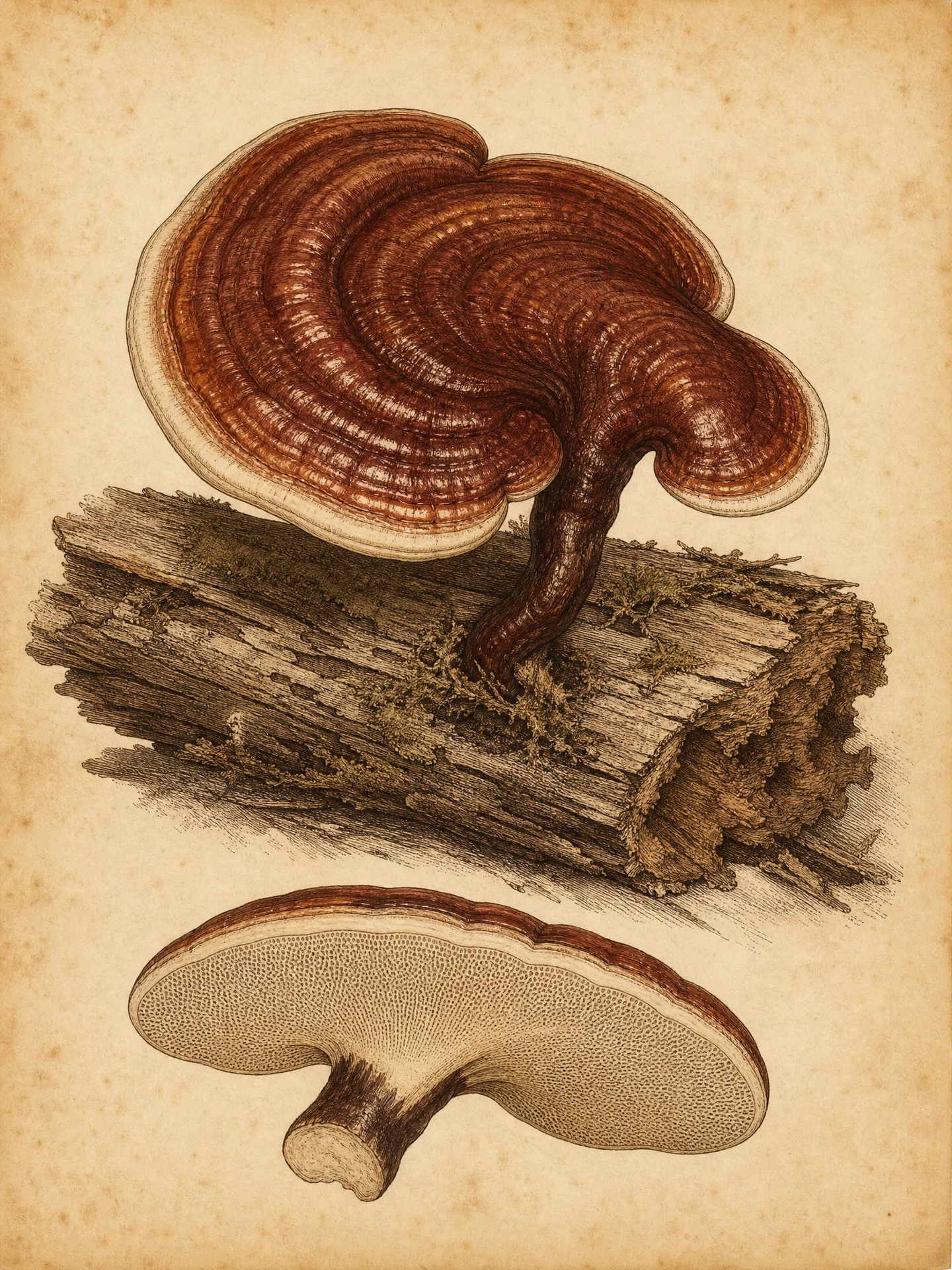
Ganoderma lucidum
Known as the mushroom of immortality, this grounding adaptogen has been revered for centuries to quiet the mind and build deep stress resilience. It is the quiet anchor in the storm, offering a slow, steady nourishment for the woman who is tired but wired.
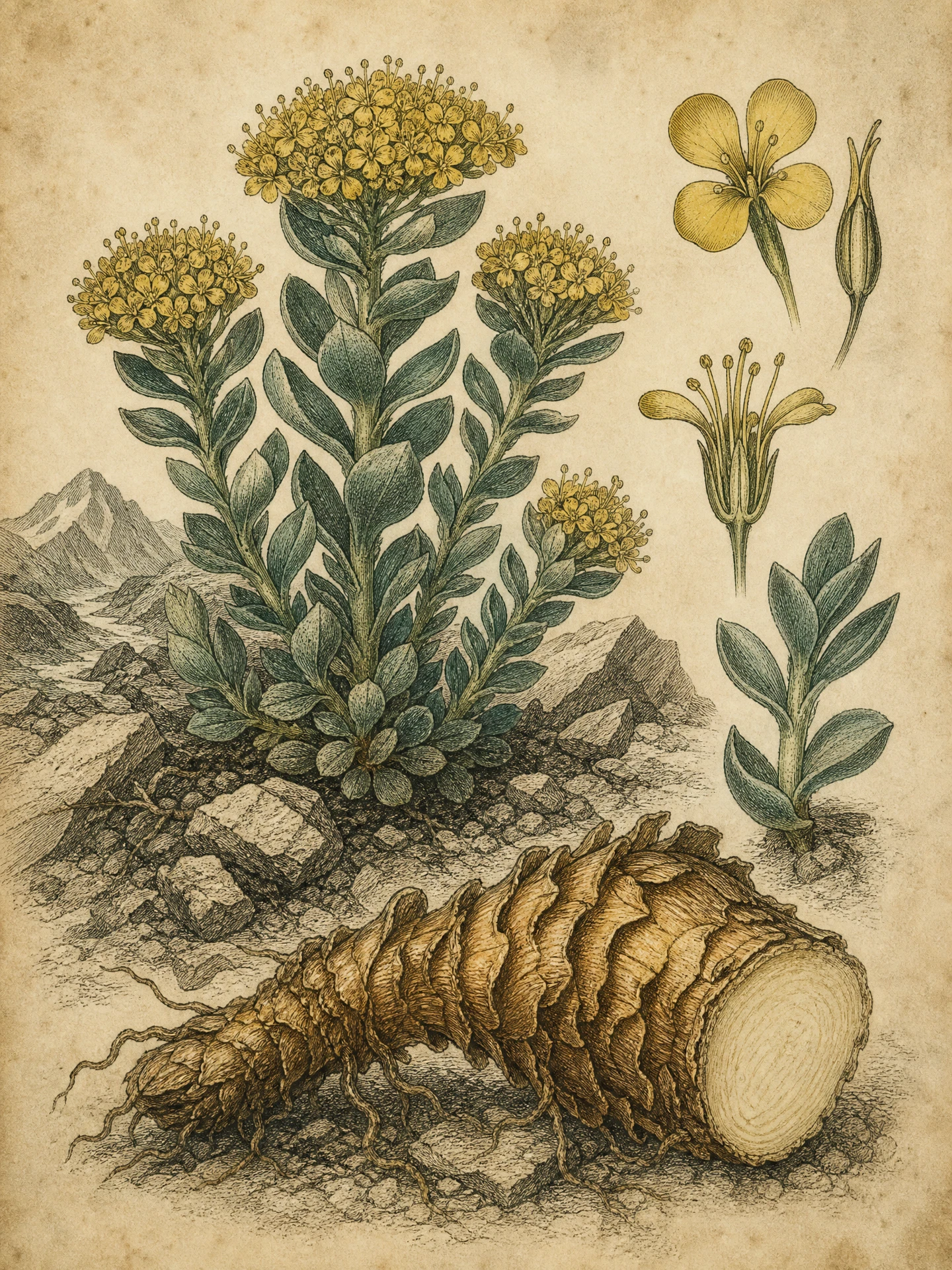
Rhodiola rosea
Known as the arctic rose, this resilient northern root is a potent adaptogen traditionally used to clear mental fog and restore deep stamina. It offers immediate, grounding energy for the days when you feel entirely depleted, helping the body adapt to profound stress.
From our shelf
Teabloom
Watching an infusion change color is half the ritual. Glass also tells you honestly when your herbs are past their prime.
Mountain Rose Herbs
Mountain Rose tests every lot and publishes the results. Their ashwagandha actually smells like ashwagandha — earthy and a little horsey — which is how you know it isn't cut with filler.
Mountain Rose Herbs
Reishi needs long, hot extraction to give up its good compounds — powder handles that better than slices. Bitter, woody, and worth it.
WishGarden Herbs
WishGarden has been making these in Colorado since 1979. This is what we keep in the bedside drawer for the nights the tea wasn't enough.
Coming, eventually
The Quiet Hour is an evening nervine blend for the mind that won't stop talking. It is a gentle, grounding companion for the nights when you need to lay down the day's burdens and finally rest.