adaptogen
Ashwagandha
Withania somnifera
A deeply grounding adaptogenic root that helps the body find its footing when the ground feels unsteady. Traditionally used to quiet a racing mind, steady the nervous system, and restore energy that has been drained by chronic stress.
Traditionally reached for
Where it comes from
Folklore & History
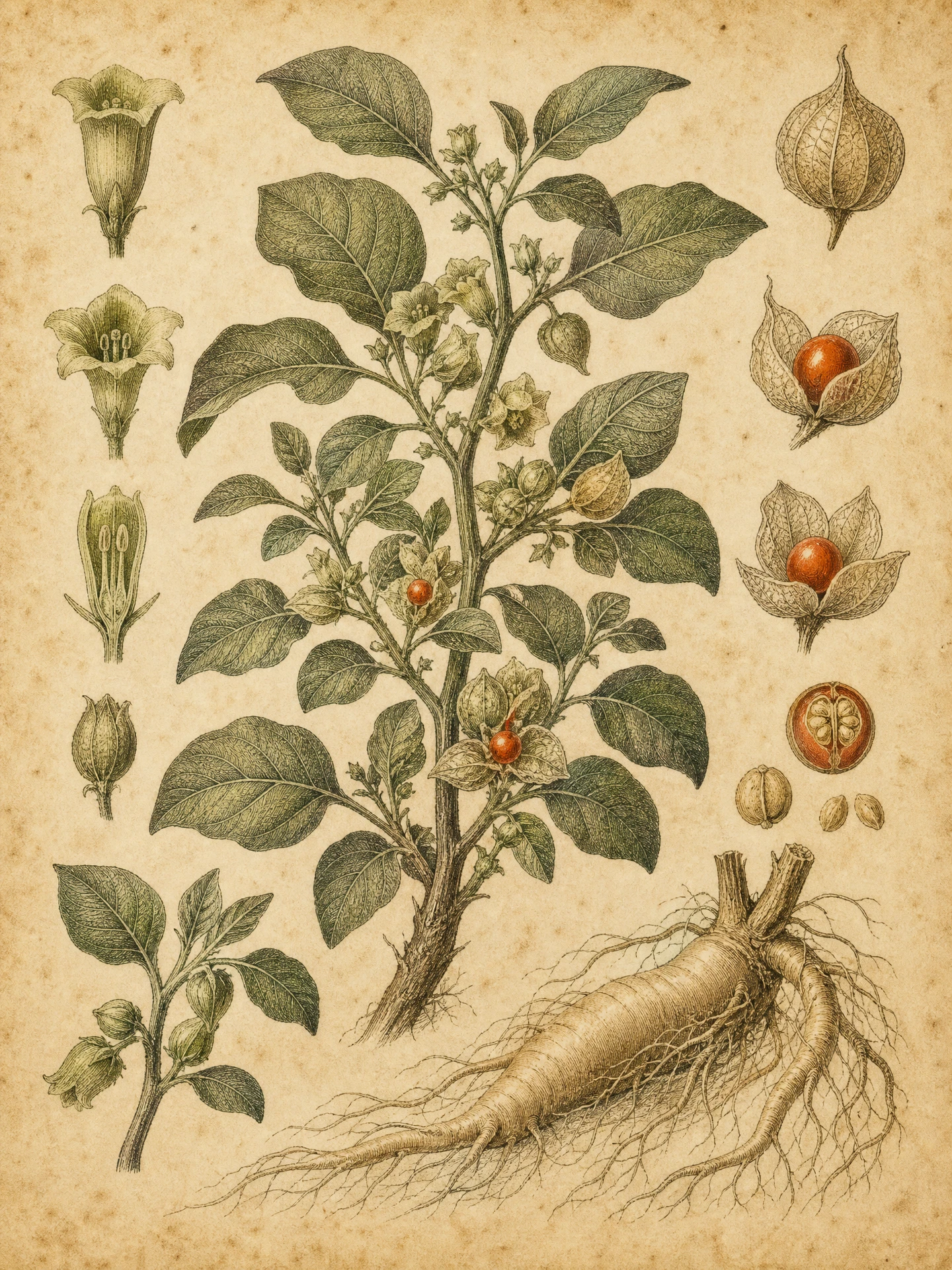
Ashwagandha (Withania somnifera) is a plant that asks you to look past its unassuming surface. Growing in the dry, unforgiving soils of India, the Middle East, and parts of Africa, this stout shrub with its dull green leaves and small, bell-shaped green flowers does not look like a powerhouse. But the magic of this nightshade-family plant lies entirely underground, in its pale, fleshy roots. For over three thousand years, Ayurvedic practitioners have turned to these roots to help the body find its footing when the ground feels unsteady. It thrives where other plants wither, drawing resilience from the arid earth, and the tradition holds that it passes this very resilience on to us.
The name itself tells a story of vitality. In Sanskrit, ashva means horse, and gandha means smell. The traditional wisdom holds that the freshly harvested root carries the earthy, musky scent of a horse, and more importantly, that it imparts the strength, stamina, and quiet endurance of a stallion to those who take it. It was the herb you reached for when the well was running dry, when the body was exhausted but the mind would not rest, and when the sheer effort of moving through the world felt like carrying stones.
Yet, its Latin botanical name, Withania somnifera, reveals the other side of its nature. Somnifera translates to "sleep-bringing." This dual nature—the ability to offer both deep, restorative rest and steady, grounded energy—is what makes it so unique among botanicals. It does not force the body into a state of artificial alertness like caffeine, nor does it knock you out like a heavy sedative. Instead, it meets you exactly where you are. If you are wired and fraying at the edges, it helps you settle. If you are depleted and dragging, it helps you rise.
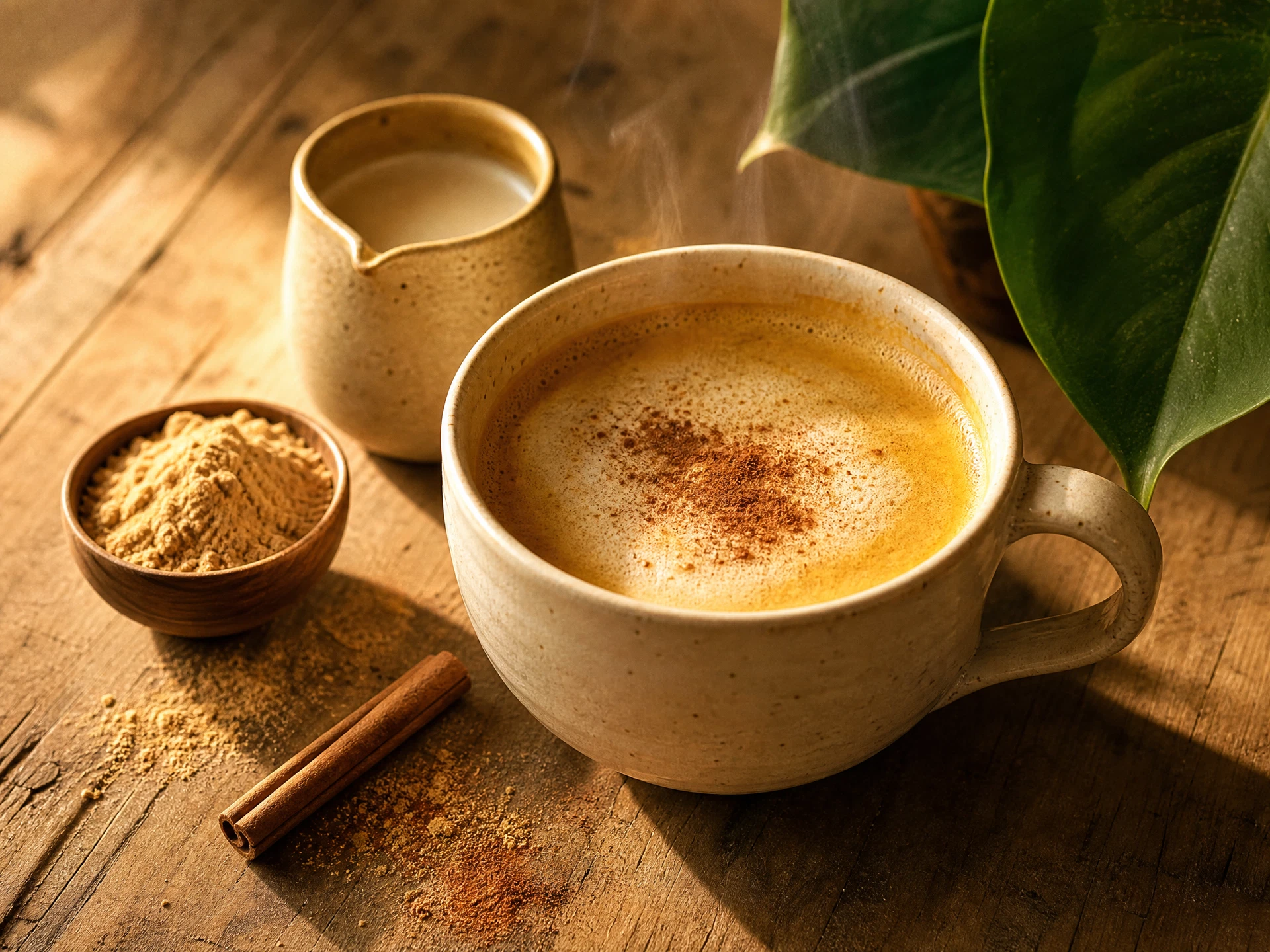
In folk practice, it was often simmered in warm milk with honey, ghee, and warming spices, a comforting evening ritual designed to coax the nervous system out of its defensive posture. This tradition of pairing the root with nourishing fats and warmth is something we still lean on today, especially when crafting a nervous system reset broth or a soothing evening cup. It is a plant that understands the toll of simply living in the world, offering a quiet, steadying hand when the demands of the day have taken too much.
In plain language
What It Actually Does
When we talk about what this plant does, we have to start with a moment of absolute honesty. Ashwagandha is currently the most hyped herb in the Western wellness market. It is added to everything from chocolate bars to sparkling waters, often marketed as a miracle cure for modern burnout. But the truth of herbalism is that no single plant is for everyone, and ashwagandha is no exception. While many women find it to be a profound ally for sleep and stress, it does not suit every constitution. Because it is so effective at turning down the volume on the nervous system's stress response, some women find that it works a little too well—leaving them feeling flat, emotionally blunted, or unmotivated. If you try it and find that your edges feel a bit too smoothed over, listen to your body. It simply means this is not your herb.
For those it does suit, however, the effects can feel like a deep, exhaling breath. Ashwagandha is classified by herbalists as an adaptogen, a category of plants traditionally used to support the body's ability to adapt to physical and emotional stress. When you are running on empty, your body is often flooded with cortisol, the hormone that keeps you in a state of high alert. This is the feeling of being "tired and wired"—when you are exhausted to your bones, but your mind is racing too fast to let you sleep.
The tradition holds that ashwagandha steps into this chaotic internal environment and gently lowers the temperature. It is traditionally understood to nourish the adrenal glands, helping to regulate the production of stress hormones so that you are not constantly living in a state of emergency. By encouraging the nervous system to shift out of fight-or-flight mode and into a state of rest and digest, it helps lay the foundation for genuine hormone balance.
When your body is no longer pouring all its resources into managing perceived threats, it can finally redirect that energy toward repair, digestion, and reproductive health. This is why herbalists have long reached for it to support women navigating the unpredictable shifts of perimenopause, or for anyone whose cycle has been disrupted by chronic stress. It does not artificially inflate your energy; rather, it helps plug the leaks where your energy is draining away, allowing your natural vitality to slowly pool back up.
How to use it
Preparation
Because ashwagandha is a dense, woody root, it requires a bit more coaxing than a delicate leaf or flower to release its medicine. A simple hot water infusion—like you would use for chamomile—is not quite enough. If you are working with the dried, cut root, it needs to be prepared as a decoction. This means simmering the roots gently in water for twenty to thirty minutes. A traditional preparation amount is about one teaspoon of the dried root per cup of water.
However, in modern practice, you will most often find ashwagandha as a fine, light brown powder. This is perhaps the most versatile way to bring it into your life. The powder can be whisked directly into warm milk, stirred into oatmeal, or blended into a hormone reset latte. Because its flavor is distinctly earthy—remember the "smell of the horse"—it pairs beautifully with warming spices like cinnamon, cardamom, and ginger, or with the rich depth of cacao and reishi. If the taste is simply not for you, high-quality capsules or tinctures are excellent alternatives.
When it comes to timing, ashwagandha is not a quick fix. It is a slow-building tonic. You should not expect to take it once and suddenly feel a wave of calm wash over you. Herbalists generally suggest taking it daily for at least two to four weeks before you expect to notice a meaningful shift in your resilience or sleep quality. Because of its grounding nature, many women prefer to take it in the late afternoon or evening, right when the day's momentum starts to tip into evening exhaustion, to help ease the transition into rest.
When buying ashwagandha, look for organic sourcing, as roots absorb whatever is in the soil around them. The powder should be a pale, creamy tan color and have a strong, slightly bitter, earthy aroma. Store it in an airtight glass jar in a cool, dark cupboard, away from the heat of the stove, to protect its potency.
Who Should Be Careful
Pregnancy & Nursing
Tradition tells us to leave this powerful root on the shelf while you are growing a new life. It is traditionally avoided during pregnancy.
We believe that knowing when to step away from a plant is just as important as knowing when to reach for it. Because ashwagandha has a real, tangible impact on the body, there are times when it is simply not the right choice.
If you are pregnant, this is one to leave on the shelf; it is traditionally avoided during pregnancy. Because it belongs to the nightshade family, women with a known nightshade sensitivity should bypass it to avoid unnecessary inflammation.
It is also important to be mindful of how it interacts with your internal chemistry and any medications you might be taking. Ashwagandha may naturally raise thyroid hormone levels, so if you are taking thyroid medication, you need to be incredibly cautious to avoid pushing your levels too high. Similarly, because it can stimulate the immune system, it is generally not recommended for those navigating autoimmune conditions. If you are taking sedatives, combining them with this root can cause too much drowsiness, and you should pause taking it at least two weeks before any upcoming surgery.
Please, always bring your own healthcare practitioner into the conversation before introducing a new herb to your routine, so you can make the best choice for your unique body.