adaptogen
Reishi Mushroom
Ganoderma lucidum
Known as the mushroom of immortality, this grounding adaptogen has been revered for centuries to quiet the mind and build deep stress resilience. It is the quiet anchor in the storm, offering a slow, steady nourishment for the woman who is tired but wired.
Traditionally reached for
Where it comes from
Folklore & History
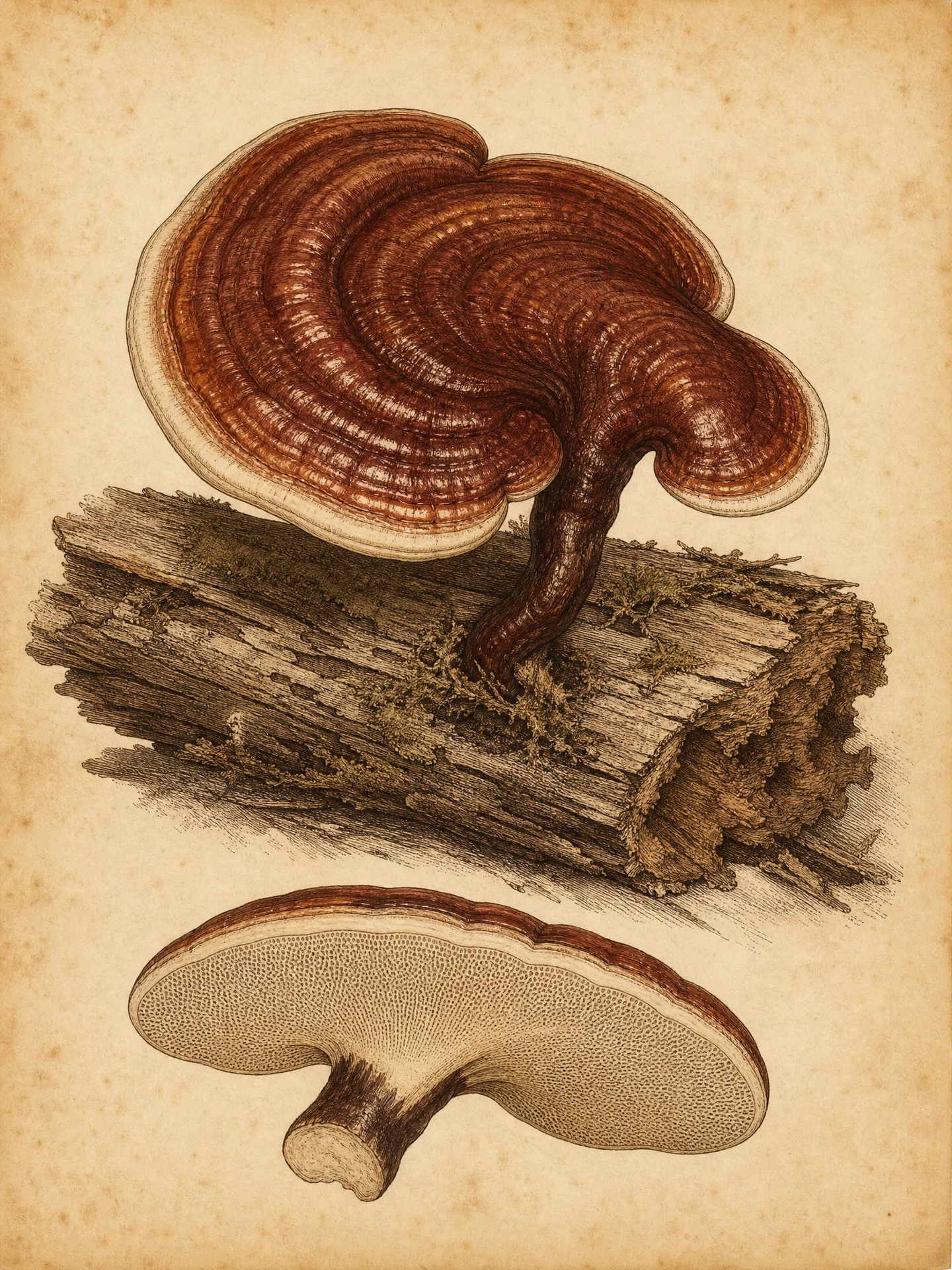
If you were to walk through a damp, ancient hardwood forest in Asia, you might spot it growing on the side of a decaying plum or oak tree—a striking, kidney-shaped shelf fungus that looks as though it has been varnished by hand. Its colors range from deep, bruised purples to fiery reds and burnt oranges, fading to a pale, creamy edge. This is Ganoderma lucidum, known in China as lingzhi, the mushroom of immortality. It does not look like something you would eat. It is woody, tough, and deeply bitter, a far cry from the soft, earthy mushrooms you might slice into a pan. But for over two thousand years, herbalists have revered this lacquered fungus as one of the most profound tonics in the botanical world.
In traditional Chinese medicine, reishi is placed in the highest class of herbs—those believed to nourish the spirit, or shen, and promote a long, centered life. It was so highly prized in ancient times that it was often reserved for emperors and royalty. You can find its distinct, cloud-like shape painted onto silk scrolls, carved into jade, and woven into imperial robes, a symbol of divine longevity and spiritual radiance. The foragers who knew where to find it in the wild kept their locations fiercely guarded secrets, passing the knowledge down through generations.
Because it is so tough and woody, reishi cannot simply be steeped like a delicate flower or leaf. The tradition holds that it must be simmered slowly, coaxing the deep, bitter medicine out of the tough fruiting body over hours. This long decoction process was a ritual in itself, a slow, deliberate act of preparation that mirrored the mushroom's own slow, grounding nature. It is not a quick fix, but a deep, foundational nourishment.
Today, we reach for reishi when the world feels too loud, when our reserves are tapped, and when we need to rebuild our resilience from the ground up. It is the quiet anchor in the storm, a reminder that true strength often comes from deep, slow nourishment rather than frantic energy. Whether you are navigating the shifting tides of perimenopause or simply seeking a steadier center, this ancient mushroom offers a profound, grounding presence. It asks us to slow down, to simmer rather than boil, and to trust in the slow, steady accumulation of vitality.
In plain language
What It Actually Does
When we talk about what reishi does in the body, we have to start by adjusting our expectations of time. We are so accustomed to things that work immediately—a pill that forces sleep, a cup of coffee that forces energy. Reishi does not force anything. It is an adaptogen, which means it is traditionally used to support the body's ability to handle stress, but it works slowly, cumulatively, and quietly.
Herbalists have long reached for reishi to nourish the nervous system and support deep, restorative rest. But here is the honest truth: reishi is not a sleeping pill. If you take it at ten o'clock hoping it will knock you out by ten-thirty, you will be disappointed. Instead, it works by gradually lowering the volume on your body's stress response over days and weeks. It is for the woman who is tired but wired, whose mind races when her head hits the pillow, who feels like she is constantly running on fumes. By taking it as a nightly habit, you are slowly rebuilding your stress resilience, helping your nervous system remember how to shift from high alert back into a state of rest.
Beyond sleep and stress, reishi is deeply valued for immune modulation. In folk practice, it is not seen as an herb that simply stimulates the immune system, but rather one that helps balance it—giving your body what it's been asking for to maintain a steady, resilient defense. This makes it a beautiful ally during the colder months or when you feel run down from burning the candle at both ends.
Because it is so grounding, many women find it particularly supportive during times of hormonal transition. When the body is navigating the profound shifts of perimenopause, the nervous system can feel frayed and fragile. Reishi acts as a steadying hand, offering a deep, quiet nourishment that helps smooth the edges of those transitions. It pairs beautifully with other grounding herbs like ashwagandha or passionflower for those seeking a steadier center. Just remember that this is a long game. You are not hacking your biology; you are tending to a garden, and that takes time, patience, and a willingness to let the medicine work at its own unhurried pace.
How to use it
Preparation
If you bring whole, dried reishi slices into your kitchen, you will quickly discover that this is not a plant you can simply drop into a mug with hot water. Because it is a tough, woody shelf fungus, an infusion (steeping in hot water) will not extract its medicine. It requires a decoction—a slow, rolling simmer for at least an hour, sometimes two, to draw out the beneficial compounds.
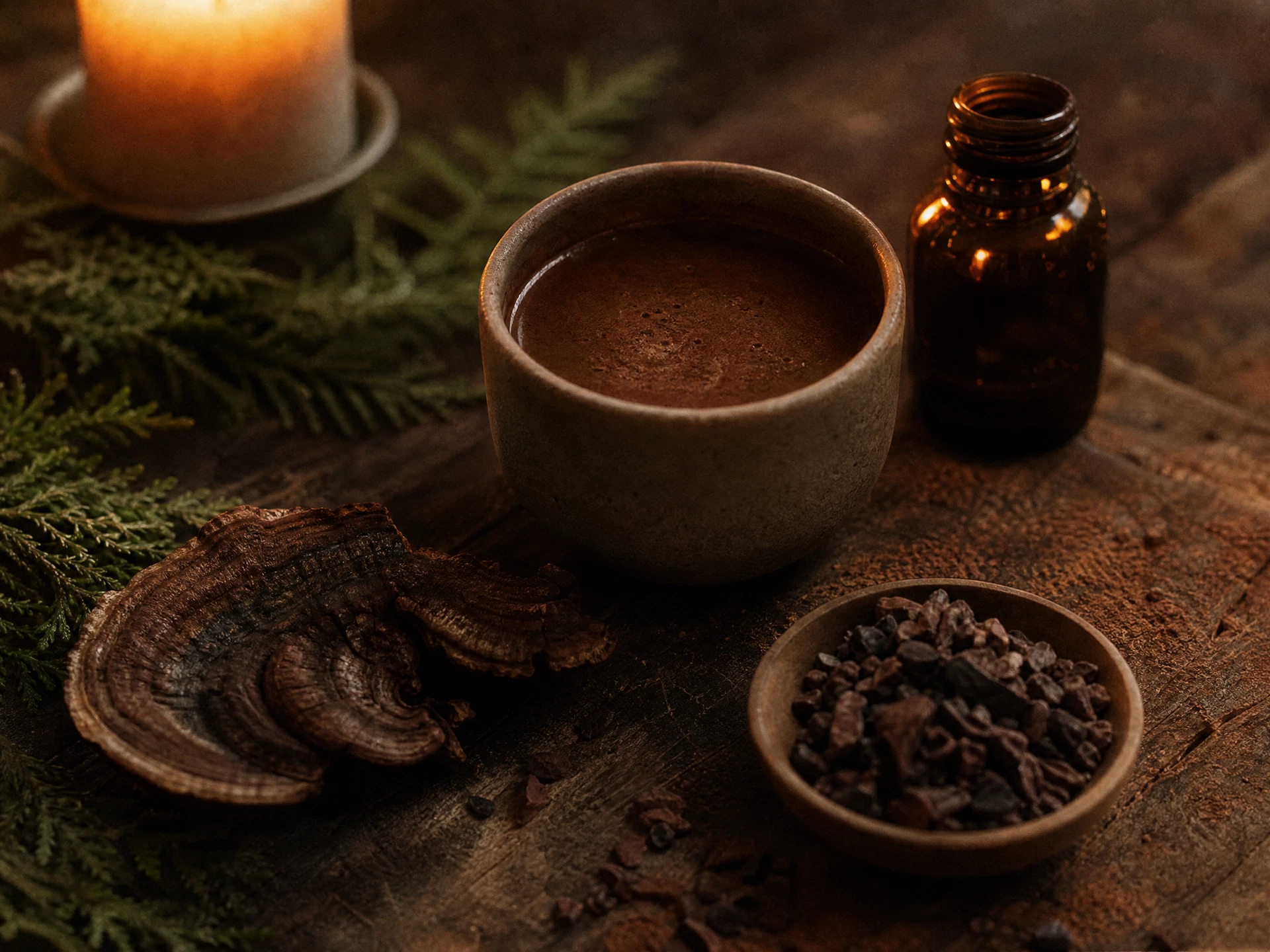
But let us be completely honest: reishi is bitter. It is a deep, earthy, unapologetic bitterness that can be jarring if you are expecting a mild tea. For many women, the most practical and enjoyable way to bring reishi into their daily rhythm is through a high-quality extract powder. And the honest fix for that bitterness? Cocoa. The rich, dark notes of cacao perfectly mask and complement the earthy bite of the mushroom. Whisking a spoonful of reishi powder into a warm deep sleep reishi cocoa or an adaptogen morning elixir transforms a bitter medicine into a decadent, comforting ritual.
When you are buying reishi, especially in powder or capsule form, you must be fiercely discerning. There is a real consumer trap in the mushroom market. You want an extract made from the fruiting body—the actual mushroom itself, which contains the concentrated compounds herbalists have valued for centuries. Many cheap commercial products are made from mycelium on grain, which means you are largely paying for the ground-up oats or rice that the mushroom's root system was grown on, rather than the mushroom itself. Always read the label, and look for a dual-extracted fruiting body powder.
Because reishi is slow and cumulative, consistency is everything. We recommend making it a daily practice, perhaps as a quiet evening ritual to signal to your body that the day's work is done. You might not notice a profound shift on day one or even day five. But after a few weeks of steady use, you may suddenly realize that the things that used to rattle you no longer do, and that your sleep has grown deeper and more unbroken. Store your reishi powder or dried slices in a cool, dark place, tightly sealed, where it will keep its potency for a year or more.
Who Should Be Careful
Pregnancy & Nursing
While reishi is a deeply nourishing tonic, there is insufficient information on its safety during pregnancy and nursing, and it is traditionally avoided during these tender seasons.
As much as we revere this ancient mushroom, its profound effects on the body mean it is not the right ally for everyone, and we want you to be safe. Because reishi can naturally support healthy circulation and may slow blood clotting, you should not take it if you are on blood thinners or antiplatelet drugs, or if you have an upcoming surgery. It is also traditionally understood to modulate the immune system, which means it is contraindicated if you are taking immunosuppressants or transplant medication, or if you are navigating certain autoimmune conditions where immune modulation might be unpredictable.
If you naturally run cold and have low blood pressure, be aware that reishi may lower it further, which could leave you feeling lightheaded. And while it is a deeply nourishing tonic, there is simply not enough clear, historical consensus on its safety during pregnancy and nursing, so the tradition holds that it is best avoided during those tender seasons.
Your body is your own, and you know it best. If you are navigating a complex health picture or taking prescription medications, please bring your curiosity to a trusted healthcare practitioner or clinical herbalist who can help you weave this plant into your life safely.