 elixirs
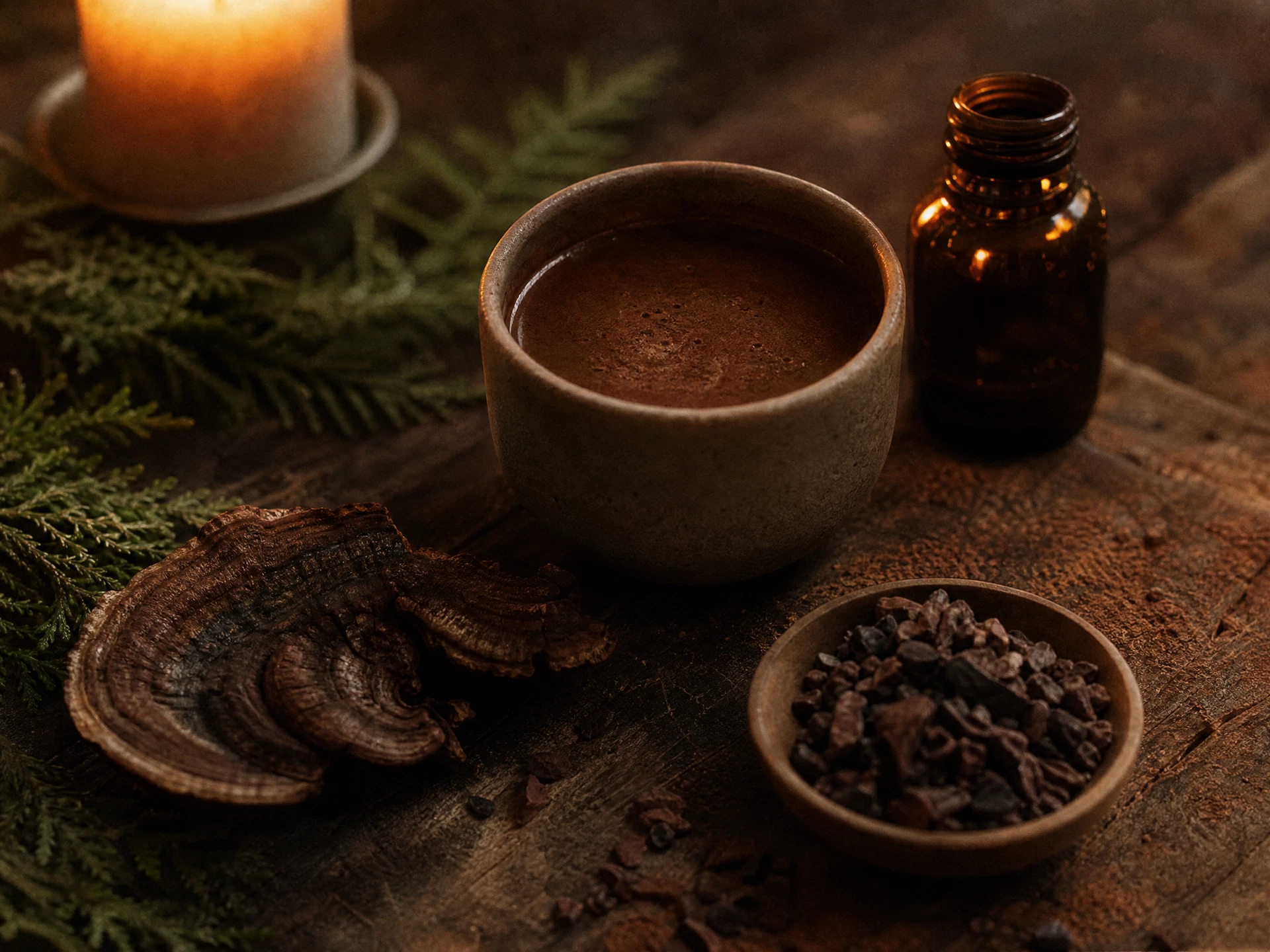
Deep Sleep Reishi Cocoa
A heavy blanket for the nervous system, crafted for the woman who falls asleep easily but wakes at 3 AM. Earthy reishi and potent valerian anchor this deeply grounding, slightly bitter cocoa.
Sleep & Stress 10 minutes
The earth already made the medicine
First, the truth
When the temperature drops and the days shorten, your body naturally shifts its energy. The immune system is a complex, elegant network of cells, tissues, and organs that works constantly to identify what belongs to you and what does not. It is not a muscle to be flexed or a battery to be overcharged.
When you encounter a seasonal challenge, your body mounts an inflammatory response to clear it out. This is a healthy, necessary process. However, when the immune system is constantly stimulated—whether by chronic stress, lack of sleep, or over-the-counter "boosters"—it can lose its ability to distinguish between a true threat and your own healthy tissue. This is the root of autoimmune conditions, where the body's defense mechanism turns inward.
True immune resilience is about modulation: the ability to mount a strong defense when needed and, just as importantly, the ability to stand down and return to a state of calm. This requires deep nourishment. Your immune cells rely on a steady supply of minerals, vitamins, and restorative sleep to function properly.
If you find yourself catching every cold that passes through, or if you are experiencing persistent, unexplained fatigue, joint pain, or a feeling that your body is constantly fighting itself, it is time to involve a clinician. These can be signs of an underlying autoimmune issue, a thyroid condition, or severe depletion that warrants real medical investigation. The herbs are here to support your foundation, but they are not a substitute for understanding what your body is truly asking for.
The first frost always feels like a surprise, even when you know it is coming. The air shifts, the light thins, and suddenly the world is asking more of your body than it did in the easy heat of July. This is the season when the wellness industry begins shouting at you to boost your immune system, offering a barrage of pills, powders, and quick fixes promising to make you invincible against the cold.
But an immune system that has been boosted is not a good thing. In fact, a hyperactive immune response is the very definition of an autoimmune condition. Your body does not need to be boosted; it needs to be modulated. It needs resilience, not a panic response. The tradition of herbalism has always understood this vital distinction. We do not wait until we are already sick to scramble for a cure. We put things up in advance. We prepare the fire cider in October. We set the elderberry on the shelf. We build the foundation before the storm arrives, trusting that the work we do in the autumn will carry us through the deep winter.
The unglamorous truth is that true resilience begins with the foundations: sleep, minerals, and actual vegetables. No herb can outwork exhaustion. No tincture can replace a solid night of rest or a meal cooked with care. But when those foundations are laid, the plants offer a profound kind of support. They teach the body how to adapt, how to stand firm when the season turns, and how to weather the inevitable challenges of the colder months.
In folk practice, autumn is the time for roots and berries. Because these parts of the plant are dense, woody, and tightly bound, they require a different kind of preparation than the delicate leaves and flowers of summer. You cannot simply pour hot water over them and expect them to yield their medicine. This is the difference between an infusion and a decoction. An infusion is a gentle steeping, perfect for a nettle infusion or a light afternoon tea. A decoction requires a slow, rolling simmer. You must boil the roots and berries to coax out their deep, grounding properties. This is how we prepare a seasonal shield tonic, letting the heat and the water do the slow work of extraction over time.
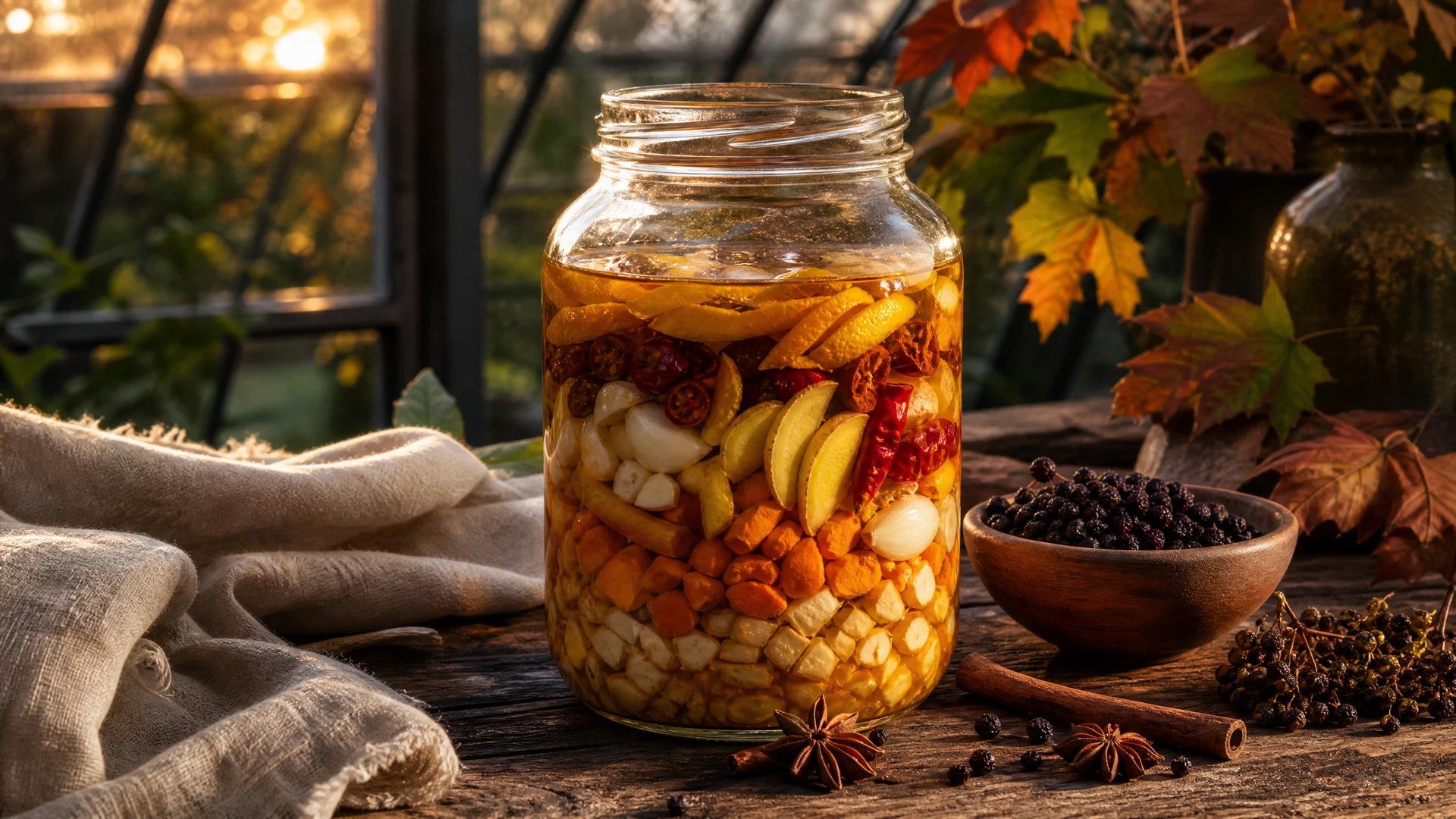
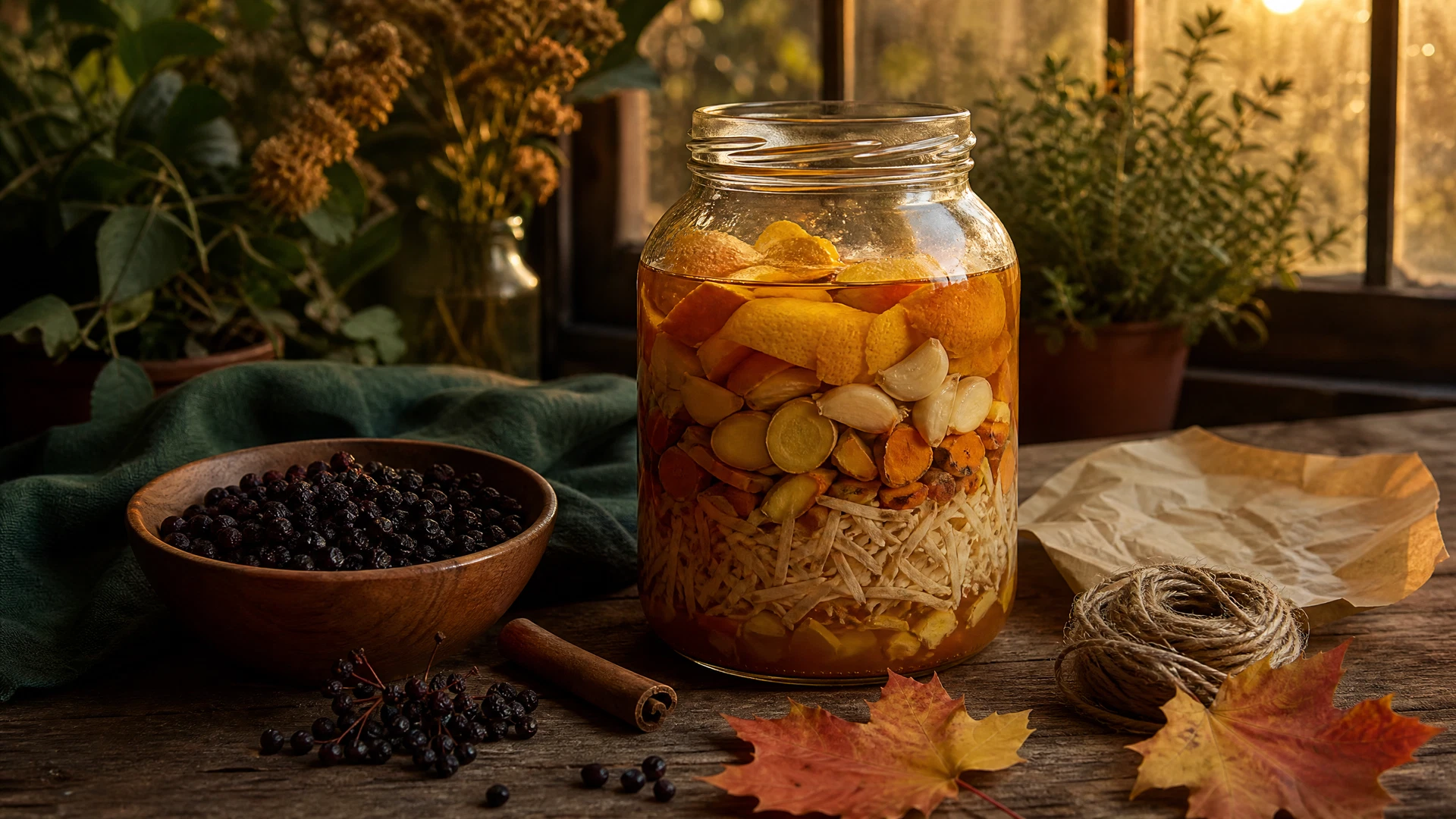
There is a quiet, grounding power in preparing for the winter before it arrives. It is an act of trust in the turning of the year and a reclamation of our own agency. Making fire cider is perhaps the most iconic of these autumn rituals. It is a fiery, pungent vinegar infusion, packed with horseradish, garlic, onion, ginger, and whatever else the garden offers as it dies back. The fire cider benefits lie in its ability to warm the body from the inside out, moving stagnation and encouraging circulation when the world outside is freezing. It is what we reach for when the season turns, a daily spoonful to keep the inner fire burning bright.
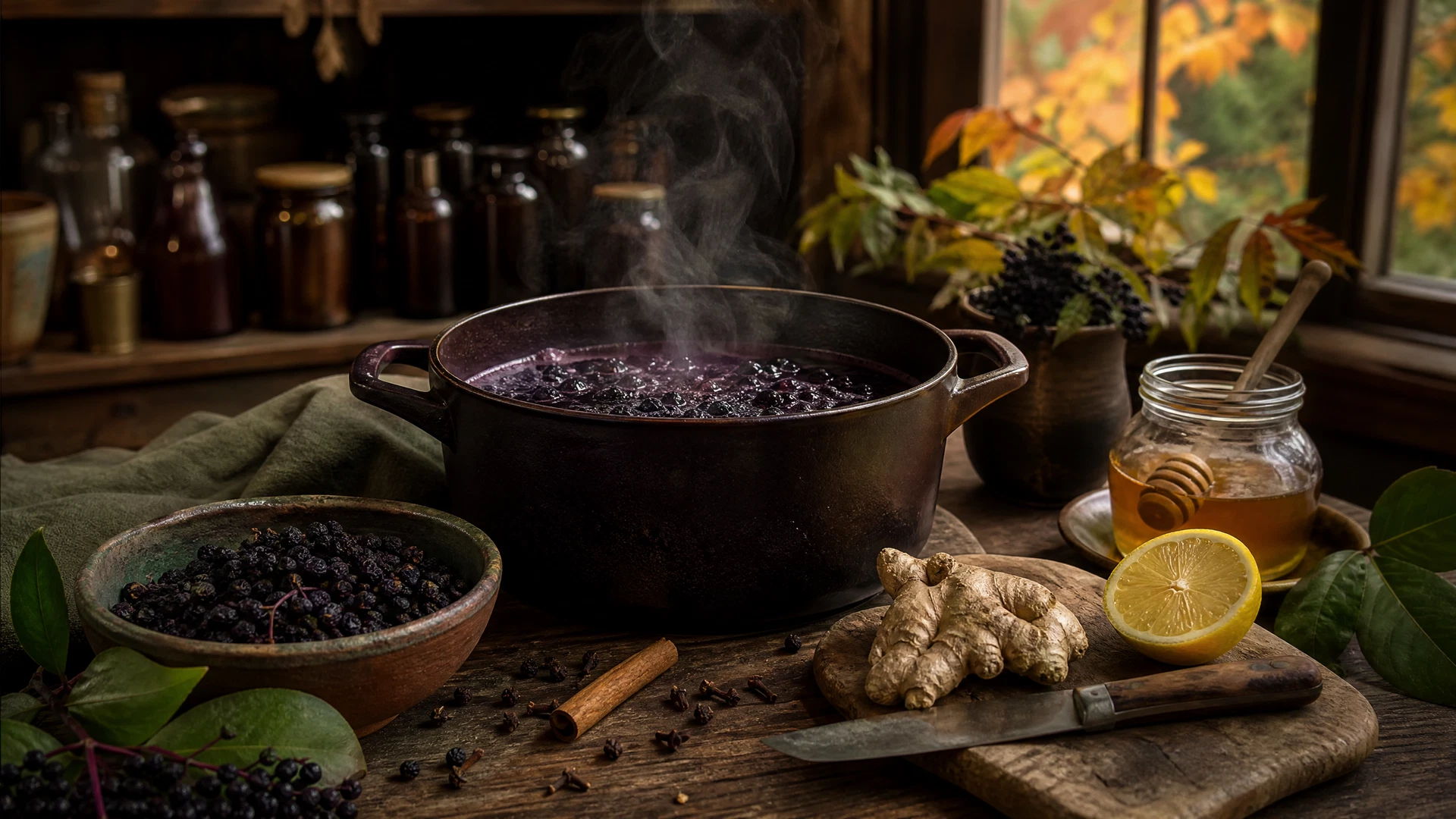
Similarly, elderberry has long been valued for its deep, dark medicine. A proper elderberry tonic recipe is not a quick fix; it is a daily ritual of nourishment. The berries are rich and complex, traditionally used to support the body's natural defenses. We simmer them down, often with warming spices like cinnamon, clove, and ginger, creating a thick, sweet syrup that feels like a protective cloak against the cold. Having these preparations ready on the shelf means that when the first scratchy throat appears, you are not rushing to the store in a panic. You are simply opening the cupboard.
When we talk about immune support herbs, we must clearly distinguish between those that stimulate and those that modulate. Stimulants, like echinacea, certainly have their place in the herbal apothecary. They are what herbalists reach for at the very first sign of a chill, a short-term intervention to wake the body up and demand attention. But they are not meant for daily, long-term use.
Crucially, immune stimulants are a poor fit for anyone navigating autoimmune conditions or taking immunosuppressant medication. If your body is already attacking itself, the last thing it needs is a stimulant pushing it further into overdrive. This is where the nuance of traditional practice is so vital. We must listen to what the body is actually asking for, rather than forcing it into a state of high alert.
Instead of stimulation, we look to the modulators. These are the herbs that teach the body balance. Reishi, the great grounding mushroom, is a master of modulation. It does not push or pull; it simply centers. It has been valued for centuries for its ability to bring a quiet strength to the system. Ashwagandha offers a similar kind of steadying support, helping the body adapt to the stress of the changing season without burning out its reserves. And nettle, though often thought of as a spring tonic, provides the deep mineral nourishment that the body craves when the days grow short and the fresh greens of summer are gone. A nervous system reset broth rich in these grounding elements is often exactly what the depleted body needs to find its footing again.
Winter is not a time for endless output. It is a time for drawing inward, for resting, for letting the soil lie fallow. When we try to push through the dark months with the exact same energy and expectations we had in the summer, we deplete ourselves at the deepest level. The herbs we reach for now are not meant to override that natural rhythm. They are meant to support it.
They remind us that resilience is not about never getting sick. Getting sick is a normal part of being human. True resilience is about having the resources to recover when we do fall ill. It is about trusting the body's innate wisdom and giving it the tools it needs to do its work efficiently and completely.
So we chop the garlic. We simmer the berries. We strain the roots. We pull up a chair and wait for the frost, knowing that the earth already made the medicine, and we have already brought it inside. We do not need to fight the winter; we only need to be ready for it.
Start here
elixirsA heavy blanket for the nervous system, crafted for the woman who falls asleep easily but wakes at 3 AM. Earthy reishi and potent valerian anchor this deeply grounding, slightly bitter cocoa.
 broths
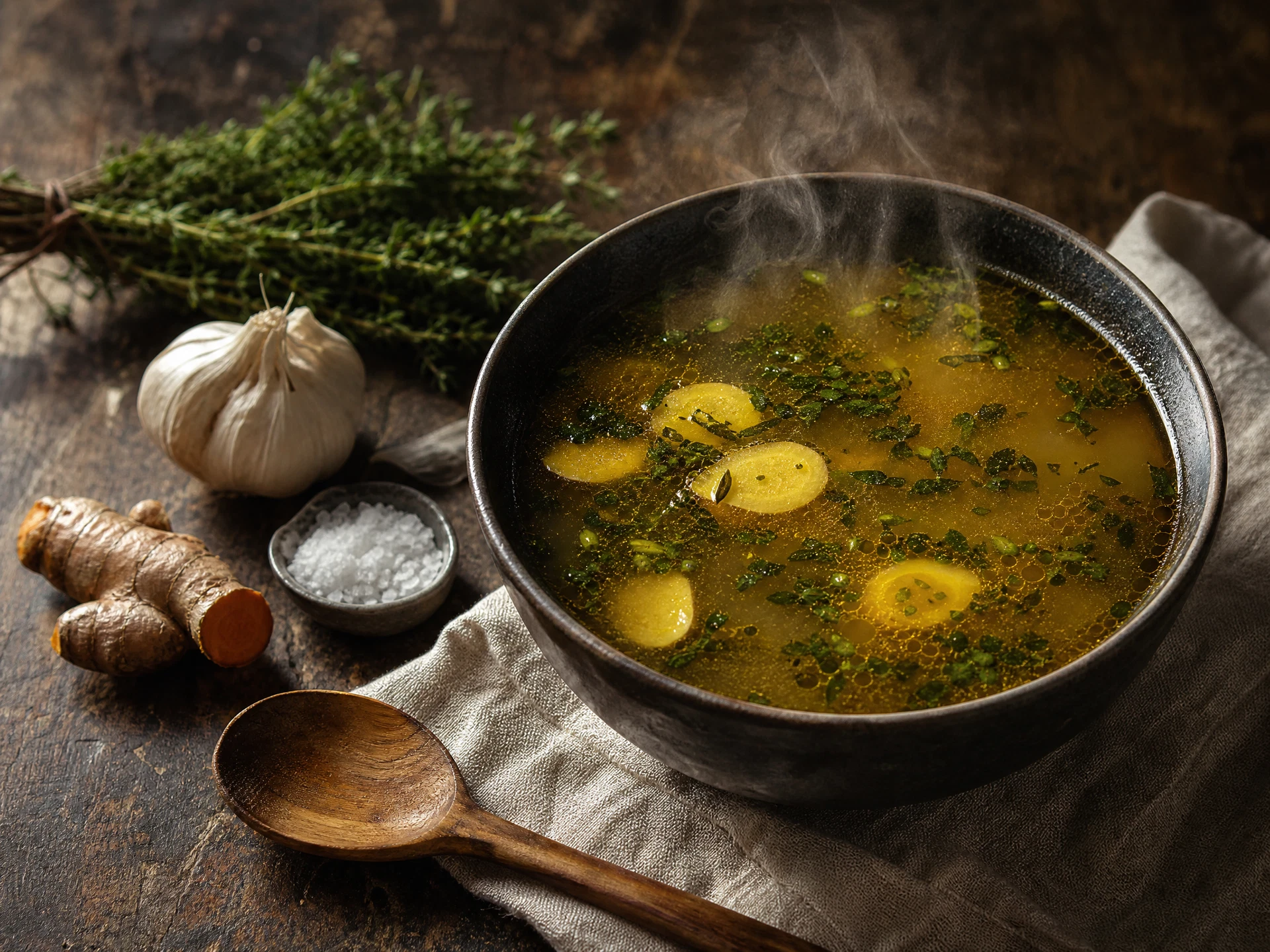
A warm, golden cup of resilience for the days when you have given too much of yourself away. Built on a foundation of rich broth and fortified with grounding roots, this savory tonic is a quiet permission to be cared for.
 tonics
A fierce, warming infusion of roots and aromatics to wake up the blood when the seasons turn. This traditional folk remedy is a four-week commitment to your winter vitality, packing the heat of horseradish, ginger, and garlic into a sharp, sweet vinegar base. Keep it in the pantry for the days when the cold settles deep into your bones.
 tonics
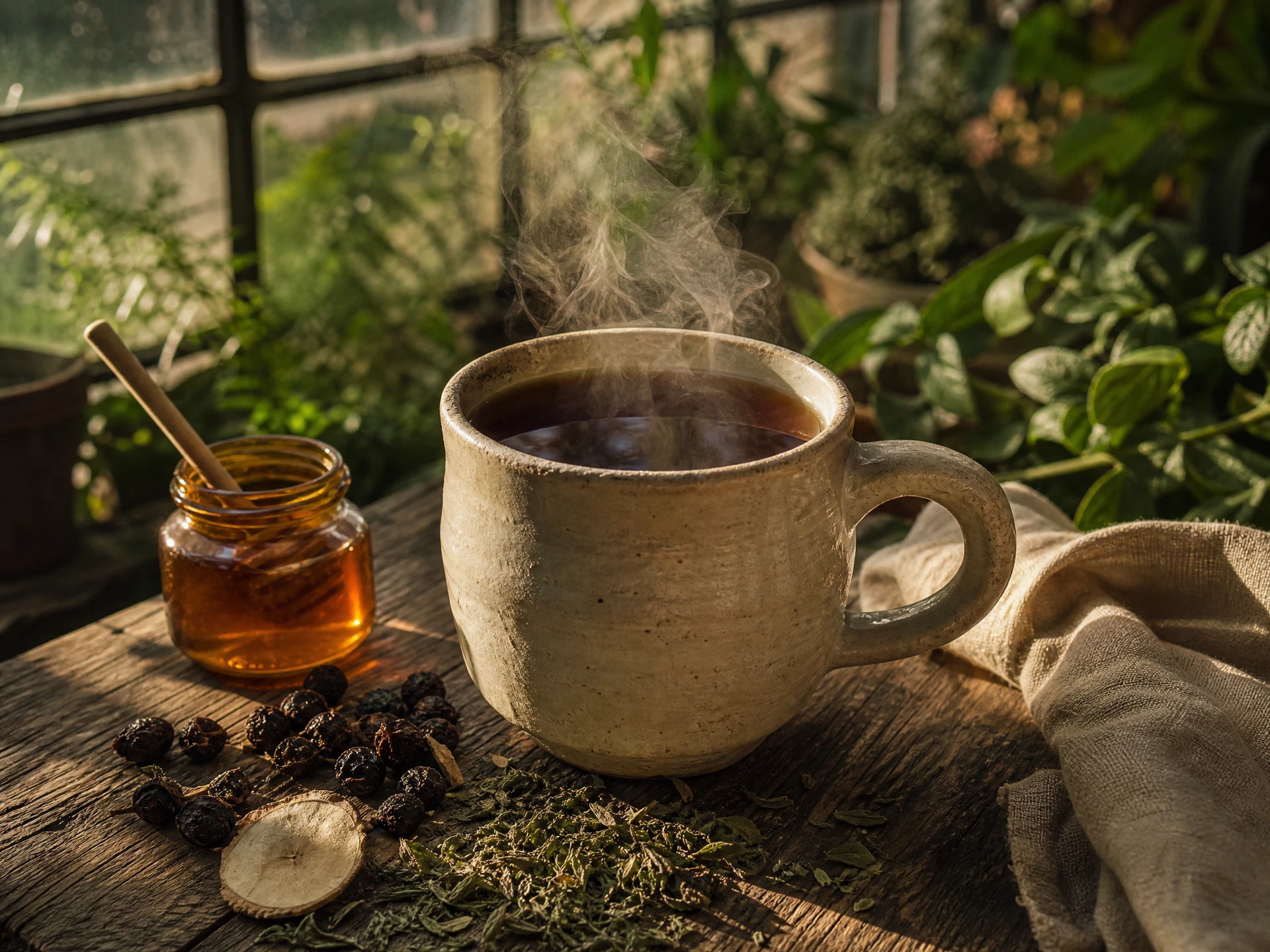
A deeply concentrated, elderberry syrup-style decoction for the season when everyone around you is coughing. Simmered with warming roots and raw honey, it is a fiercely protective shield against the winter wind.
 teas
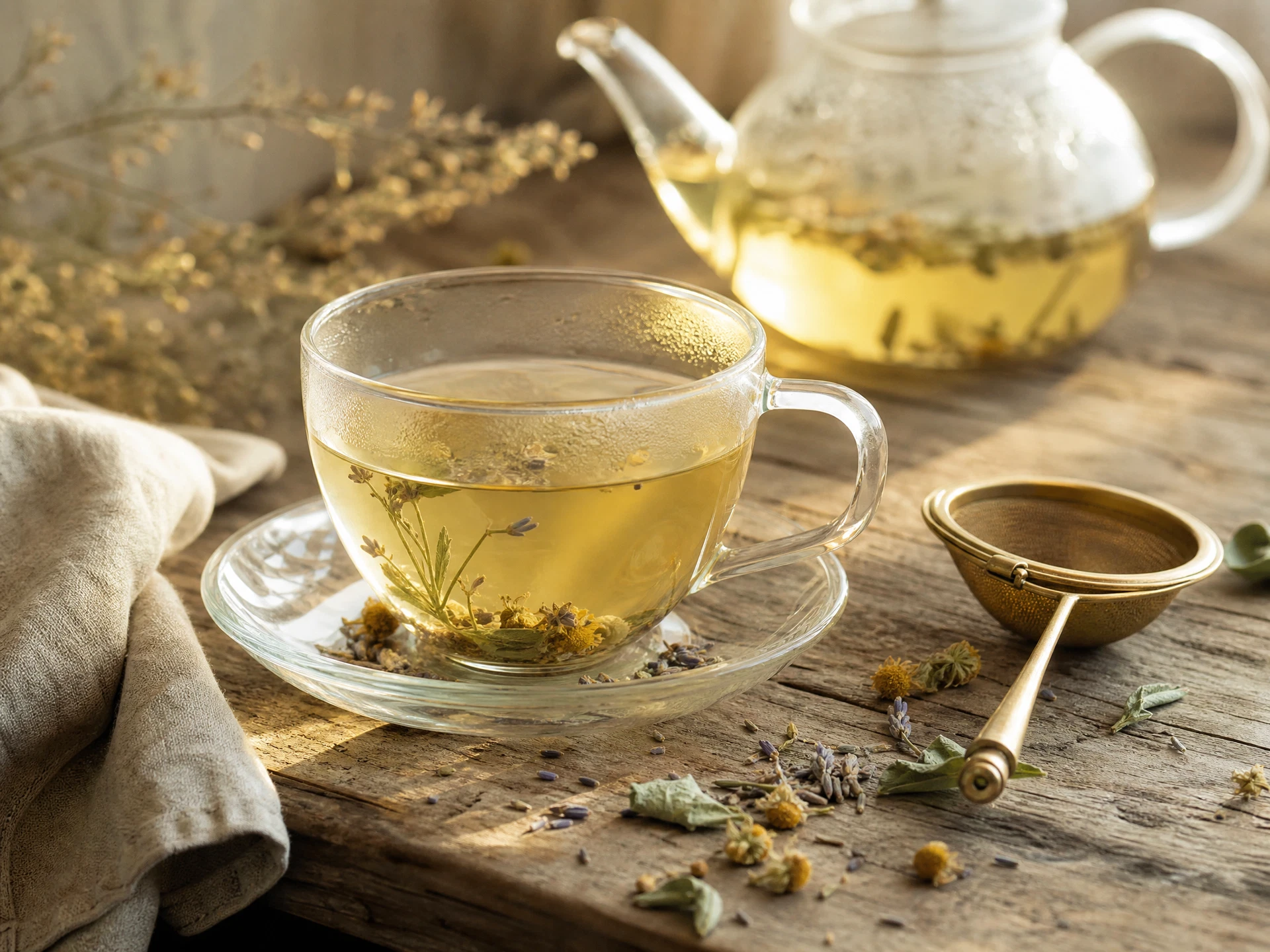
teasA dark, mineral-rich overnight infusion for the woman who is tired in a way sleep does not fix. This deep green tonic pulls the strength of the earth into your cup, offering profound nourishment when you feel hollowed out.
Know your plants
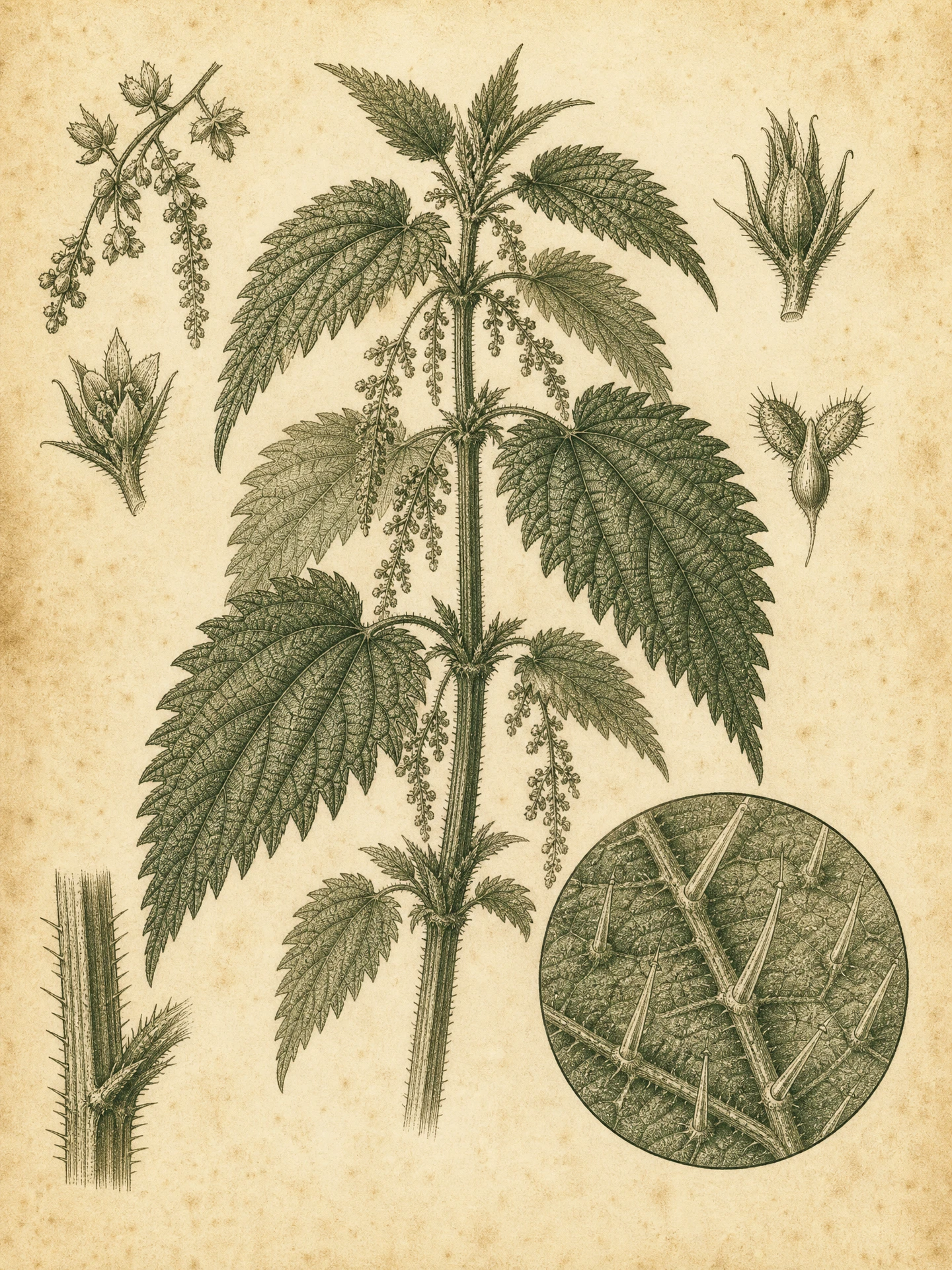
Urtica dioica
The least glamorous and most useful herb in the apothecary. A deeply nourishing, mineral-rich tonic traditionally used to replenish energy, support healthy hair and skin, and rebuild the body from the ground up.
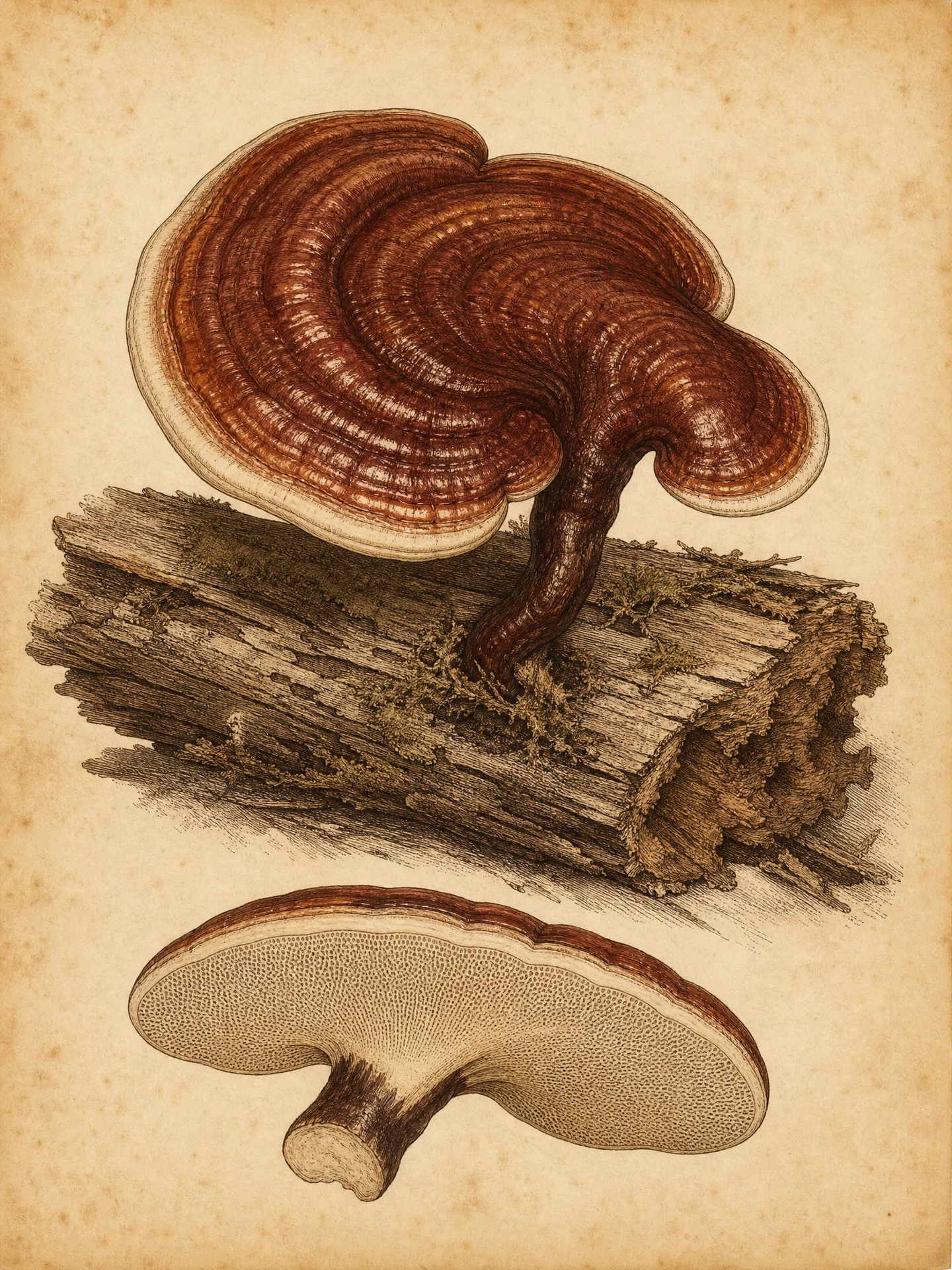
Ganoderma lucidum
Known as the mushroom of immortality, this grounding adaptogen has been revered for centuries to quiet the mind and build deep stress resilience. It is the quiet anchor in the storm, offering a slow, steady nourishment for the woman who is tired but wired.
Read further
seasonal
The light goes amber, the air turns crisp, and the apothecary shifts to roots and berries. Here is what we are brewing to meet the season.
7 minute read

lifestyle
An enormous amount of household plant knowledge lived in women's hands and was passed down in kitchens. We explore the profound wisdom of folk herbalism, what was lost to modern medicine, and how you can start the chain again.
8 minute read
From our shelf
Mountain Rose Herbs
Reishi needs long, hot extraction to give up its good compounds — powder handles that better than slices. Bitter, woody, and worth it.
Herbal Goodness
When you want the mushroom family rather than one member of it. Blends cleanly into broth.
Coming, eventually
The Shield is a modulating autumn and winter blend, put up in advance rather than in a panic. A steadying companion for the darker months, it brings quiet strength when the season turns.