tonic
Nettle
Urtica dioica
The least glamorous and most useful herb in the apothecary. A deeply nourishing, mineral-rich tonic traditionally used to replenish energy, support healthy hair and skin, and rebuild the body from the ground up.
Traditionally reached for
Where it comes from
Folklore & History
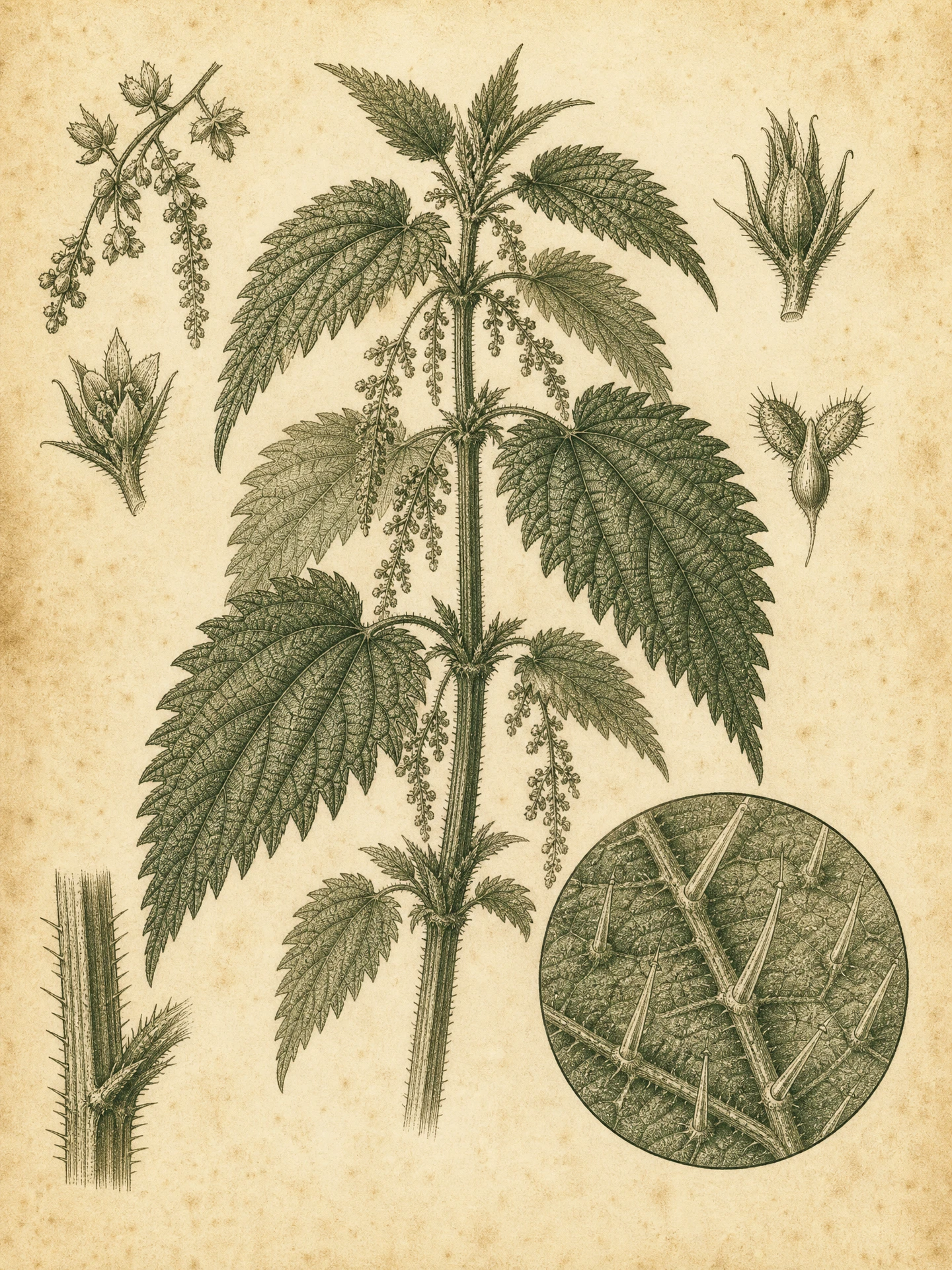
Nettle is the weed that stings. It is the plant that demands your attention, growing in thick, defiant patches in disturbed ground, along the edges of old barnyards, and in the forgotten corners of gardens everywhere in the temperate world. It is a plant that insists on being noticed, armed with tiny, hollow hairs that deliver a sharp, burning reminder of its presence to anyone who brushes past it carelessly. Yet, this fierce exterior guards one of the most deeply nourishing plants the earth has ever offered us.
For thousands of years, women have understood that the sting is merely a boundary, a test of respect. Once you know how to approach it, nettle yields its gifts generously. The small, quiet joy of working with nettle is discovering that the simple acts of cooking or drying disarm the sting completely, transforming a hostile weed into a profound source of sustenance. Across Europe, it has long been gathered as the very first green of spring, a vital, mineral-rich tonic to wake the body up after the long, heavy months of winter. It was the wild food that brought color back to pale cheeks and strength back to tired limbs.
But nettle’s history is not just one of nourishment; it is a story of resilience and utility. The strong, fibrous stalks of the nettle plant have been spun into cloth for millennia. In Bronze Age burials, archaeologists have found remnants of nettle fabric, woven with care and meant to last into eternity. Thousands of years later, during the First World War, when cotton and flax were scarce, nettle was once again harvested by the ton to weave the sturdy cloth needed for uniforms and supplies. It is a plant that steps in when times are hard, offering whatever is needed—whether that is food, medicine, or the very clothes on our backs.
To know nettle is to know a plant that does not ask to be cultivated or coddled. It thrives where the earth has been turned over, where human hands have left their mark and moved on. It is the wild, untamed grandmother of the herbal world, offering deep, foundational nourishment to anyone willing to put on a pair of gloves and gather it. In folk practice, it is the herb you reach for when you are depleted, when you need to rebuild yourself from the ground up. It is not glamorous, but it is steadfast, a reminder that the most potent medicine often grows right outside our doors, waiting for us to remember how to use it.
In plain language
What It Actually Does
Nettle is, without a doubt, the least glamorous herb we talk about. It does not have the exotic allure of adaptogens from distant mountains, nor does it boast the delicate, perfumed blossoms of the more romantic botanicals. But it is, quite possibly, the most useful plant on this entire site. What nettle does is simple, profound, and entirely foundational: it nourishes.
In traditional herbalism, nettle is considered a supreme tonic, a plant that builds and restores the body over time. It is traditionally used to support the body’s mineral reserves, acting as a deep well of nutrition. Herbalists have long reached for nettle when a woman feels entirely wrung out—when her energy is frayed, her hair feels thin, and her skin has lost its vitality. The tradition holds that nettle provides a dense, easily assimilated source of vitamins and minerals, particularly iron, calcium, and magnesium. It is the herb you turn to when you need to replenish what the months or years have taken out of you, offering a slow, steady return to yourself.
Many women find that incorporating nettle into their daily rhythm brings a subtle but undeniable shift in their energy. It is not the jagged, fleeting rush of caffeine, but the quiet, sustained stamina that comes from being truly nourished at a cellular level. It is also deeply valued in folk practice for supporting healthy hair and skin, as the rich mineral content provides the building blocks the body needs to repair and thrive. For those seeking cycle support, nettle is often woven into daily routines to help replenish the body after the bleed, offering a gentle, grounding strength.
But here is the honest truth: nettle is a food, a deeply nourishing herb, but it is not a medical treatment. If you are exhausted in a way that sleep does not fix, and you suspect you are truly deficient in iron, nettle does not replace an actual iron panel at your doctor’s office. Do not self-diagnose anemia. Herbs are wonderful allies, but they work best when you have a clear, honest picture of what is happening in your body. Nettle will support you, it will offer you its rich, dark green vitality, but it is meant to work alongside your own awareness and care, not as a substitute for knowing your numbers. It is the slow, steady work of rebuilding, one cup at a time.
How to use it
Preparation
If there is one practical lesson to take away from this entire library, let it be this: a long, overnight infusion of nettle is a completely different thing from a five-minute tea bag. When you drop a pinch of nettle into hot water for a few minutes, you get a pleasant, mildly grassy beverage. But when you steep it long and strong, you extract the deep, dark, mineral-rich magic that herbalists have relied on for centuries.
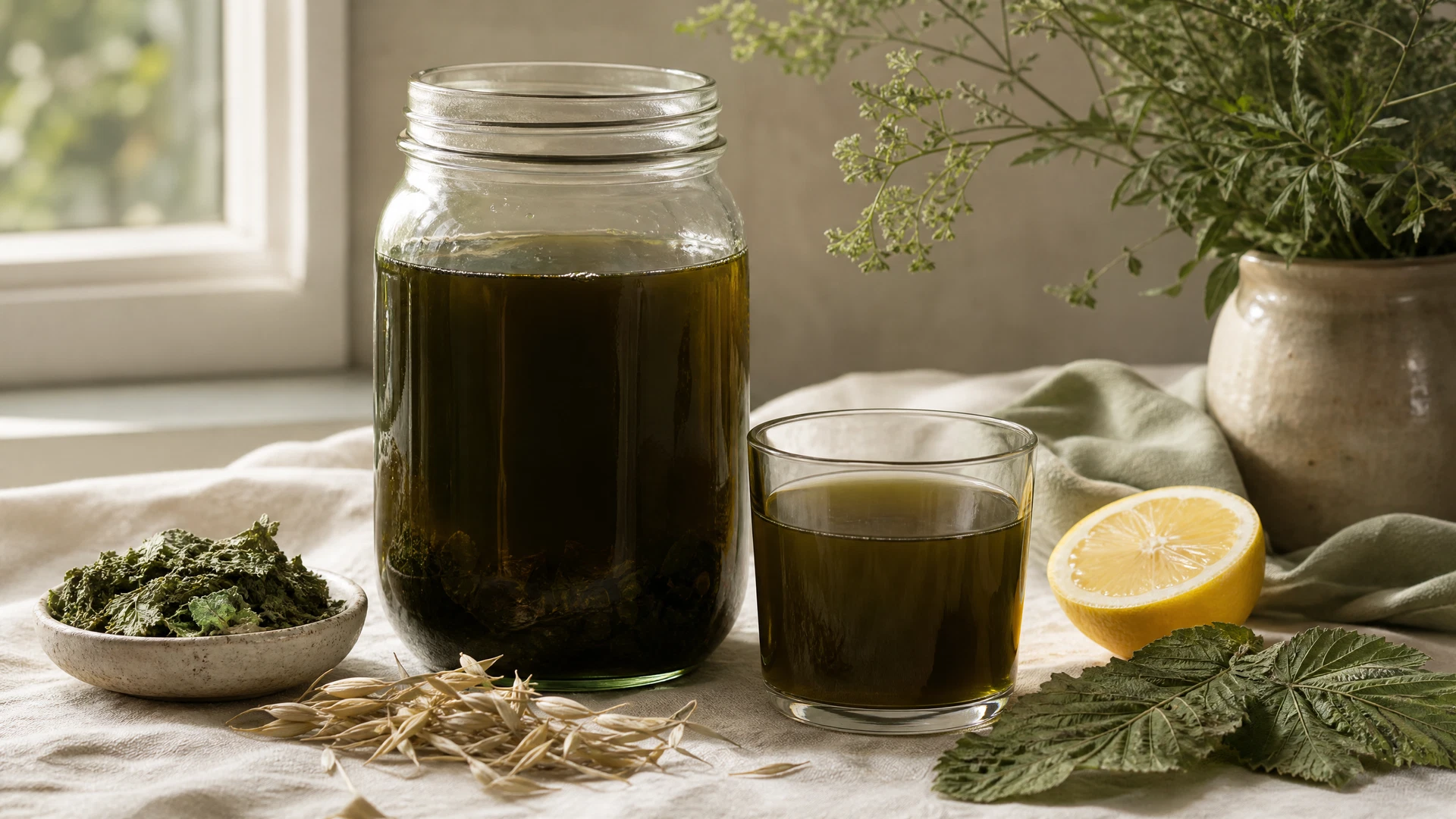
To make a proper nourishing infusion, you need volume and time. Take a quarter cup of dried nettle leaf—it should look vibrant green and smell like fresh, sweet hay—and place it in a quart-sized glass jar. Pour boiling water over the leaves, filling the jar to the top. Cap it tightly and walk away. Let it steep for four to eight hours, or simply leave it on your counter overnight. In the morning, strain the dark, almost black-green liquid, pressing every last drop from the leaves. This is your infusion. It is earthy, rich, and deeply savory. You can drink it over ice, warm it gently, or even use it as a broth base for soups.
This is the kind of preparation you want to drink regularly, perhaps a few times a week, to truly feel its grounding effects. It pairs beautifully with red raspberry leaf for a comprehensive tonic that supports the whole woman. If you are looking for a place to start, our Iron Woman Nettle Infusion is a wonderful ritual to build into your week.
When buying nettle, look for dried leaf that has retained its bright, lively color. If it looks brown or smells like dust, leave it on the shelf. Store your dried herbs in a cool, dark place, in a glass jar with a tight-fitting lid, to protect their vitality. And if you are ever lucky enough to harvest fresh nettle yourself, remember the golden rule: always wear thick gloves. The sting is real, but as soon as you dry the leaves or drop them into boiling water, the bite vanishes entirely, leaving only the nourishment behind.
Who Should Be Careful
Pregnancy & Nursing
Nettle is generally considered a deeply nourishing tonic and is commonly used by women throughout their childbearing years, but we always recommend checking in with your practitioner or midwife before making it a daily habit.
Nettle is a deeply nourishing food, but it is also a plant with real, active properties that demand respect. First and foremost, nettle has a genuine diuretic action. It encourages the body to flush fluids, which means it can interact with medications that do the same. If you are taking blood pressure medication, diabetes medication, or lithium, you must be mindful, as nettle can alter how your body processes these drugs.
Because of its high vitamin K content, nettle can also interfere with blood thinners. If you have any kidney conditions, the diuretic nature of this herb means it is not one to experiment with casually. And while nettle is traditionally celebrated for its iron content, we must be clear: do not use herbs to self-diagnose or self-treat anemia. If you are struggling with severe fatigue or suspect an iron deficiency, you need real data. Get an iron panel. Nettle is a wonderful ally for maintaining your mineral reserves, but it does not replace knowing exactly what your body needs.
Finally, a practical note for the foragers: fresh nettle must always be handled with thick gloves. The sting is painful and immediate, though it disappears entirely once the plant is dried or cooked.
As always, you know your body best. If you are navigating a diagnosed condition or taking prescription medications, please bring your practitioner into the conversation before adding a new daily ritual to your life.