tonic
Red Raspberry Leaf
Rubus idaeus
A humble hedgerow leaf that brews into a robust, earthy tea, long revered as the ultimate tonic for the female body. It offers gentle, cumulative nourishment to tone the womb and support the natural rhythms of your cycle.
Traditionally reached for
Where it comes from
Folklore & History
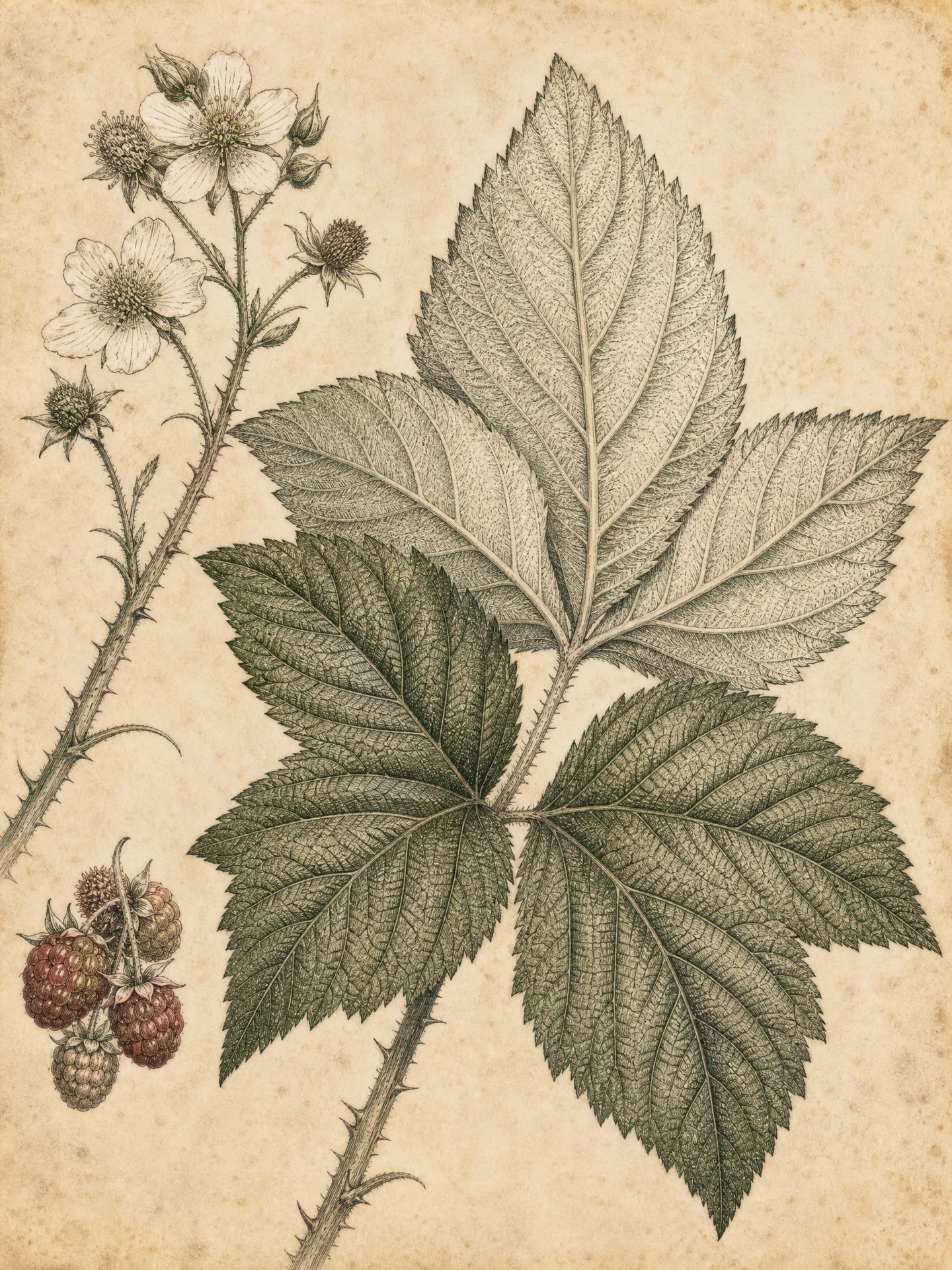
If you walk along the edges of old woods or down a country lane in high summer, you will likely pass the tangled, thorny brambles of Rubus idaeus. Most people stop only for the fruit, staining their fingers with the bright, fragile berries before moving on. But the true magic of the red raspberry plant does not lie in its sweet summer harvest. It lies in the leaves—the quiet, serrated, silver-backed foliage that generations of midwives and village herbalists kept carefully dried in their cupboards.
Red raspberry leaf is perhaps the most widely used women's herb in European folk practice, a staple of the apothecary that has been passed down from mother to daughter for centuries. It is an ordinary plant, humble and unassuming, yet it holds a profound affinity for the female body. The tradition holds that this is the great tonifier, the gentle strengthener of the womb, woven into the daily rhythms of women from menarche through menopause.
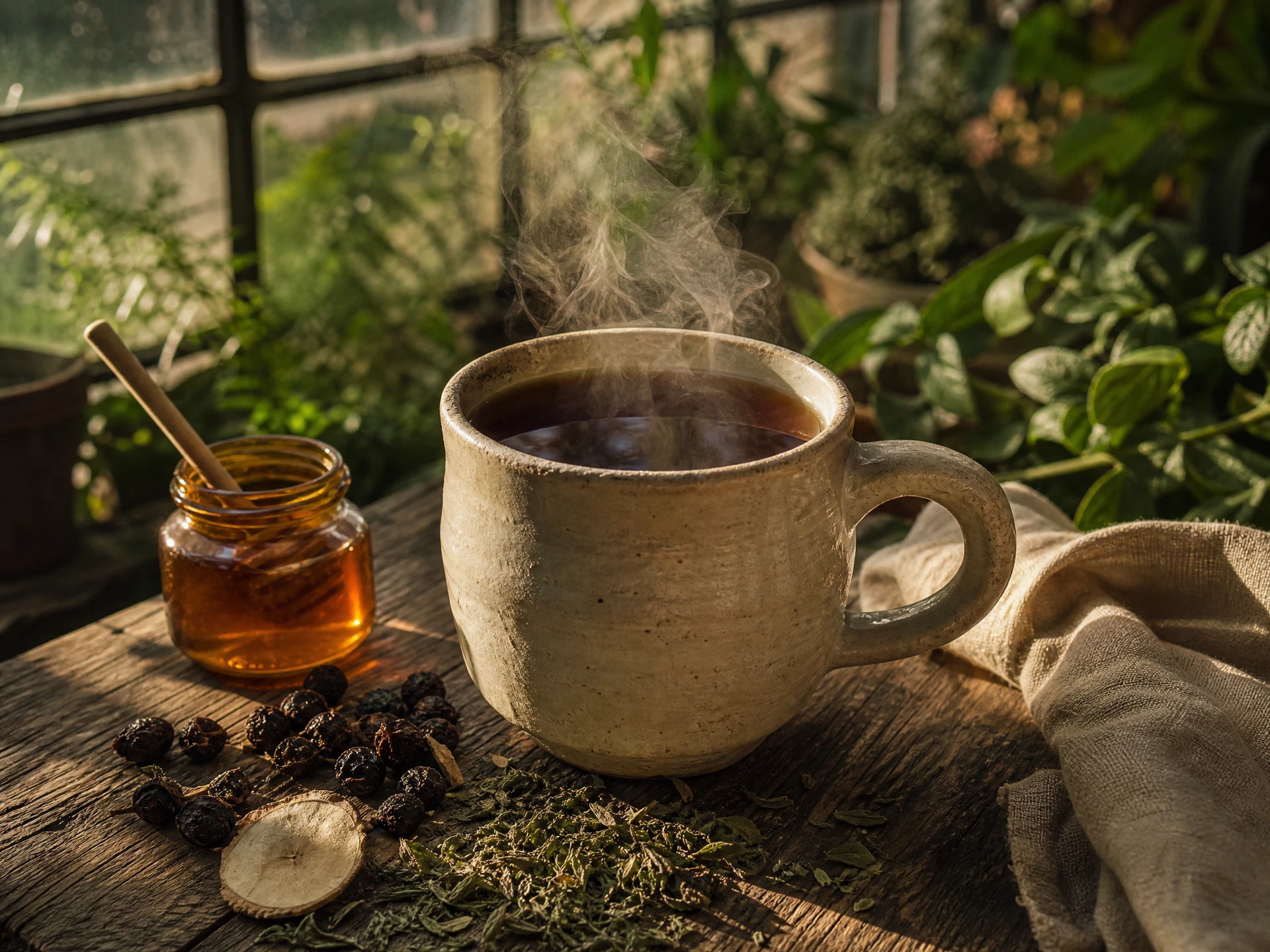
When you first brew a cup of red raspberry leaf, you might expect the tart, fruity sweetness of the berry. Instead, you are met with something entirely different. The infusion is deeply green, earthy, and slightly astringent, tasting much more like a robust black tea than a fruit tisane. It is a grounding flavor, one that feels like drinking in the resilience of the earth itself. This is not a delicate, floral sip; it is a sturdy, nourishing brew that asks you to sit down and take a breath.
Historically, this leaf was gathered in the spring, before the plant poured its energy into flowering and fruiting. Women would dry the leaves on screens in the shade, crumbling them into jars to be used throughout the year. It was the tea offered to young girls stepping into their first cycles, the brew handed to women preparing for childbirth, and the daily tonic for those seeking cycle support in their middle years. It is a plant that does not demand attention, yet it has quietly supported the rhythms of women's lives longer than almost any other herb in the apothecary. The etymology of Rubus simply means red, while idaeus refers to Mount Ida in Asia Minor, where the plant was said to grow abundantly in ancient times. Yet, despite its classical name, it is the ultimate hedgerow medicine—accessible, abundant, and deeply generous.
In plain language
What It Actually Does
When we talk about what red raspberry leaf does in the body, we are talking about the concept of a tonic. In traditional herbalism, a tonic is not a quick fix or a dramatic intervention. It is a slow, steady nourishment—a daily practice of building strength and resilience over time. Red raspberry leaf is the gentlest herb in our collection, making it the absolute best starting place for a woman who is new to herbalism and wants to begin supporting her body naturally.
At its core, this leaf is traditionally understood as a supreme uterine tonic. Herbalists have long reached for it to tone and strengthen the pelvic bowl. Think of it like a gentle workout for the muscles of the uterus. The astringent properties of the leaf are believed to help tighten and tone lax tissues, while simultaneously relaxing tension. This dual action—toning what is loose and relaxing what is tight—is why so many women find it invaluable for hormone balance and easing the heavy, dragging sensations that can accompany a difficult menstrual cycle.
Beyond its affinity for the womb, red raspberry leaf is a profound source of mineral nourishment. It draws up calcium, magnesium, and iron from the soil, offering them to us in a form that the body easily recognizes and absorbs. When you are feeling depleted, when your energy is low and you feel hollowed out by the demands of the month, this herb acts as a deeply restorative infusion. It does not give you the false, jittery energy of caffeine; instead, it slowly refills your well.
Here is the honest truth about red raspberry leaf: it is not dramatic. You will not drink one cup and suddenly feel like a new woman. Its work is quiet, cumulative, and deeply nourishing. It requires consistency and patience. Furthermore, while it is famously known as the classic pregnancy tea, timing matters immensely. In folk practice, it is often used to prepare the womb for labor, but its toning action means that its use during pregnancy—particularly in the delicate first trimester—should always be discussed with your midwife or care provider. It is a beautiful, supportive plant, but it is one that asks you to listen to your body and seek wise counsel when you are carrying new life.
How to use it
Preparation
Because red raspberry leaf is so rich in minerals and its beneficial compounds are easily extracted in water, it is best prepared as a long, strong infusion rather than a simmered decoction. While you can find it in tinctures or capsules, you miss out on the deep hydration and the ritual of the tea, which is half the magic.
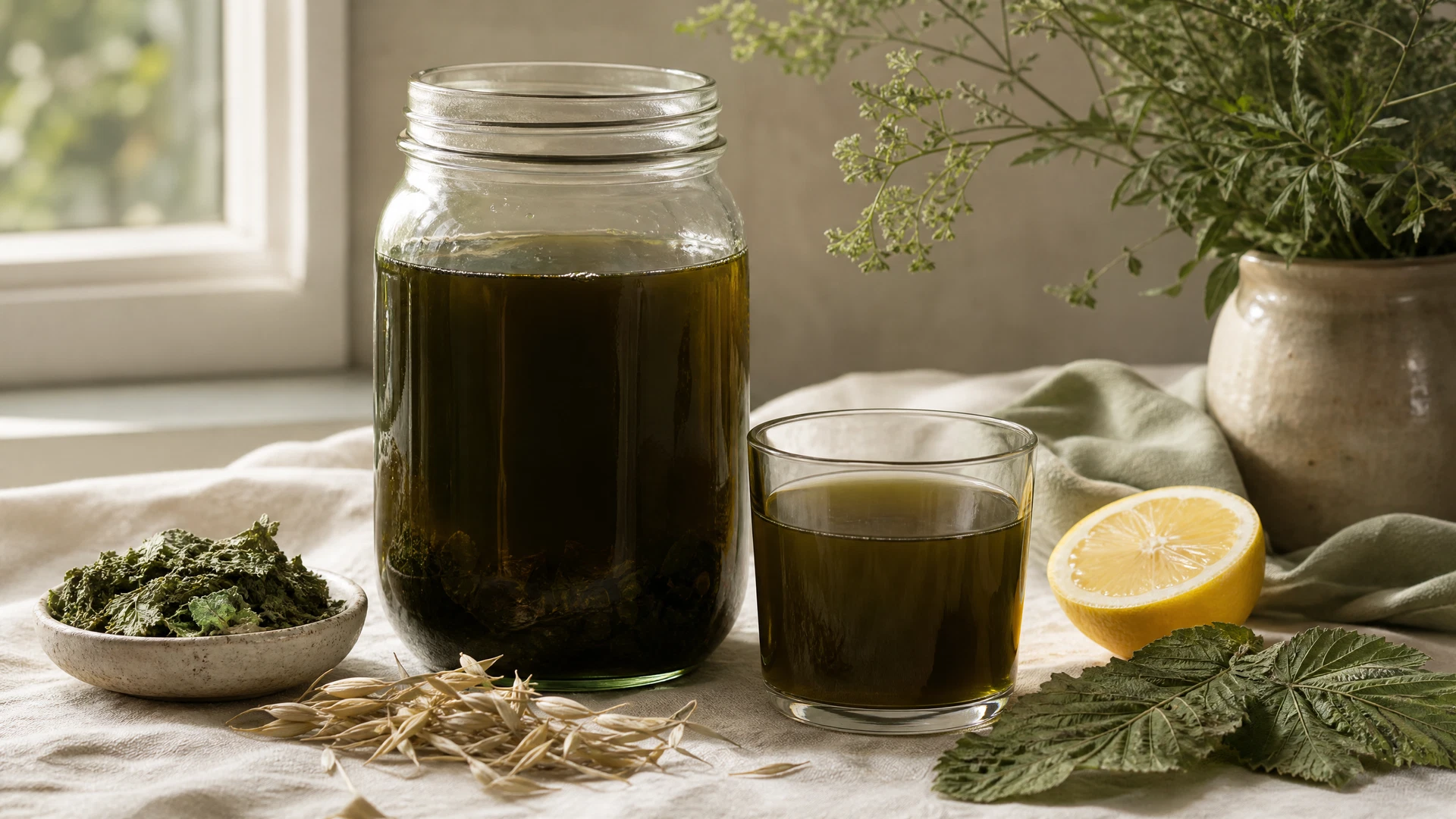
To make a proper traditional infusion, you want to use a generous amount of the dried herb. A standard starting point is one heaping tablespoon of dried leaf per cup of hot water. Pour boiling water over the leaves, cover your mug or jar tightly to keep the volatile oils from escaping, and let it steep for at least fifteen to twenty minutes. For a truly medicinal, mineral-rich brew, many herbalists prefer to steep it for several hours or even overnight. You can strain it in the morning and drink it at room temperature or gently warmed.
This is a daily herb. You can drink it at any time of day, as it contains no caffeine and will not disrupt your rest. For general cycle support, many women enjoy a cup or two daily throughout the entire month. If you are using it specifically to ease menstrual cramping, you might begin drinking it more heavily in the week leading up to your bleed. Because it is a slow-building tonic, give it at least two to three full menstrual cycles before you expect to notice a shift in how your body feels.
When purchasing red raspberry leaf, look for dried material that is still vibrantly green and smells faintly of fresh hay and black tea. If it looks brown, dusty, or smells like nothing at all, it has sat on the shelf too long and lost its vitality. Store your dried leaves in an airtight glass jar in a cool, dark cupboard, away from direct sunlight and moisture.
Red raspberry leaf plays beautifully with other herbs. It is the grounding base in our moon-cycle-tonic, and it pairs exceptionally well with nettle for a deeply restorative, iron-rich brew. Whether you drink it alone or blended, let the act of preparing it be a quiet moment of returning to yourself.
Who Should Be Careful
Pregnancy & Nursing
While traditionally celebrated as the classic pregnancy tea, its active toning effect means timing is everything. Please discuss the right time to introduce this herb with your midwife.
Red raspberry leaf is wonderfully gentle, but even the mildest herbs ask for our respect and awareness. Because it is a mild diuretic, you may find yourself needing to visit the bathroom a bit more often, so be sure you are drinking plenty of plain water alongside your tea.
Its astringency—the very thing that makes it so good at toning tissues—comes from tannins that can interfere with how your body absorbs iron from supplements or meals. If you are taking an iron supplement, simply enjoy your red raspberry leaf tea a couple of hours before or after your dose, rather than washing your pill down with it.
If you have a history of hormone-sensitive conditions, you should be mindful. While a casual cup of tea is generally fine, consuming large, therapeutic amounts of this herb might not be the right path for your body.
Finally, we must talk about pregnancy. While this is the most famous pregnancy herb in the apothecary, timing is everything. Because of its active toning effect on the uterus, traditional practice often suggests avoiding it during the fragile first trimester. Please, before you brew a pot while pregnant, have a conversation with your midwife or doctor to ensure it is the right time for you. We always want you to feel safe and supported, so please bring your own practitioner into the loop when adding new herbs to your daily rhythm.