You are sitting in a paper gown, listening to a doctor tell you that your labs are perfectly normal. But you do not feel normal. You feel like someone has rewired the house while you were sleeping. The anxiety that arrived out of nowhere and sits heavy on your chest. The sudden, white-hot rage over a dropped spoon. The 3am waking, staring at the ceiling while your mind races through a decade of regrets. The joint aches that make you feel eighty, the dry eyes, the brain fog that swallows words you used to know, the sudden realization that your body no longer tolerates a single glass of wine.
Nobody warned you about this part. They told you about hot flashes and periods stopping, but they didn't tell you about the decade before that happens. They didn't tell you that perimenopause can begin in your late thirties, long before anyone thinks to mention the word. And they certainly didn't tell you that because this phase is defined by wild, unpredictable fluctuation rather than a steady decline, a blood test taken on a Tuesday might look entirely fine, even while your lived experience on Wednesday feels like a storm.
This is the profound validation you deserve to hear: you are not losing your mind. Your body is simply entering a profound transition, a shedding of one season and the slow, sometimes turbulent arrival of another. It is a time that demands a different kind of care, a deeper listening, and a willingness to reach for the tools that women have quietly passed down to one another for centuries.
The Tradition of the Transition
In the quiet corners of herbalism, the years leading up to menopause have never been viewed as a disease to be cured, but as a threshold to be crossed. The earth already made the medicine for this crossing. We just help you find it. Herbalists have long reached for specific plants not to force the body back into its youth, but to support it through the turbulence of change. These are the herbs your body already knows, the roots and leaves that offer a steady hand when the ground feels unsteady.
When we talk about herbs for perimenopause, we are talking about a tradition of nourishment. We look to plants that have been valued for their ability to cool the sudden heat, to quiet the racing mind, and to lend resilience to a nervous system that feels frayed at the edges.
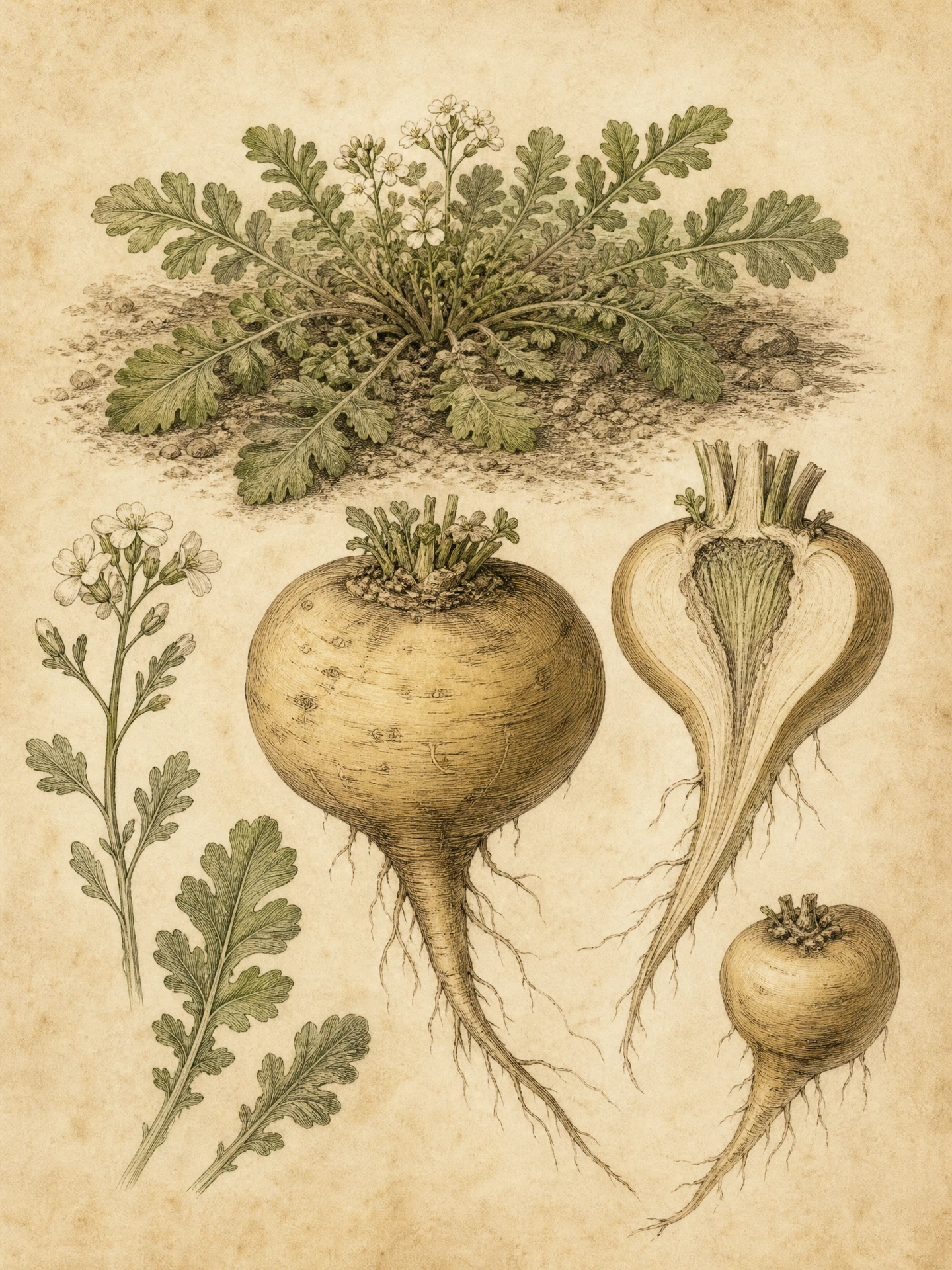
Consider the deep, grounding presence of Maca, a root traditionally used to support energy and vitality when you feel depleted. It is not a stimulant that will leave you crashing, but a slow, steady fire built from the ground up. Or the quiet comfort of Passionflower, which herbalists have long reached for when sleep refuses to come and the mind spins in endless loops. It is the botanical equivalent of a heavy quilt on a cold night.
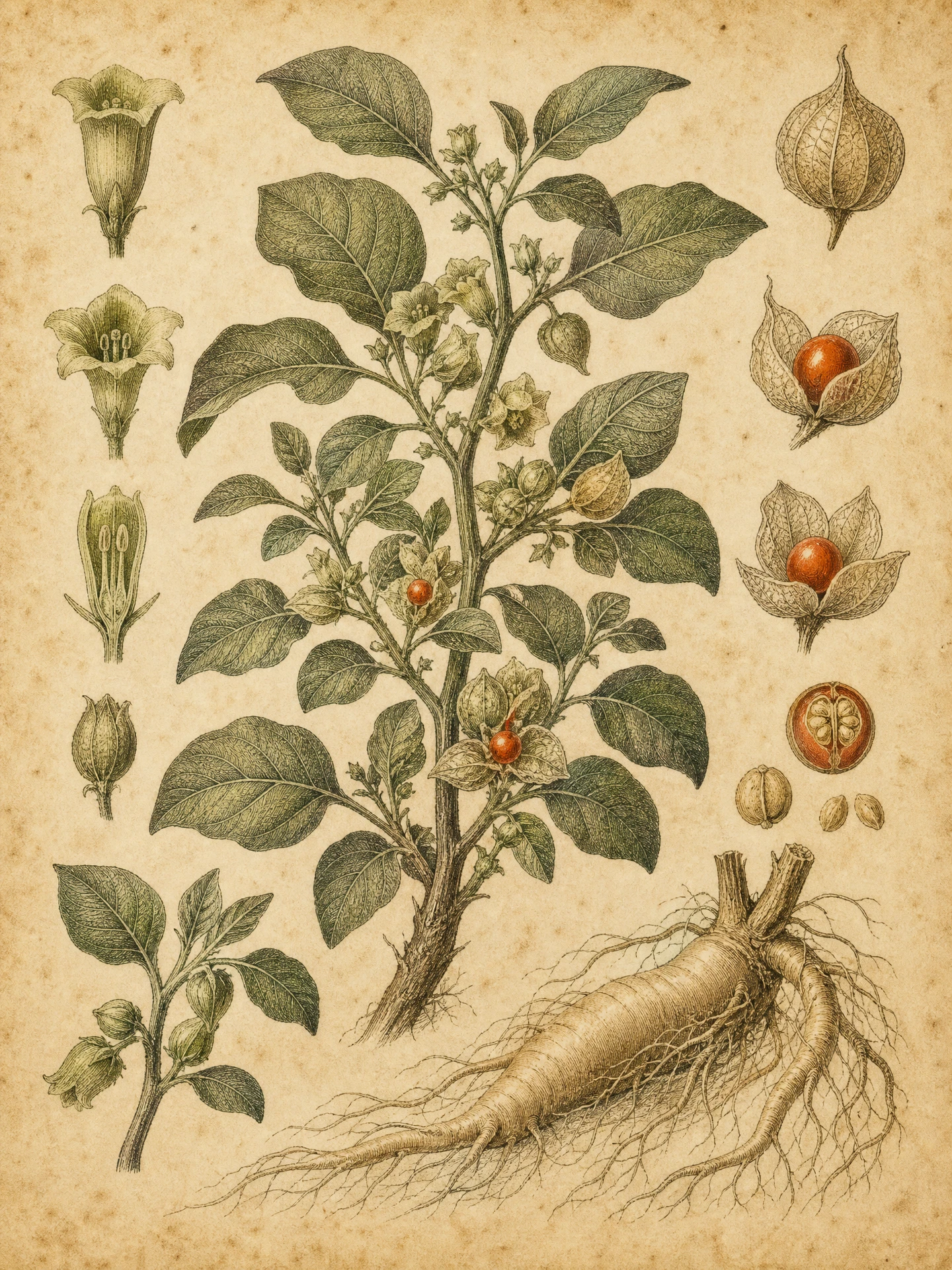
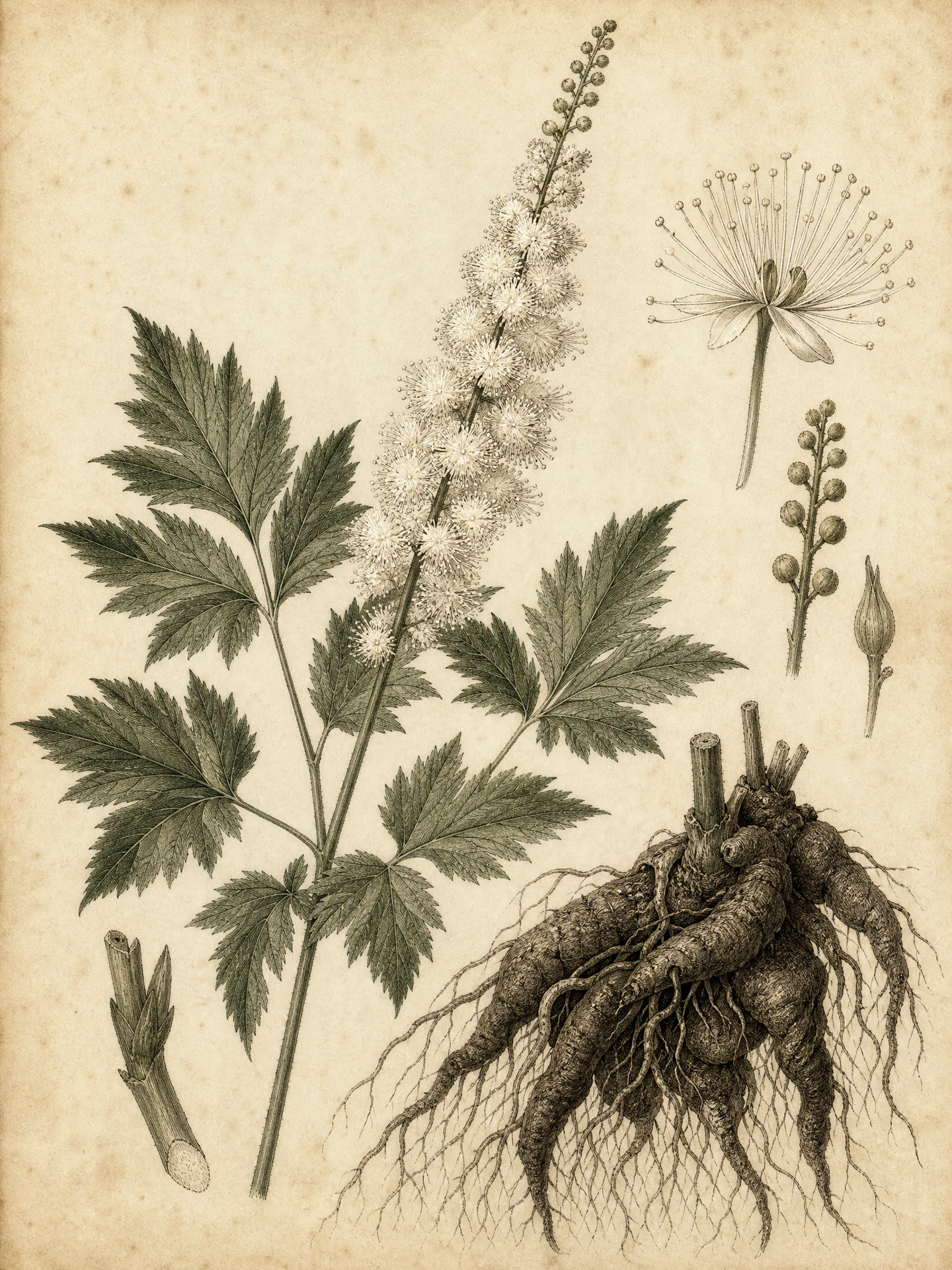
There is Ashwagandha, an adaptogen that many women find helps them weather the sudden storms of stress. It does not erase the demands of your life, but it may help you feel more capable of meeting them without being swept away. We also look to Reishi, the mushroom of immortality, offering a profound, earthy grounding when you feel untethered. And of course, Black Cohosh, a plant with a long history in folk practice for cooling the body and easing the transition, a trusted ally when the internal thermostat seems broken.
These plants are not quick fixes. They are slow medicine, requiring your participation and your patience. They ask you to slow down enough to brew a cup, to inhale the steam, to sit quietly for ten minutes while the water draws the medicine from the leaf.
A Word on the Medical Path
Here is where we must be entirely honest, because that is what you deserve. Herbs are powerful allies, but they are not the only path, nor are they always enough on their own. The wellness world often positions natural remedies in opposition to modern medicine, demanding that you choose a side. We do not believe in that false division.
Hormone therapy is a legitimate, deeply researched option that has given countless women their lives back. If your symptoms are overwhelming, if the anxiety is persistent, or if the physical changes are making your daily life unbearable, we strongly encourage you to involve a clinician. Discussing hormone therapy, getting a full thyroid panel, and exploring all your options is an act of self-advocacy.
Herbs can work beautifully alongside medical care, but they should never be used as a reason to deny yourself the relief that modern medicine can offer. If you are navigating persistent anxiety, severe depression, or physical symptoms that disrupt your ability to function, please bring a trusted doctor into your circle of care. You do not have to earn your wellness through suffering.
Bringing the Herbs Home
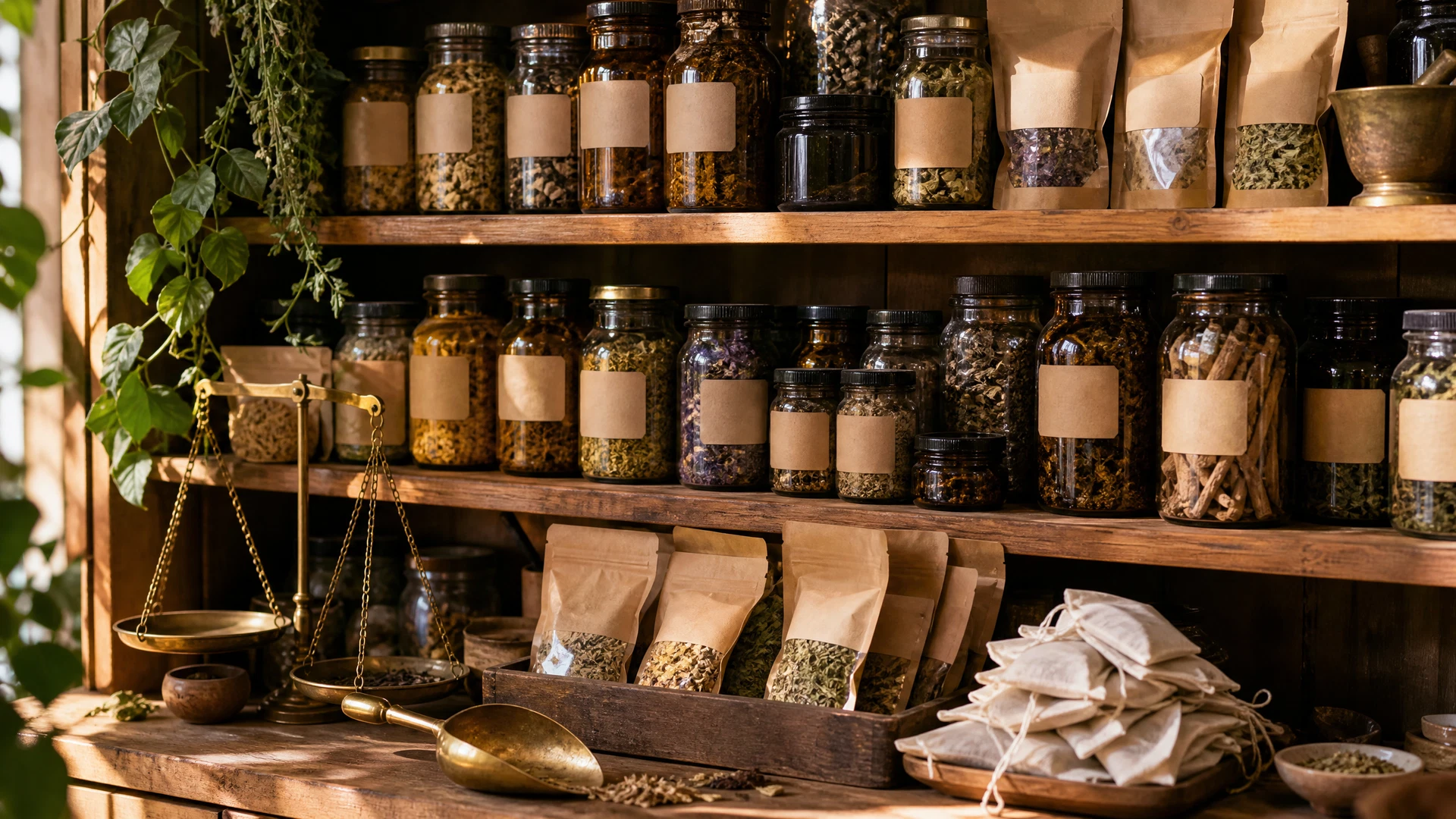
If you are looking to weave these traditions into your days, the kitchen is where the magic happens. It is in the slow, deliberate act of boiling water, of measuring out dried leaves, of giving yourself ten minutes of unbroken peace.
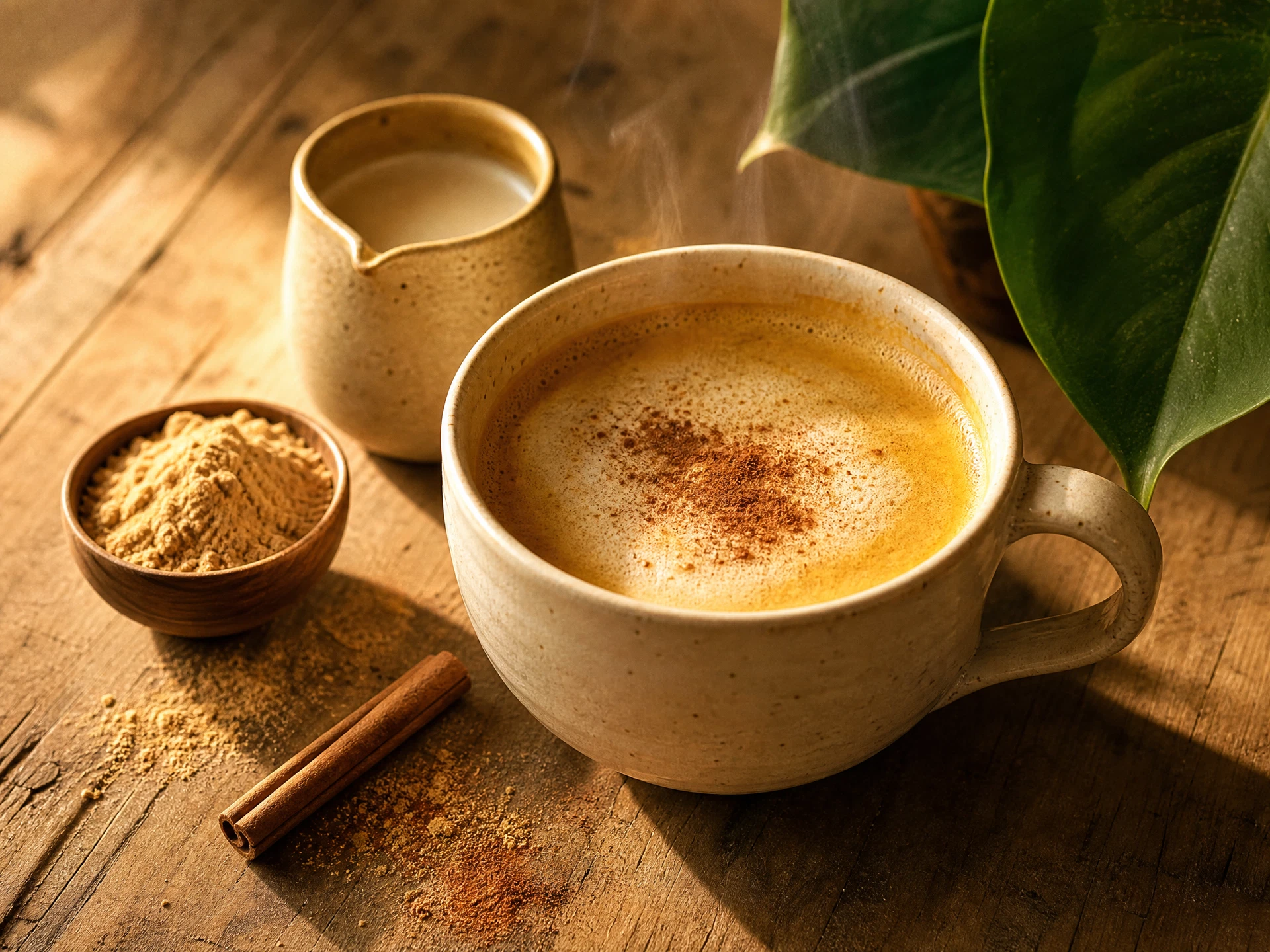
For the mornings when you need to find your footing, the Hormone Reset Latte offers a grounding start, blending the earthy resilience of maca with warming spices. It is a ritual that says, before I give myself to the world, I will give this moment to myself.
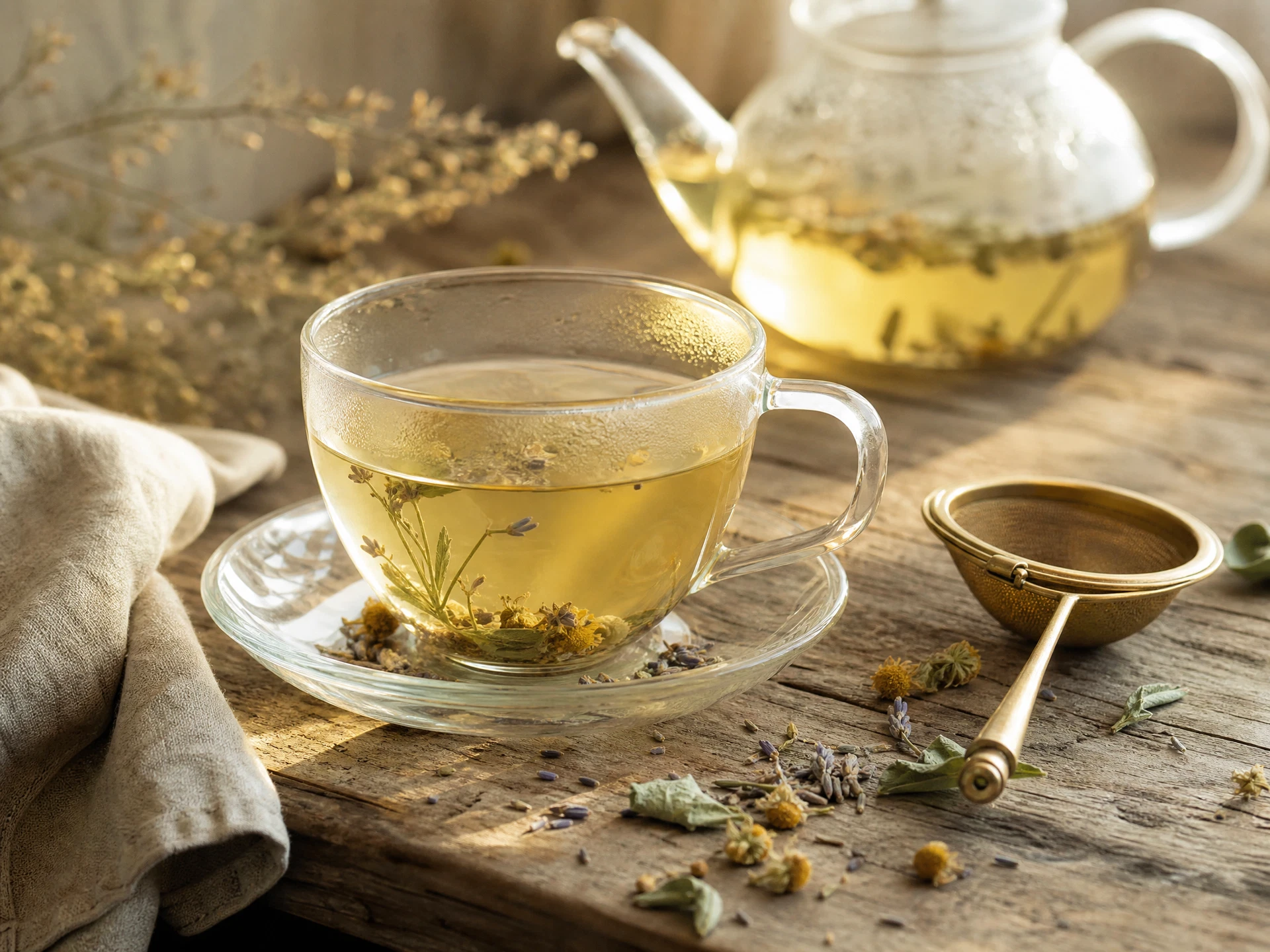
When the afternoon brings a sudden wave of overwhelm, a cup of Perimenopause Peace Tea can be the quiet anchor you need. It is formulated for the exact moment you feel the tension rising in your shoulders.
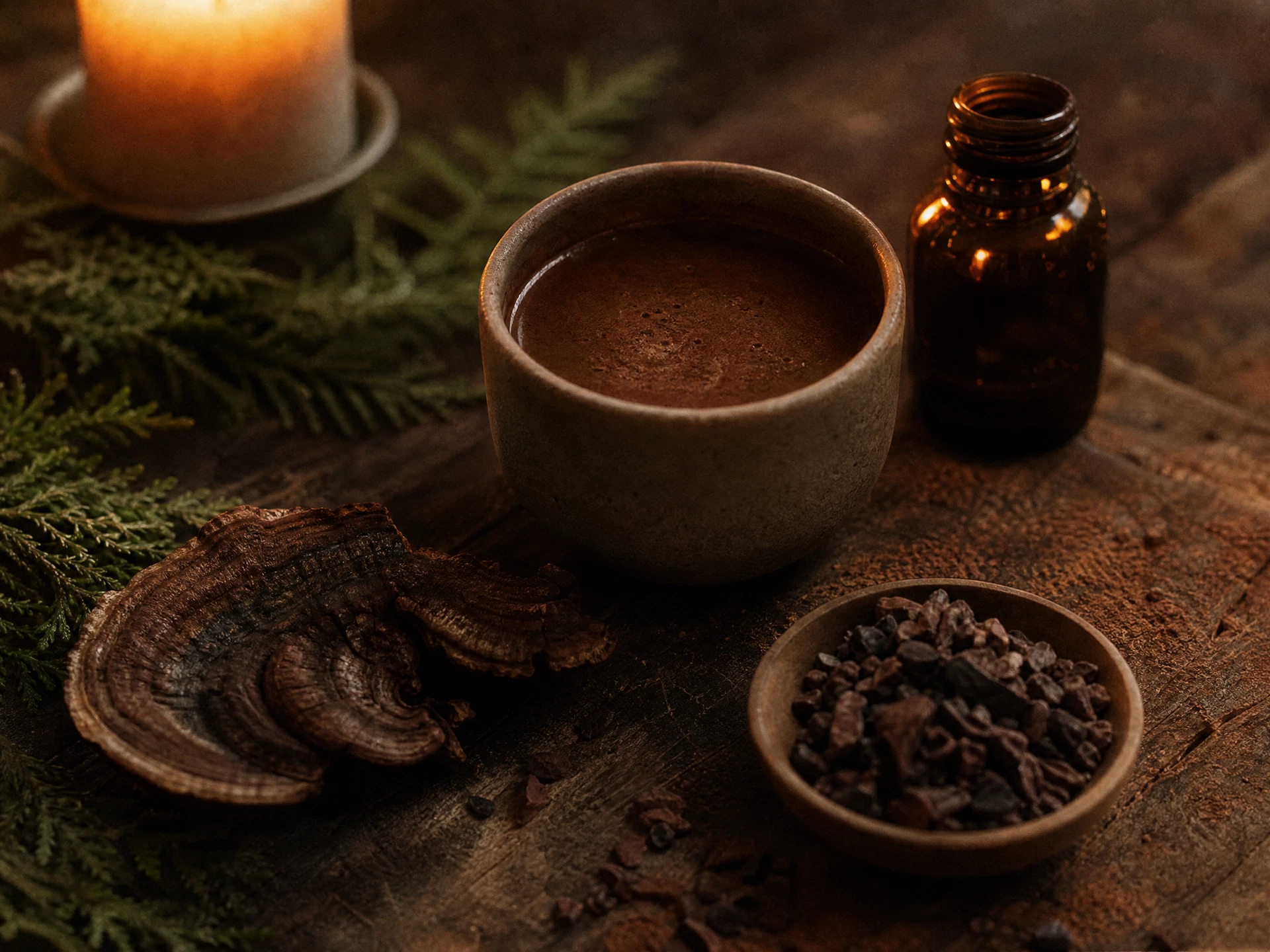
As evening falls and the house finally quiets, the Quiet Mind Tea leans on passionflower to help you transition from the demands of the day into rest. And for those nights when sleep feels fragile, the Deep Sleep Reishi Cocoa is a rich, comforting ritual that invites a heavier, more restorative rest, reminding your body that it is safe to let go.
The Years the Books Skip
This phase of life is rarely talked about with the reverence it deserves. It is messy, yes, and often uncomfortable. But it is also a time of profound shedding. The rage you feel might just be the boundary you finally learned to set. The exhaustion might be your body demanding that you stop giving so much of yourself away. The changes in your body are not a betrayal; they are an initiation.
You do not have to navigate this threshold alone. There is a whole garden of support waiting for you, a lineage of women who have walked this path, and a tradition of plants ready to offer their quiet strength. Pull up a chair. Let us pour you a cup. The storm will pass, and you will find yourself on the other side, rooted, wise, and entirely your own.
Start with the hour you are in
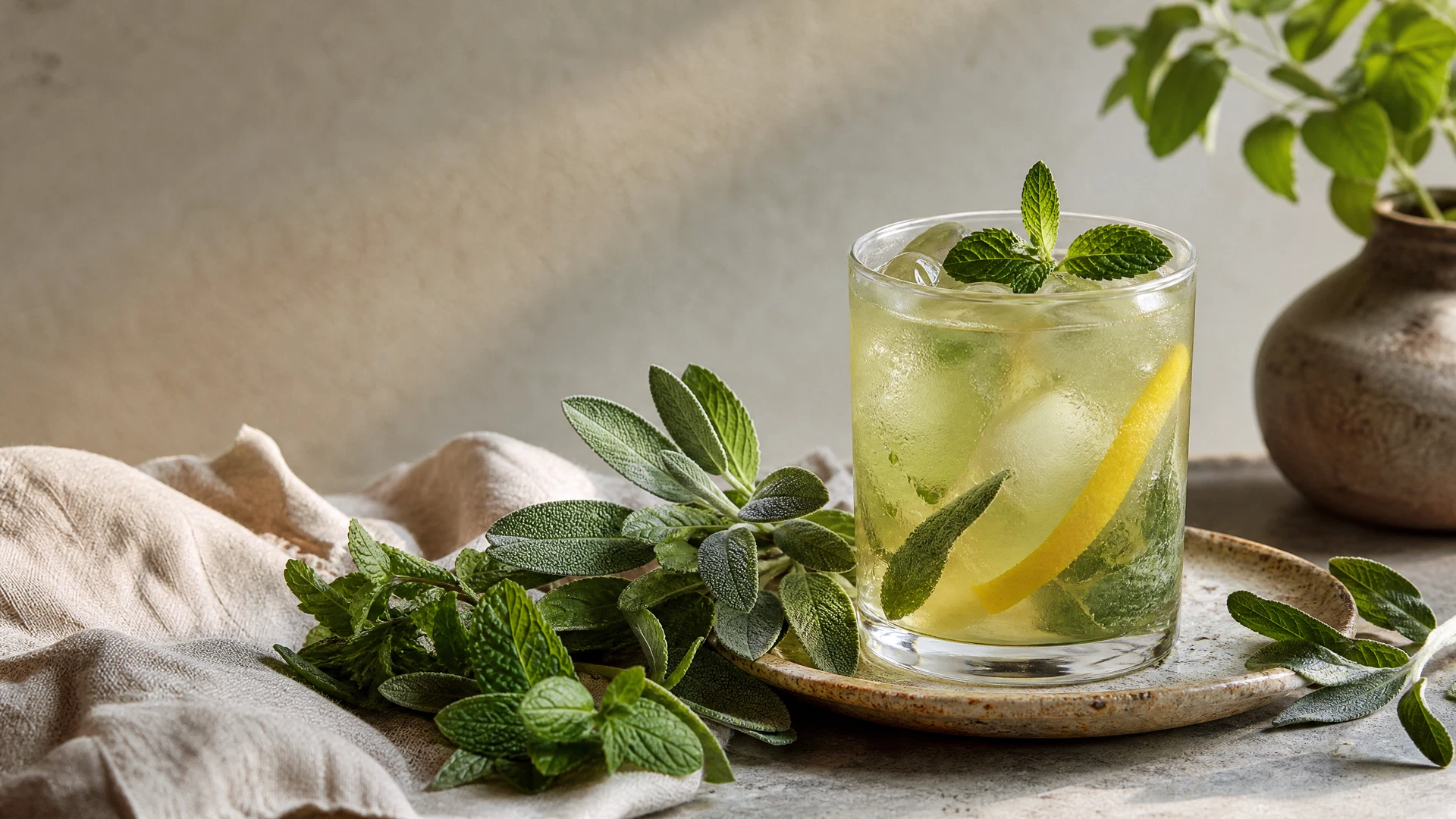
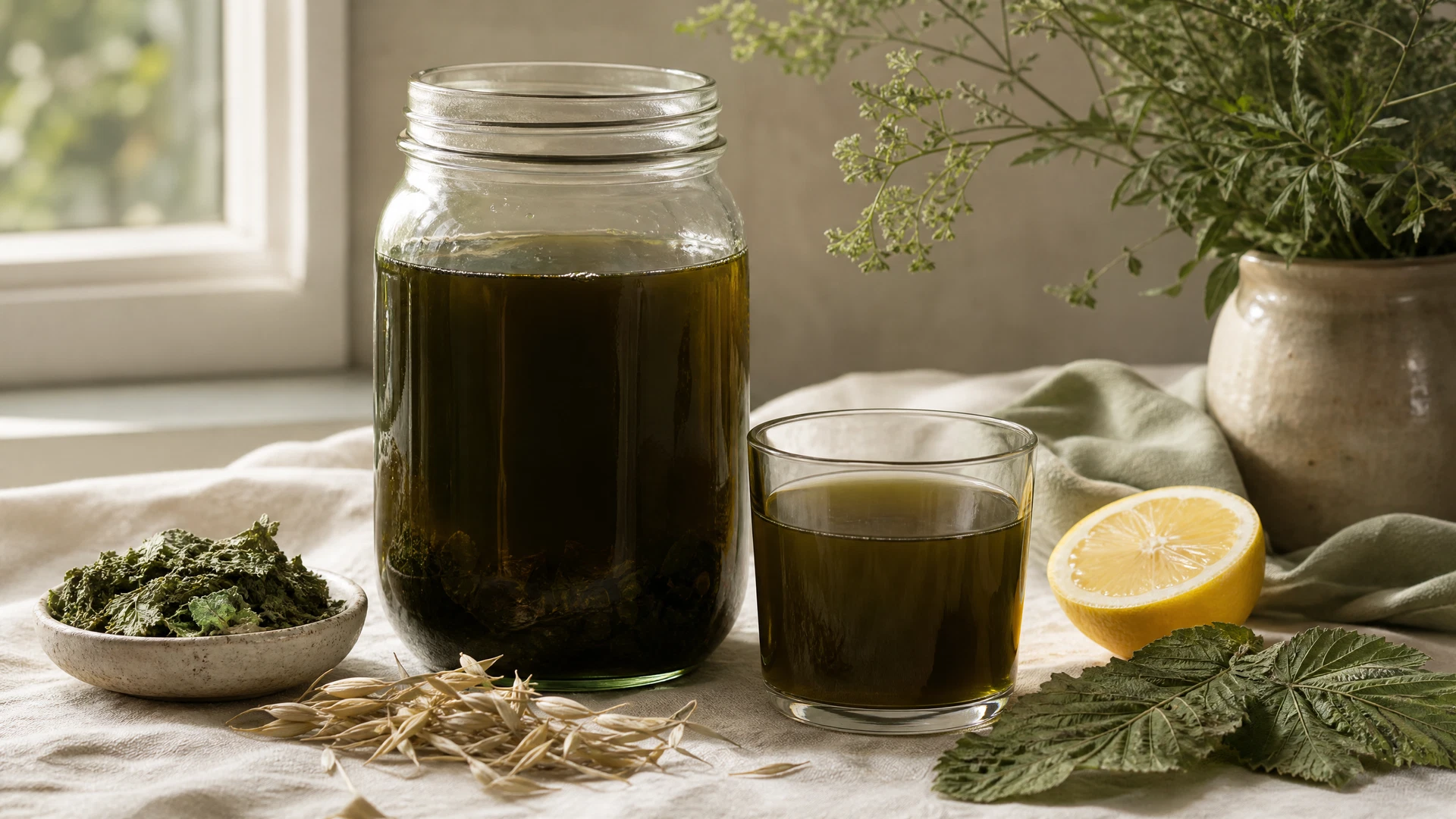
For sudden daytime heat, make the Cooling Sage & Mint Tea before the afternoon asks for it. When broken sleep leaves the morning hollow, prepare The Morning-After Mineral Infusion the night before and drink it through the next day. The original Perimenopause Peace Tea belongs to the restless evening. These are not a regimen; they are three different doors into the same season.
 teas
teas