Cooling Sage & Mint Tea
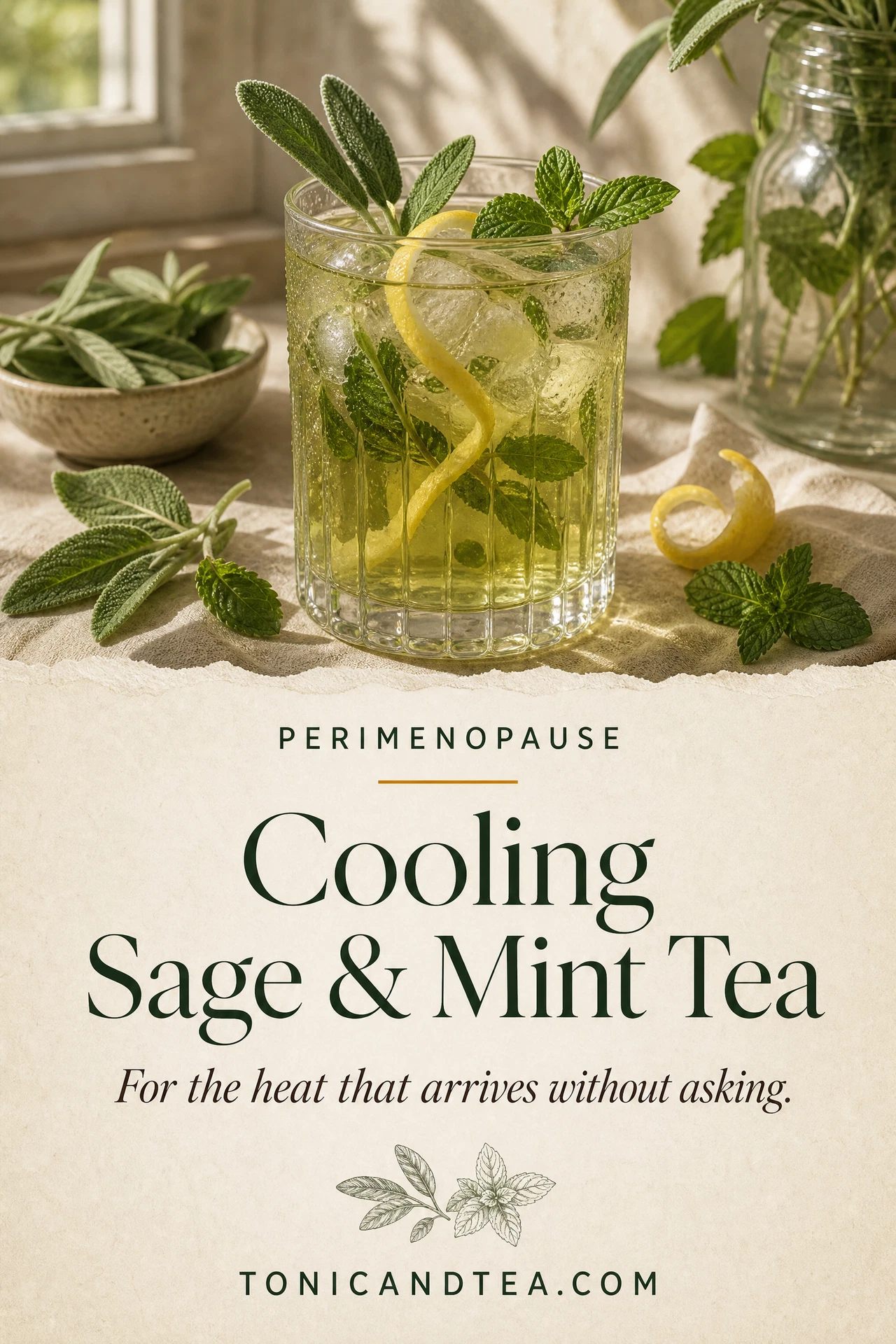
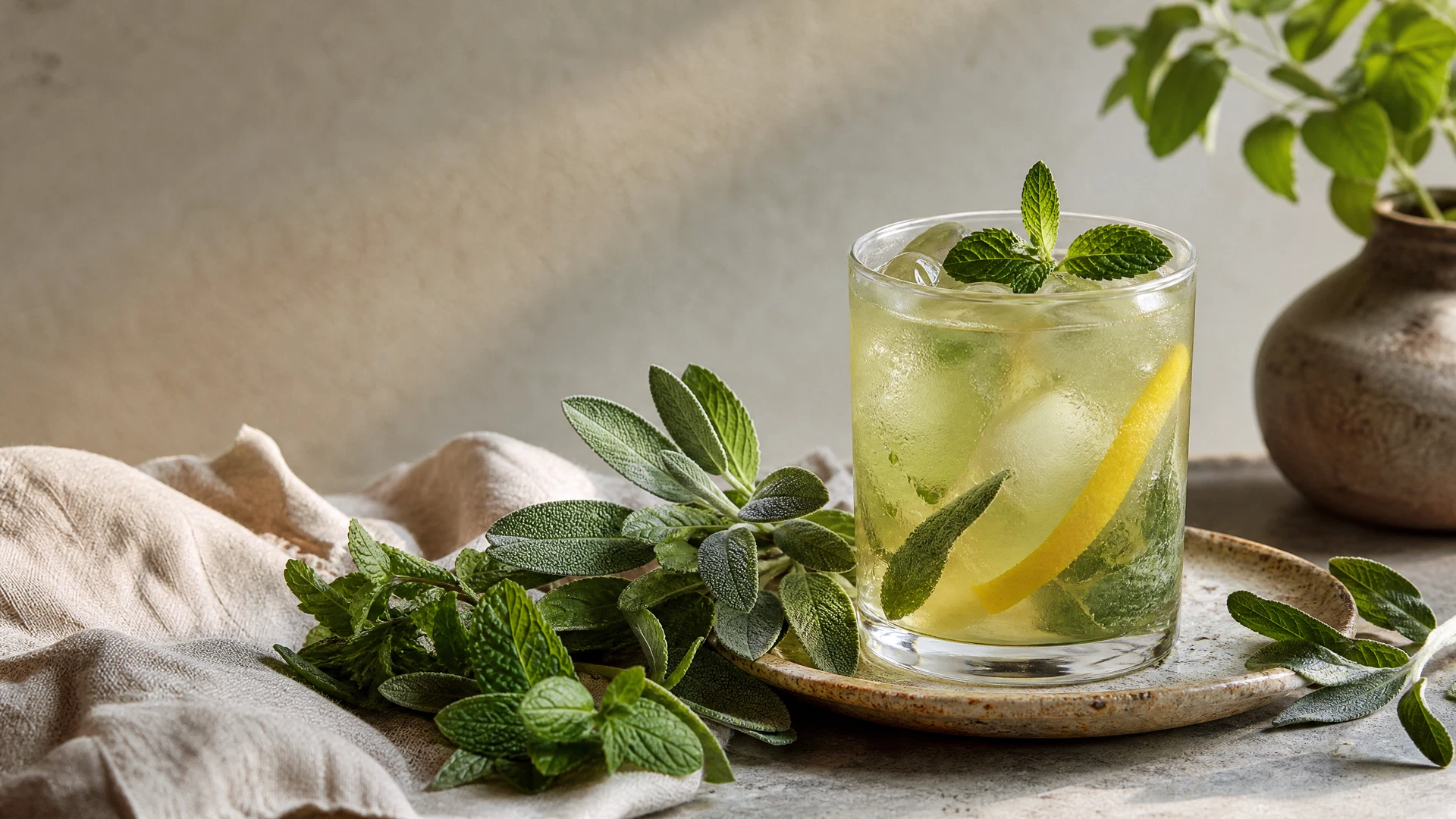
For the meeting where the heat rises before you can excuse yourself. Sage, spearmint, and lemon balm turn into a cool, green cup that is as good over ice as it is warm.
The heat that arrives without asking
A hot flash has terrible timing. It comes while you are halfway through a sentence, standing under grocery-store fluorescents, or trying to fall back asleep without waking the person beside you. There is often no graceful way to meet it. Your face burns, your collar feels suddenly wrong, and then — as quickly as it arrived — the heat leaves you damp and cold.
This tea is for the hours when that pattern has begun to organize the day. It is not a switch that turns hot flashes off. It is a cooling ritual built around sage, the kitchen herb European herbalists have long reached for when heat and perspiration become part of the menopausal transition. Spearmint softens sage's savory edge, lemon balm brightens the middle, and a strip of lemon peel makes the whole cup feel clean rather than medicinal.
The best way to make it is before you need it. Brew two cups in the morning, drink one warm, and pour the second over ice for the afternoon. The jar waiting in the refrigerator is useful in a way that a complicated wellness plan never is: it removes the decision from the moment your patience is already thin.
A kitchen herb, taken seriously
Sage is so familiar that it is easy to underestimate. It smells like stuffing and winter kitchens; it grows without drama in a cracked terracotta pot. But traditional herbal practice has used the leaf for much more than flavor. Its drying quality is the reason herbalists have reached for it around excess perspiration, including the sudden sweating that can arrive in perimenopause. Modern research has taken an interest in this use, but the evidence is still small. A recent review found a promising signal for hot-flash frequency across four studies, not a guarantee and not a replacement for care.
That distinction matters. A tea can be a form of attention without becoming a medical claim. If your hot flashes are new, severe, or accompanied by symptoms that concern you, involve your practitioner. Perimenopause is common; it should not become a reason every new symptom is automatically dismissed.
Spearmint has a different job. It cools the flavor and the experience of the cup, keeping the sage from reading like broth. Lemon balm is the bridge between heat and the nervous system. Many women notice that a flash arrives faster when the day is already running at the edge — not because stress causes the transition, but because a braced nervous system has less room for any additional signal. The balm does not erase the heat. It makes the ritual feel less like fighting your body.
Make it once, drink it twice
Use ordinary dried culinary sage leaf, not sage essential oil and not an unknown concentrated extract. Whole or gently cut leaf should still smell distinctly resinous when you open the bag. If it smells only like dust, it will brew like dust.
Covering the cup while it steeps is not fussy herbal theater. The aromatic compounds you can smell in sage, mint, and lemon balm rise with the steam. A lid or small plate keeps more of them in the tea instead of perfuming the room. Ten minutes gives the sage enough time to make itself known without pulling the cup into bitterness.
Drink the first serving as it is, or cool the whole batch. For iced tea, strain the herbs before chilling; leaving them in the jar for hours makes sage harsh. A thin slice of cucumber or a squeeze of lemon is welcome. A large spoonful of sugar is not forbidden, but try the cup first. Spearmint often supplies enough sweetness on its own.
This is a tea for a two-week experiment, not a forever rule. Make one batch a day, note whether the timing or intensity of the heat changes, and pay attention to what else is happening — sleep, coffee, alcohol, a room that runs warm, a week with no margin. The point is not to police yourself. The point is to see the pattern clearly enough that you have choices inside it.
When this is not enough
Some hot flashes are inconvenient. Some make work, sleep, and ordinary intimacy genuinely difficult. You do not earn extra credit for enduring the second kind with a teacup. There are effective medical options, hormonal and nonhormonal, and you are allowed to ask about them. Bring a short symptom log and the actual recipe you have been drinking; both help your practitioner see the whole picture.
If the heat is mainly waking you at night, the existing Perimenopause Peace Tea may fit the moment better because it includes passionflower for the mind that will not settle. If you wake depleted after those broken nights, make the Morning-After Mineral Infusion next. These recipes are neighbors, not a protocol. Choose the one that matches the hour you are actually in.
And on the afternoon when the heat rises in the middle of the meeting, let the cold jar be enough. You do not have to turn every symptom into a project. Sometimes care looks like making tomorrow's tea before tomorrow asks for it.
Best for
The recipe
Cooling Sage & Mint Tea
What you'll need
1 teaspoon Dried culinary sage leaf
Cut and sifted; not essential oil
We buy ours from Mountain Rose Herbs1 strip Fresh lemon peel
Avoid the bitter white pith
2 cups Filtered water
Just off the boil
1 teaspoon Raw honey
Optional, to taste
How to make it
- 1
Place the sage, spearmint, lemon balm, and strip of lemon peel in a heat-safe jar or teapot.
- 2
Bring the water to a boil, then let it stand for thirty seconds before pouring it over the herbs.
- 3
Cover immediately with a lid or small plate so the aromatic steam stays in the tea.
- 4
Steep for ten minutes. Do not leave the sage in longer; the cup becomes needlessly bitter.
- 5
Strain into two cups and stir in honey if using.
- 6
Drink one serving warm. Cool the second completely, cover, and refrigerate for up to twenty-four hours.
- 7
For the iced serving, pour over ice and add a thin cucumber slice or squeeze of lemon if you like.
The reasoning
Why This Works
Sage is traditionally described as a drying herb, and herbalists have long used the leaf when perspiration and sudden heat accompany the menopausal transition. A 2023 systematic review found that four small studies all reported improvement in hot-flash measures, with the pooled result more persuasive for frequency than severity; the evidence is promising but limited. Spearmint makes the savory leaf easier to drink and contributes a cooling sensory quality. Lemon balm is a gentle nervine traditionally used when physical discomfort and a braced, restless state travel together. The covered steep protects the aromatic compounds in all three leaves.
Before You Brew This
Use dried culinary sage leaf only; never add sage essential oil to a drink. Avoid this blend during pregnancy, and talk with your practitioner before using sage while nursing because it has traditionally been used to reduce milk supply. Sage contains thujone, which can be unsafe in large or concentrated amounts; skip this tea if you have a seizure disorder or take anticonvulsant medication, and do not turn a one-cup recipe into a heavily concentrated daily extract. Sage may also affect blood sugar, so involve your prescriber if you use insulin or glucose-lowering medication. Lemon balm can interact with thyroid medication in some people. If hot flashes are severe, new, or disruptive, ask your practitioner about the full range of evidence-based options rather than relying on tea alone.
Want more like this?
Pull up a chair.
Start with our free guide, 7 Tonics Every Woman Should Know, then a letter each week — recipes, plant wisdom, and what we're brewing as the season turns.
Coming, eventually
Cooling Sage & Mint Tea, pre-blended
One day this will come measured out in a tin, from us. It doesn't yet. Tell us where to write when it does.