Perimenopause Peace Tea
A cooling, grounding blend for the nights when the heat wakes you and the mind will not settle. Earthy roots and gentle flowers offer a quiet anchor in the storm of transition.

It happens quietly at first. You are sitting at your desk, or perhaps standing in the kitchen, and a sudden, uninvited heat rises from your chest to your hairline. You brush it off as a warm room, a heavy sweater, a moment of stress. But then comes the night waking. The sudden, startling clarity at three in the morning, staring at the ceiling while the rest of the house breathes in deep, rhythmic sleep. You are awake, and your mind is racing through a catalog of worries that seemed entirely manageable in the daylight. You mention it to your doctor, hoping for a map, a name, a solution. They run the blood panels, they check the boxes, and they tell you that everything is perfectly normal. But you know your own body, and you know that this sudden, electric shift is anything but normal.
This is the threshold of perimenopause, a season of profound transition that our culture has largely forgotten how to hold. It is not a disease to be cured, nor a failing to be fixed, but a deep, structural rewiring of the self. Your body is asking for a different kind of attention, a slower, more deliberate rhythm. When the old ways of pushing through no longer work, we must look to the plants that have held women through this exact passage for centuries. We reach for the roots and leaves that understand the language of shifting tides, the herbs that offer a cool hand on a fevered forehead and a quiet anchor in the storm.
This tea is for the nights when the heat wakes you and the mind will not settle. It is a grounding, cooling blend designed to meet you exactly where you are. We bring together the deep, earthy resonance of black cohosh, a root long valued by herbalists for its ability to cool the sudden fires of transition, with the gentle, nourishing embrace of red clover. We add the quiet, dream-like quality of passionflower to help ease the racing thoughts, and the deeply restorative nourishment of oat straw to feed the frayed edges of your nervous system. This is not a quick fix, but a daily practice of returning to yourself, a way of honoring the profound work your body is doing.
When you are navigating the unpredictable waters of perimenopause, the most radical act of self-care is to simply stop and listen. The sudden flashes of heat, the disrupted sleep, the feeling that your own skin has become a slightly unfamiliar garment—these are not signs of failure. They are the body's way of demanding a new kind of reverence. For generations, women have turned to the earth during this time, finding solace in the quiet wisdom of the garden and the forest. They understood that this transition requires a softening, a yielding to the natural progression of life, rather than a rigid resistance.
The Ritual
The act of making this tea is just as important as the herbs themselves. It is a deliberate slowing down, a conscious stepping away from the demands of the day. Begin by boiling fresh, clean water. As you wait for the kettle to sing, take a moment to simply stand in your kitchen and feel your feet on the floor. Notice the light coming through the window, the hum of the refrigerator, the quiet rhythm of your own breath.
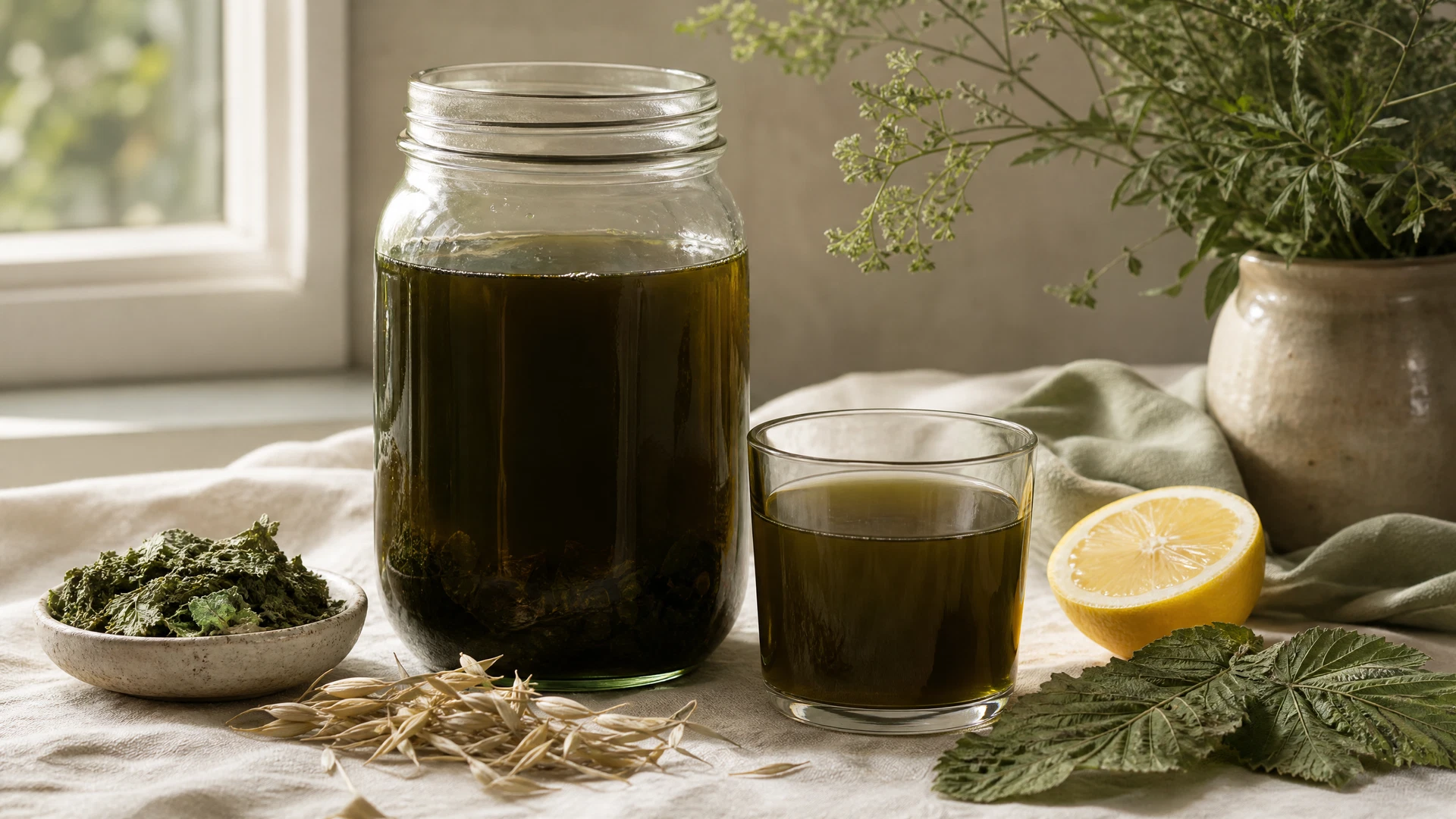
When you measure out the herbs, do so with intention. Notice the dark, gnarled pieces of black cohosh, the soft, vibrant blossoms of red clover, the delicate, winding tendrils of passionflower, and the pale, golden green of the oat straw. These are not just ingredients; they are allies, offering their strength and resilience to you. Place them in your favorite teapot or a large glass jar, and pour the hot water over them. Watch as the water transforms, taking on the deep, amber hues of the plants.
Cover the vessel and let it steep. This is not a tea to be rushed. It requires time for the roots to soften and release their deep, earthy medicine, and for the delicate flowers to unfurl and share their gentle, soothing qualities. Allow it to steep for at least fifteen minutes, or even longer if you prefer a stronger, more robust infusion. Use this time to do something that nourishes you—read a few pages of a book, step outside and feel the air on your face, or simply sit quietly and let your mind wander.
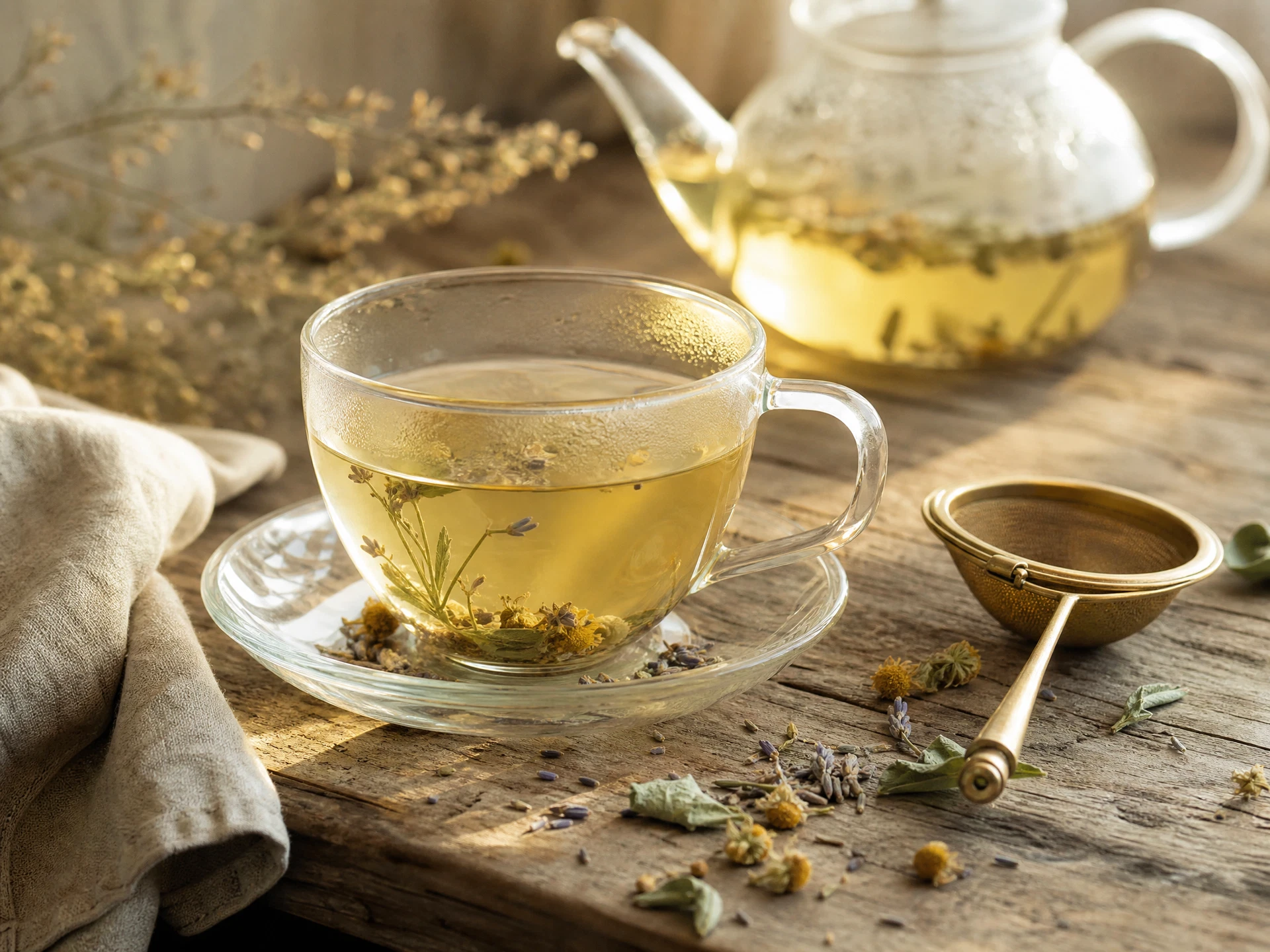
When the tea is ready, strain it into a favorite mug. Hold the warm ceramic in your hands and let the heat seep into your palms. Bring the cup to your face and inhale the complex, earthy aroma. Take your first sip slowly, allowing the liquid to coat your tongue and warm your throat. Feel it traveling down into your center, bringing a sense of calm and groundedness to your entire being. Drink this tea in the late afternoon or early evening, as the day begins to wind down, to help ease the transition into a restful night.
Making It Yours
Herbalism is a deeply personal practice, and this recipe is a starting point, not a rigid prescription. You are the ultimate authority on your own body, and you should feel empowered to adjust this blend to suit your unique needs and preferences. If you find the earthy, slightly bitter taste of the black cohosh to be too strong, you can soften it by adding a small spoonful of raw honey or a splash of oat milk. The sweetness will help to round out the flavors and make the tea more comforting.
If you are experiencing particularly intense hot flashes, you might consider drinking this tea cool or at room temperature, rather than hot. You can brew a large batch in the morning, let it cool, and keep it in the refrigerator to sip throughout the day. The cooling nature of the herbs will be even more pronounced when served chilled, offering a refreshing respite from the sudden surges of heat.
For those nights when sleep feels entirely elusive, you can increase the amount of passionflower in the blend. This gentle, vine-like plant has a profound affinity for the nervous system, helping to quiet the racing thoughts and ease the body into a state of deep relaxation.
Keep the neighboring recipes close
For heat, Cooling Sage & Mint Tea is the better match. For the depleted morning after another interrupted night, prepare The Morning-After Mineral Infusion and drink it through the next day. Different hours ask for different care.
Best for
The recipe
Perimenopause Peace Tea
What you'll need
1 tablespoon Dried red clover blossoms
Whole blossoms preferred
1 tablespoon Dried oat straw
Cut and sifted
How to make it
- 1
Bring two cups of fresh water to a rolling boil.
- 2
Place the black cohosh, red clover, passionflower, and oat straw into a teapot or heat-safe glass jar.
- 3
Pour the hot water over the herbs, watching the colors begin to shift.
- 4
Cover the vessel to keep the volatile oils from escaping.
- 5
Let the tea steep for at least fifteen minutes, allowing the roots to fully release their medicine.
- 6
Strain the tea into your favorite mug, breathing in the earthy aroma before your first sip.
The reasoning
Why This Works
Black cohosh is a root that herbalists have long reached for when a woman's body is navigating the sudden, fiery shifts of perimenopause. It is traditionally understood to have a cooling, grounding effect, helping to ease the intensity of hot flashes and night sweats. By offering a deep, earthy anchor, it supports the body in finding a new equilibrium during this profound transition.
Red clover is a gentle, nourishing blossom that is rich in phytoestrogens. In folk practice, it is valued for its ability to support the body's shifting hormonal landscape, offering a subtle, steadying presence. When combined with the quiet, dream-like qualities of passionflower, which has a profound affinity for the nervous system, the blend becomes a powerful ally for those nights when the mind is racing and sleep feels elusive. Oat straw rounds out the formula, providing deep, mineral-rich nourishment to frayed nerves, helping you feel held and supported.
Before You Brew This
Black cohosh is a powerful root, but it is not for everyone. You should avoid this blend if you are pregnant, nursing, or have a history of hormone-sensitive conditions. Because black cohosh can affect the liver, it is not intended for long, open-ended use, and you should skip it if you have liver concerns. Red clover is a phytoestrogen, which means it interacts with your body's hormonal landscape. If you are taking any medications, especially those for blood pressure or hormone regulation, please talk to your own practitioner before bringing this tea into your routine.
Want more like this?
Pull up a chair.
Start with our free guide, 7 Tonics Every Woman Should Know, then a letter each week — recipes, plant wisdom, and what we're brewing as the season turns.
Coming, eventually
Perimenopause Peace Tea, pre-blended
One day this will come measured out in a tin, from us. It doesn't yet. Tell us where to write when it does.