nervine
Passionflower
Passiflora incarnata
An extraordinary vine with a complex, otherworldly blossom, passionflower is the herbalist's choice for a mind that will not stop talking. It gently turns down the volume on looping thoughts and nervous tension, inviting a state of natural ease. A deeply supportive, gentle nervine for the restless and the weary.
Traditionally reached for
Where it comes from
Folklore & History
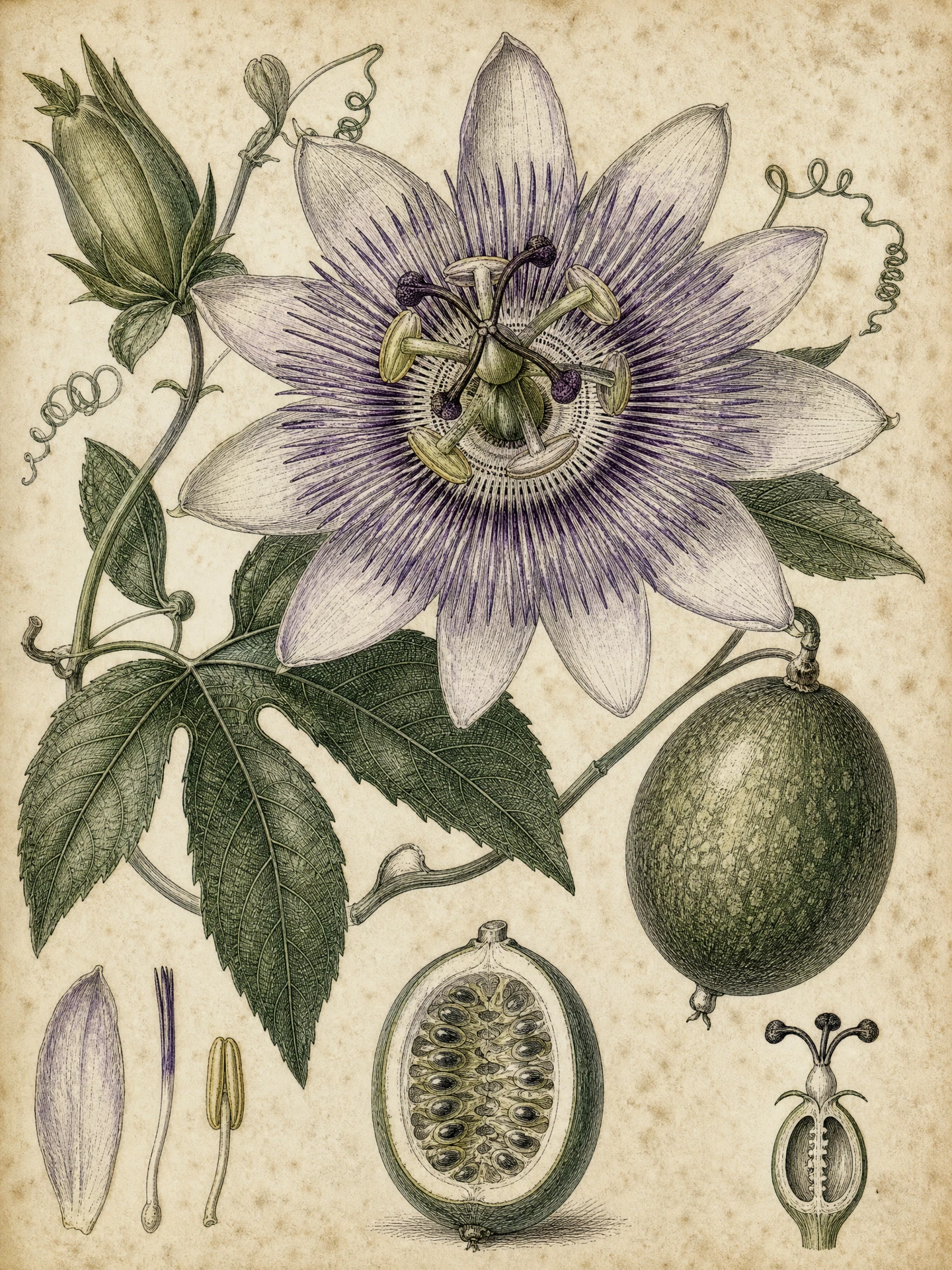
To encounter a passionflower in bloom is to stop entirely in your tracks. It is a vine that produces a blossom so structurally complex, so otherworldly in its architecture, that it looks less like a flower and more like a celestial instrument. The petals form a pale, starry base, but it is the center that commands attention: a fringed, radial corona of purple and white filaments, topped by five prominent stamens and three striking stigmas that hover above the rest like delicate antennae.
When sixteenth-century Spanish missionaries first encountered this astonishing vine in the Americas, they did not see a botanical curiosity; they saw a divine message. They read the story of the Passion of Christ directly into the plant's anatomy. The fringed corona became the crown of thorns, the five stamens represented the five wounds, and the three stigmas were seen as the nails of the cross. The ten petals and sepals stood for the faithful apostles. Thus, it was named the passionflower—a title that has absolutely nothing to do with romantic love or fiery emotion, but rather with suffering, endurance, and grace.
Long before the missionaries arrived, the Indigenous peoples of the American Southeast, where Passiflora incarnata grows wild and abundant, knew this vine intimately. They understood it not as a symbol of suffering, but as a profound source of relief. They gathered the leaves, stems, and flowers to soothe the nervous system, ease tension, and invite rest. It was a trusted companion for the restless and the weary.
As European settlers learned of its virtues, passionflower wove its way into the fabric of American herbalism. It was so highly regarded that it held an official place in the US National Formulary until the 1930s, recognized as a reliable, gentle nervine. Today, when you reach for this extraordinary plant, you are participating in a tradition that spans centuries and continents. You are asking a vine that thrives in the humid, tangled heat of the South to lend you its quiet, grounding strength. It is a reminder that sometimes, the most complex and intricate things in nature are designed to bring us the simplest, most profound peace.
In plain language
What It Actually Does
In the traditional apothecary, we categorize herbs by how they interact with the body's systems. Passionflower is a nervine—a plant that speaks directly to the nervous system. But herbalism is a practice of specificity, and passionflower is not a generic sedative. It is specifically the herb for the mind that will not stop talking.
If you have ever lain awake at two in the morning, exhausted in your bones but trapped in a cycle of looping thoughts—replaying a conversation, anticipating a deadline, worrying about a child—passionflower is the plant herbalists have long reached for. It is not for the cannot-get-comfortable variety of sleeplessness, where your body aches or your temperature fluctuates. It is for the mental chatter that refuses to quiet down. The tradition holds that passionflower gently turns down the volume on that internal monologue, allowing the mind to finally release its grip on the day so that sleep can arrive naturally.
What makes passionflower so beloved is its profound gentleness. It is one of the best-tolerated nervines we have, offering a calming touch without the heavy, groggy hangover that often accompanies stronger sedatives. It does not force you into unconsciousness; rather, it invites a state of ease, helping to untangle the tightly wound threads of a stressed nervous system. Many women find it particularly supportive when navigating the emotional fluctuations of perimenopause, when sleep can suddenly become elusive and anxiety can spike without warning. It pairs beautifully with other grounding herbs, like reishi, to create a deeper sense of resilience.
However, honesty is the foundation of our practice. While passionflower is a beautiful, supportive ally for occasional restlessness and the Sunday night spirals, it is not a cure for clinical anxiety. Persistent, overwhelming anxiety deserves real, comprehensive support. A cup of tea is a companion to that journey, a moment of ritual and comfort, but it is not a replacement for professional care, therapy, or necessary medication. We ask plants to hold us, but we must also allow our communities and practitioners to hold us, too.
How to use it
Preparation
Because we are working with the delicate aerial parts of the plant—the leaves, stems, and flowers—passionflower calls for an infusion rather than a heavy, simmering decoction. Boiling would destroy the very volatile compounds we are trying to capture.
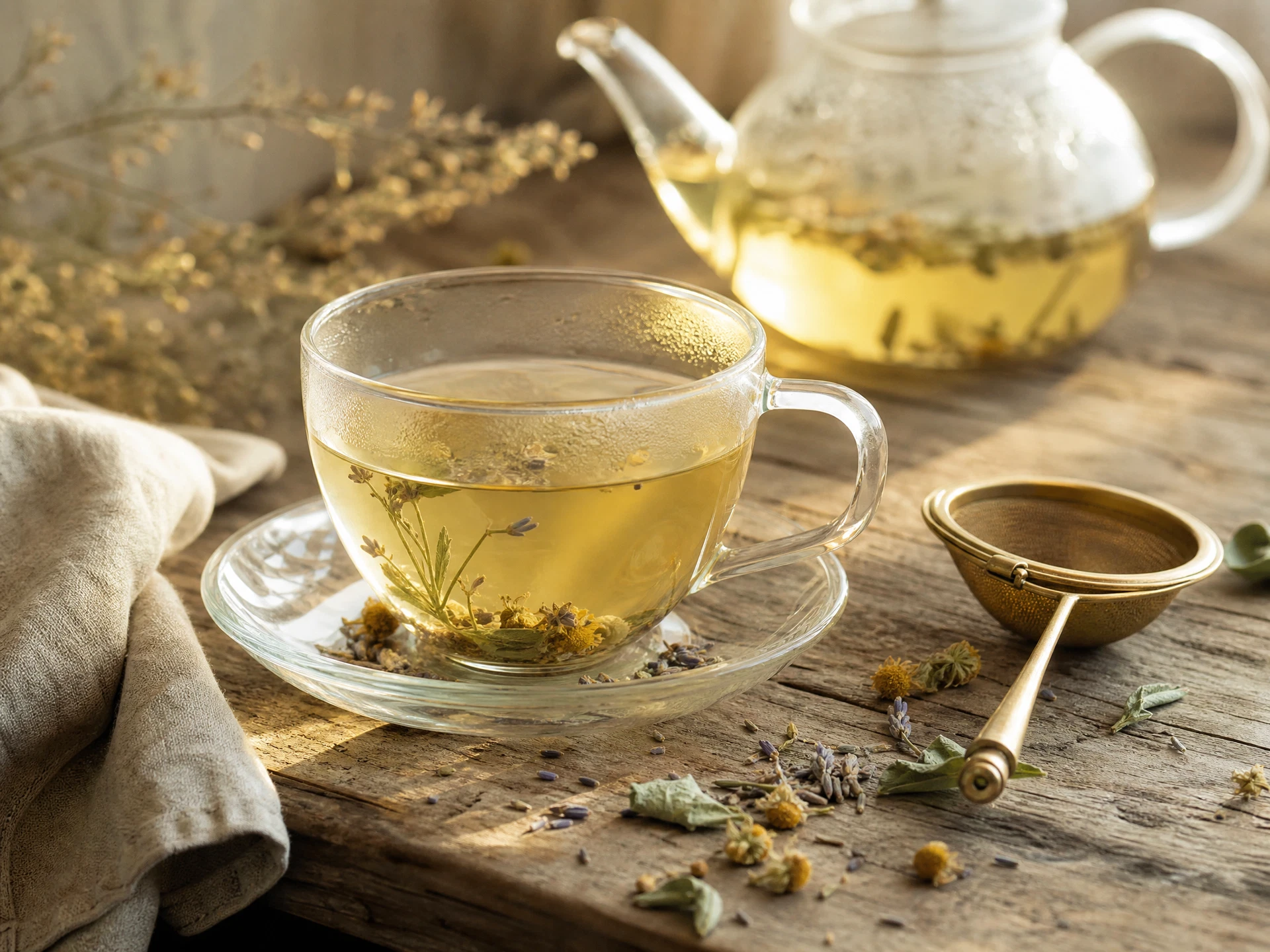
To prepare a traditional infusion, place one to two teaspoons of the dried herb into your favorite mug. Pour freshly boiled water over the plant material, cover the cup with a saucer to keep the essential oils from escaping in the steam, and let it steep for ten to fifteen minutes. The resulting tea is mild, slightly earthy, and grassy—not a bold flavor, but a comforting one. If you are using it to quiet a racing mind before bed, as in our quiet mind tea, drink it about an hour before you hope to sleep.
If you are navigating a particularly demanding season and need support during the day, passionflower can also be taken as a tincture. A tincture offers a more concentrated, immediate delivery. A standard traditional amount is one to two dropperfuls in a splash of water, taken when you feel the familiar tightening of stress in your chest. Because it is so gentle, it typically does not cause daytime drowsiness, just a subtle softening of the edges. You might expect to notice its calming influence within twenty to thirty minutes of taking a tincture, or as you finish your cup of warm infusion.
When sourcing passionflower, look for dried herb that still holds some of its vibrant green color, with visible pieces of the intricate flowers mixed in. If it looks entirely brown and dusty, it has likely sat on a shelf too long and lost its vitality. Store your dried passionflower in an airtight glass jar, tucked away in a cool, dark cupboard, away from the heat of the stove or the direct glare of the sun. Treated well, it will keep its potency for about a year, ready to be called upon whenever your mind needs a quiet place to rest.
Who Should Be Careful
Pregnancy & Nursing
Traditional practice advises against using passionflower during pregnancy, as it may affect the uterus, and it is not recommended while nursing.
We believe that knowing a plant's boundaries is just as important as knowing its gifts. Because passionflower is so effective at calming the nervous system, it demands respect when combined with anything else that does the same.
You should not use passionflower if you are taking prescription sedatives, benzodiazepines, or sleep medications, as it can amplify their effects to an unsafe degree. For the same reason, it should not be combined with alcohol. It is also contraindicated if you are taking MAOIs or blood thinners. Because it interacts with the nervous system, you must stop taking passionflower at least two weeks before any scheduled surgery that requires anesthesia.
While passionflower is generally not heavily sedating on its own, everyone's body responds differently. Pay attention to how it makes you feel before driving or operating heavy machinery, especially the first time you invite it into your routine. Finally, traditional practice advises against using passionflower during pregnancy, as it may stimulate the uterus, and it is not recommended while nursing.
Your body is your own, and you know it best. We always encourage you to share what you are drinking with your own trusted healthcare practitioner, especially if you are navigating a complex health season or managing medications.