tonic
Maca
Lepidium meyenii
A resilient cruciferous root from the high Andes, traditionally cooked to nourish vitality and endurance. Maca is a slow, cumulative food that herbalists reach for to support steady energy, libido, and hormonal balance, particularly during the shifts of perimenopause.
Traditionally reached for
Where it comes from
Folklore & History
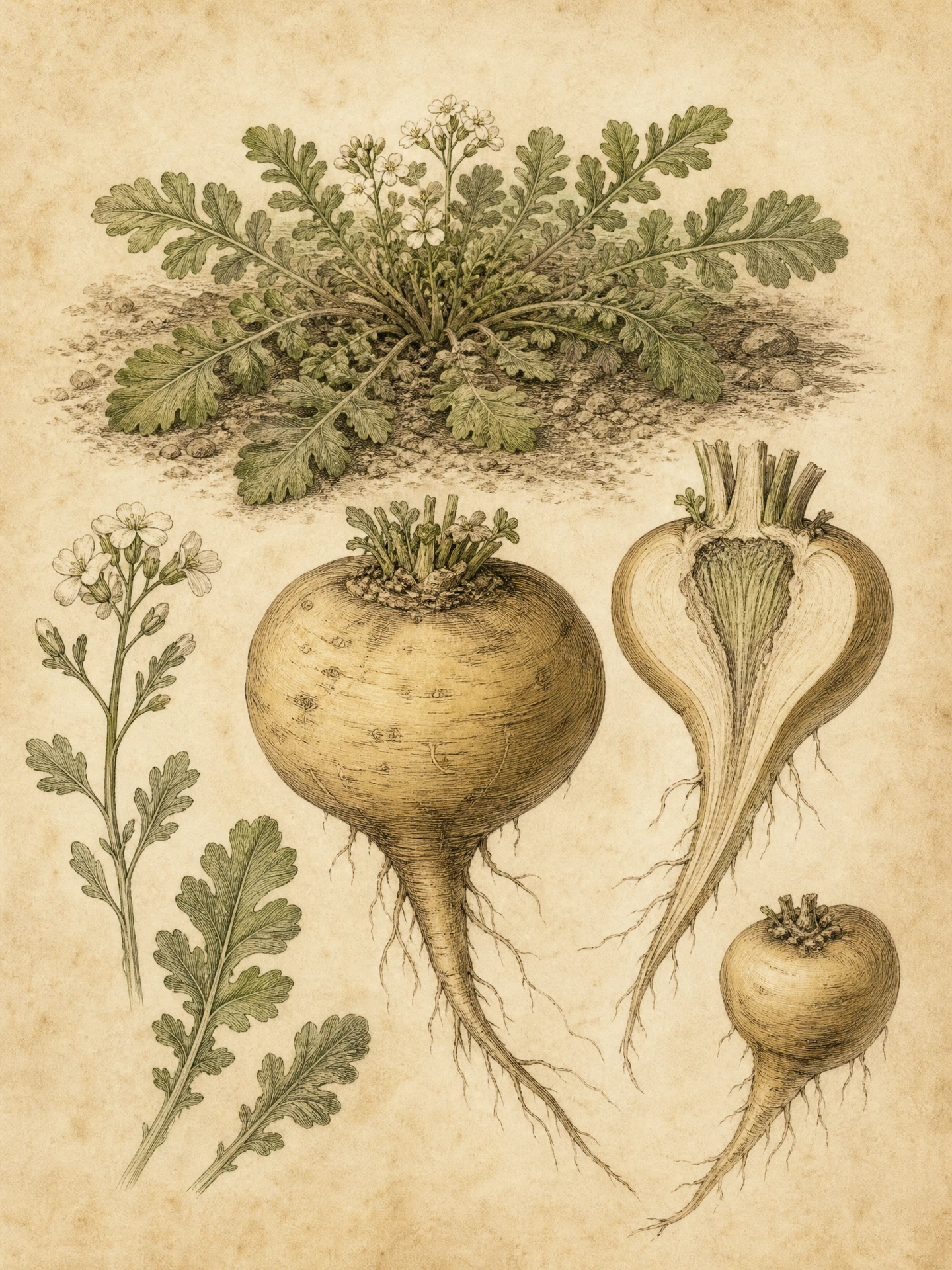
High in the Peruvian Andes, at elevations above thirteen thousand feet where the air is thin and the wind is fierce, very little can survive. Yet this is exactly where maca (Lepidium meyenii) thrives. A hardy cruciferous root related to the turnip and the radish, it pulls its strength from the harsh, rocky soil, storing up vitality in a landscape that demands resilience. For thousands of years, the indigenous peoples of the Andes have cultivated this remarkable plant, relying on it not just as a staple food, but as a source of endurance in an unforgiving climate.
In its native home, maca is almost never eaten raw. The tradition holds that it must be cooked—often roasted in earthen pits or boiled into sweet, warming porridges—to unlock its nourishment and protect the digestion. It is a food of sustenance, traded for lowland crops and valued for its ability to sustain energy on long journeys across the mountains.
When you pull maca from the earth, it reveals itself in three primary colors: yellow, red, and black. Traditional practice assigns different affinities to each. Yellow maca, the most common, is the daily staple for steady energy. Black maca is often reached for to support stamina and focus. But it is red maca that herbalists traditionally favor for women, valuing it for its gentle, grounding support of hormonal harmony and inner vitality. It smells earthy and slightly sweet, with a malty, caramel-like warmth that hints at the deep nourishment it offers.
This is a plant that understands how to survive extremes, and in folk practice, it is believed to pass that resilience on to us. It is not a quick fix, but a slow, cumulative companion, offering the kind of grounded strength that only comes from deep roots.
In plain language
What It Actually Does
Maca is often misunderstood in the modern wellness world. It is frequently sold as a quick-fix stimulant or a miracle cure for hormonal woes, but that is not how this plant works. Maca is a food, not a drug. It does not force the body into action; rather, it provides a deep, cumulative nourishment that the body can use to find its own balance.
Herbalists consider maca an adaptogen—a plant that helps the body respond to stress with greater resilience. When we are exhausted, when our reserves are drawn down by the demands of life or the profound shifts of perimenopause, maca offers a steadying hand. It is traditionally understood to nourish the endocrine system, the intricate network responsible for our hormones. Instead of introducing external hormones, it is believed to support the hypothalamus and pituitary glands, encouraging the body to produce and regulate its own hormones more effectively.
This is why many women find it so supportive for hormone balance. It is reached for to ease the hot flashes and mood shifts of the menopausal transition, and to gently awaken a quieted libido. It offers energy, but not the frantic, borrowed energy of caffeine. Instead, it is the sustained endurance of a root that knows how to survive at high altitudes.
However, honesty requires us to say that maca is not for everyone. Because it is a food, it requires consistent use in cooking amounts to see its benefits; a tiny pinch in a smoothie once a week will do very little. Furthermore, raw maca can be quite hard on the digestion and contains compounds that can interfere with thyroid function. If you are going to invite maca into your kitchen, it is worth seeking out gelatinized maca, which has been gently heated to remove the starches, making it much easier for your body to welcome and use.
How to use it
Preparation
Because maca is a food, it is best approached as an ingredient in your daily nourishment rather than a pill to be swallowed. While you can find it in capsules, the traditional way to use maca is as a powder, incorporated into warm drinks or foods.
If you are buying maca, look for "gelatinized" powder. This does not mean it contains gelatin; rather, it is a traditional process of gentle heating and extrusion that removes the tough starches. Raw maca can cause significant digestive upset and bloating for many women, and the gelatinization process makes it much kinder to the stomach while concentrating its supportive qualities. If you are seeking support for hormonal harmony, look specifically for red maca, which is traditionally favored for women's wellness.
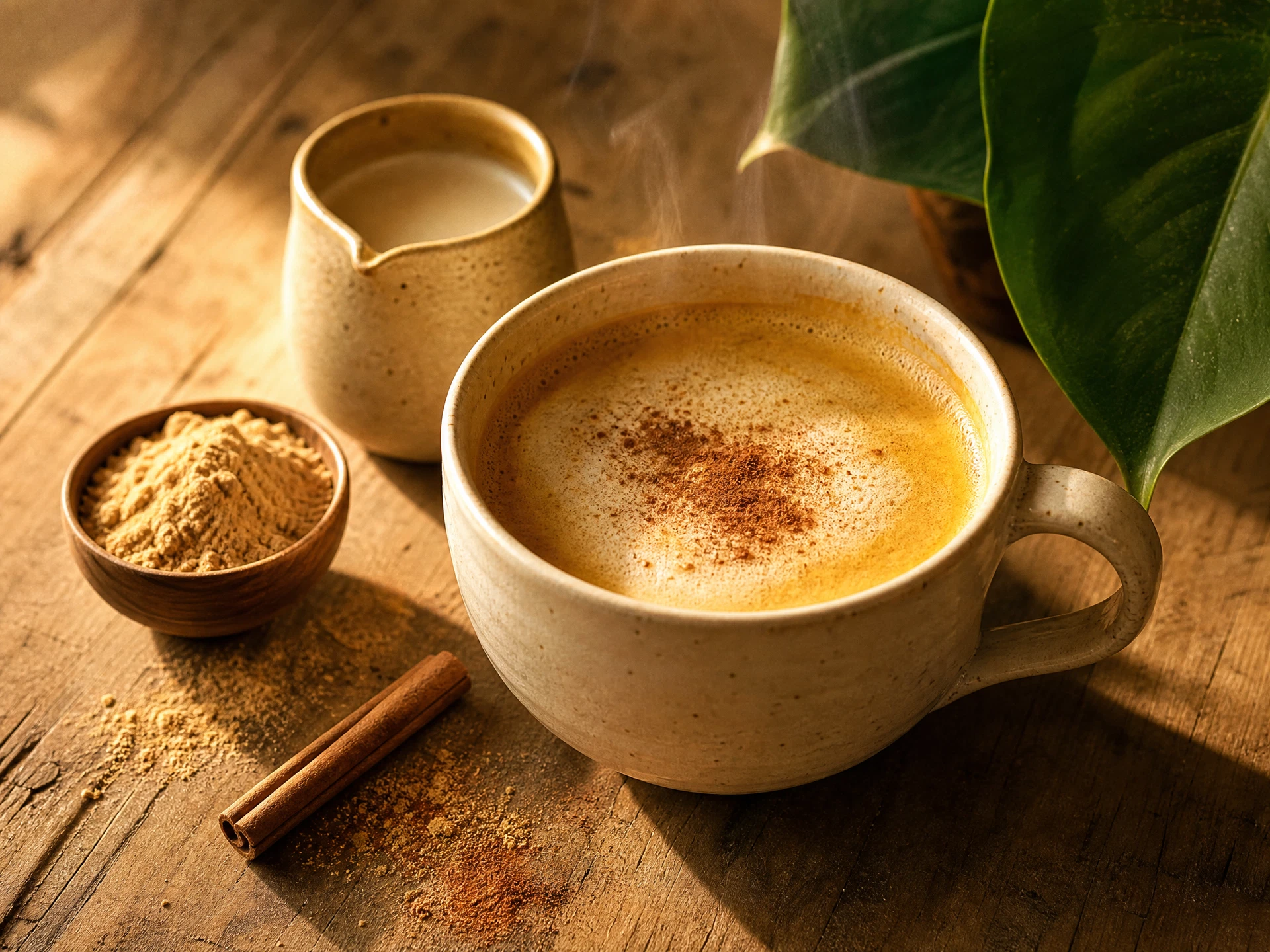
A traditional amount is one to three teaspoons a day. Because its energy can be stimulating for some, it is best taken in the morning or early afternoon; a hormone reset latte is a beautiful way to begin the day. It also blends seamlessly into a seed cycling smoothie tonic, pairing beautifully with the earthy notes of ashwagandha.
Maca is a slow, cumulative ally. You should not expect to feel a sudden rush of energy; rather, after several weeks of consistent use, you may simply notice that you have more resilience, that your mood is steadier, and that your vitality has returned. Store your maca powder in a cool, dark place, tightly sealed, to protect its malty flavor and deep nourishment.
Who Should Be Careful
Pregnancy & Nursing
While maca is a traditional food, medicinal amounts are not recommended during pregnancy. We suggest pausing its use until after your baby arrives.
Maca is a food, but it is a potent one, and it asks for respect. Because it is a cruciferous root, raw maca contains goitrogens that can interfere with thyroid function; if you have a thyroid condition, you should only use gelatinized or cooked maca, and even then, proceed thoughtfully. Its very nature is to encourage the body's hormonal vitality, which means it is not suited for those with hormone-sensitive conditions. For some women, its energy is profoundly stimulating—if you find it makes you feel wired, do not take it late in the day, and consider lowering your amount. While it is a traditional food, medicinal amounts are not recommended during pregnancy. As always, we encourage you to share what you are taking with a practitioner who knows your body's unique story.