adaptogen
Rhodiola
Rhodiola rosea
Known as the arctic rose, this resilient northern root is a potent adaptogen traditionally used to clear mental fog and restore deep stamina. It offers immediate, grounding energy for the days when you feel entirely depleted, helping the body adapt to profound stress.
Traditionally reached for
Where it comes from
Folklore & History
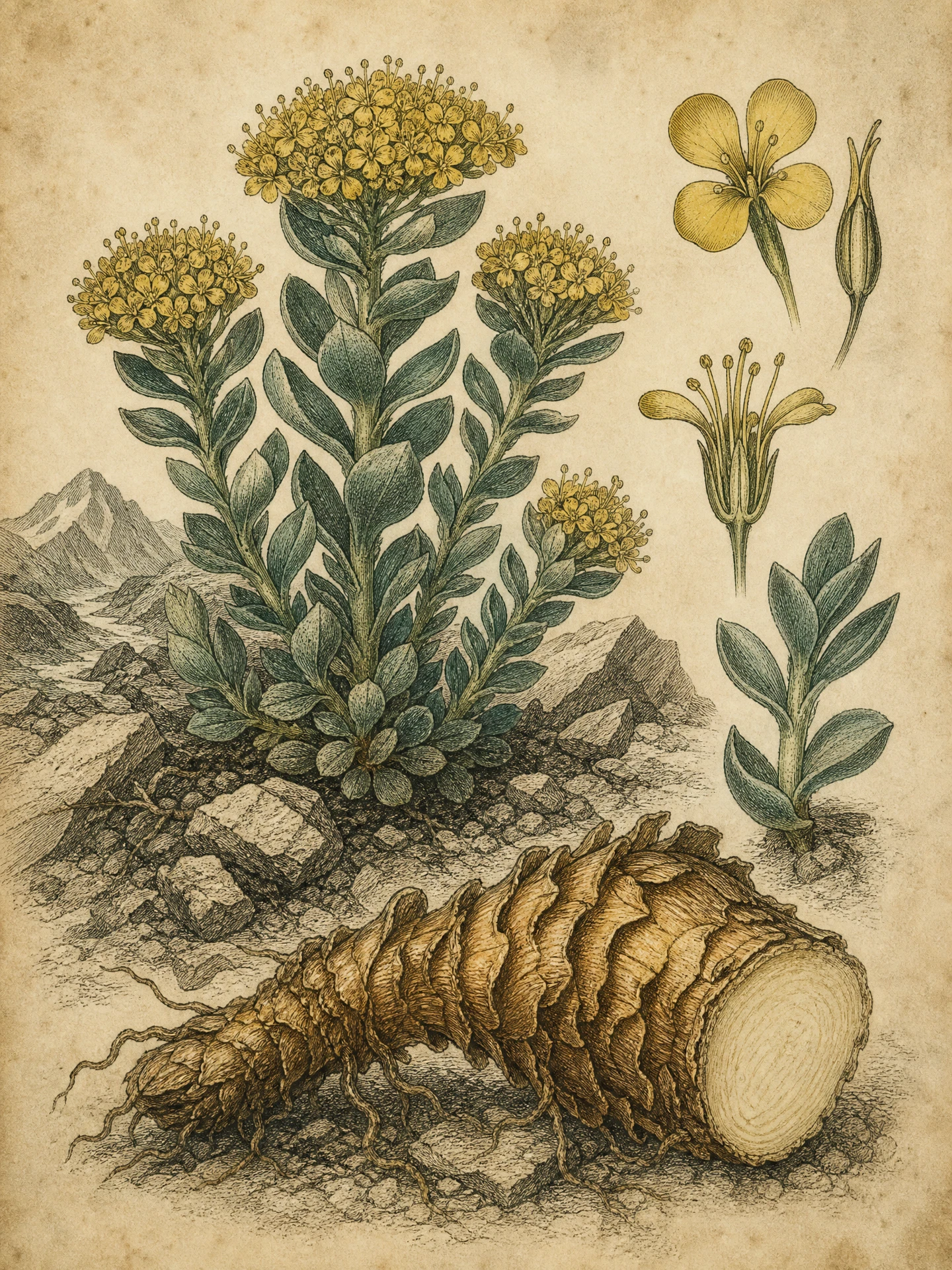
There is a particular kind of resilience that only grows in the cold. High in the Altai Mountains of Siberia, clinging to sea cliffs in Scandinavia, and scattered across the unforgiving tundra of the high Arctic, you will find a low-growing succulent with yellow-green flowers. This is Rhodiola rosea, known to those who forage it as the arctic rose or golden root. When you slice into the thick, gnarled rhizome of this plant, it releases a scent that is unexpectedly delicate—a faint, sweet perfume of old roses rising from the frozen earth.
For centuries, the people who lived in these harsh northern climates understood that a plant capable of surviving such extremes must hold a certain kind of fire within it. In Siberian tradition, the root was given to newlyweds to ensure fertility and the birth of healthy children, a nod to its deep connection to hormone balance and vitality. The Vikings, navigating icy waters and brutal winters, are said to have relied on rhodiola to sustain their legendary physical endurance and mental sharpness. It was a closely guarded secret of the north, a botanical ally for those who needed to keep moving when the world around them demanded stillness.
The story of rhodiola took a fascinating turn in the twentieth century, moving from folk medicine to state secret. During the Cold War, Soviet researchers began systematically studying the plants of their vast wilderness, looking for ways to enhance the performance of their cosmonauts, soldiers, and Olympic athletes. They were searching for what they called adaptogens—substances that could help the body resist the profound wear and tear of extreme stress. Rhodiola proved so effective at supporting energy and stamina that the research was kept partly classified for decades, hidden behind the Iron Curtain while the rest of the world remained largely unaware of the arctic rose.
Today, we do not need to be launching into space or crossing the North Sea to understand the kind of exhaustion that settles into the bones. The modern world demands a different kind of endurance, one that often leaves us depleted and searching for a way to reclaim our focus. Rhodiola offers a bridge back to ourselves, a reminder of the quiet, unyielding strength that thrives even in the most inhospitable conditions. It is a plant that teaches us how to stand firm when the winds are howling, drawing on deep reserves we might have forgotten we possessed.
In plain language
What It Actually Does
When you are running on empty, the instinct is often to reach for something that will force the engine to turn over—another cup of coffee, another hit of sugar. But true vitality cannot be borrowed; it must be cultivated. In the tradition of herbalism, rhodiola is understood as a profound adaptogen, a plant that helps the body navigate the physical and emotional toll of prolonged strain. It does not simply mask fatigue; it is traditionally used to support the body's own capacity for resilience, helping you find a steady, grounded center when everything around you feels chaotic.
Herbalists have long reached for rhodiola when a woman is experiencing the kind of deep, systemic exhaustion that sleep alone does not seem to fix. It is valued for its ability to clear the fog from the mind, sharpen focus, and gently lift the spirit. If you are navigating the complex terrain of sleep and stress, rhodiola is often called upon to help the nervous system remember how to adapt rather than simply react. It is a botanical ally for the days when you need to be fully present, offering a clean, sustained clarity that feels entirely different from the jagged edge of caffeine.
Here is the honest truth about rhodiola, the thing we must speak plainly about: it is the most immediately noticeable herb in our apothecary. Many women feel its effects the very same day they take it. This immediate feedback makes it incredibly seductive, but it also means it is remarkably easy to overdo. Rhodiola is inherently stimulating. If you take it too late in the day, it will keep you awake, your mind spinning long after you should be resting. We never recommend taking it after early afternoon. Furthermore, with this particular root, less is genuinely more. Pushing the dose will not give you more energy; it will only leave you feeling wired and frayed.
It is also vital to speak about where this plant comes from. Because it grows slowly in fragile, high-altitude ecosystems, wild rhodiola is under immense ecological pressure. The global demand for this root has led to overharvesting, threatening the very survival of the arctic rose in its native habitats. When you invite this plant into your life, sourcing matters deeply. We must ensure we are choosing cultivated rhodiola or strictly verified, sustainably wildcrafted sources, honoring the earth that provides it.
How to use it
Preparation
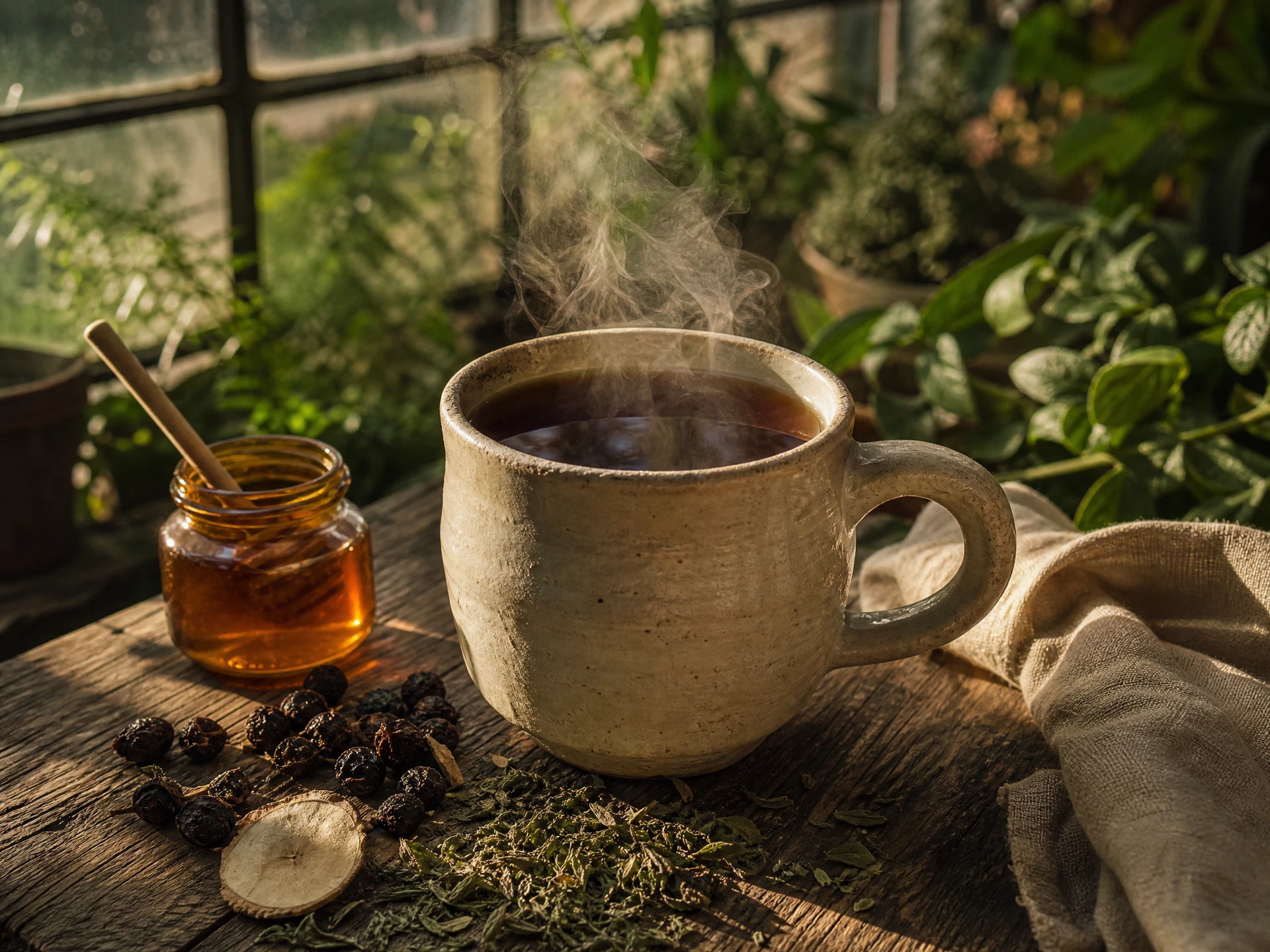
Because rhodiola is a dense, woody root, it will not yield its medicine to a simple, quick steeping. If you are working with the dried root, it requires a decoction—a slow, deliberate simmering in water to draw out its properties. To prepare it this way, add one teaspoon of the chopped root to two cups of water, bring it to a gentle boil, and then lower the heat to let it simmer covered for twenty to thirty minutes. The resulting liquid will be earthy, slightly astringent, and faintly floral.
However, because of its robust flavor and the time required to decoct it, many women find that a high-quality tincture or a standardized extract in capsule form is the most practical way to welcome rhodiola into their daily rhythm. If you are using a tincture, a traditional starting point is twenty to thirty drops in a small splash of water. If you are working with powders or capsules, begin with the lowest possible amount suggested by the maker. Remember our honest note: this is a potent, stimulating plant. You will likely notice its effects—a lifting of the mental fog, a subtle surge of physical stamina—within a few hours of your very first cup or dose.
Timing is everything with the arctic rose. You must take it in the morning or, at the very latest, before one o'clock in the afternoon. It is the perfect foundation for a 3pm revival tonic only if you are someone who works the night shift; otherwise, late-day use will almost certainly disrupt your rest. It pairs beautifully with more grounding herbs; blending it with ashwagandha or nettle can help anchor its upward, stimulating energy, creating a beautifully balanced support system for your days.
When sourcing rhodiola, look for a supplier who is entirely transparent about their supply chain. You want cultivated roots, ideally five years old before harvest, to ensure the plant has had time to develop its complex chemistry. The dried root should smell distinctly of roses when crushed, a sign of its vitality. Store your dried root, powders, or tinctures in a cool, dark cupboard, away from the heat of the stove and the direct glare of the sun, where they will keep their strength for up to two years.
Who Should Be Careful
Pregnancy & Nursing
There is simply not enough clear, historical evidence to say that rhodiola is safe during pregnancy and nursing, so we ask that you leave it on the shelf during those tender seasons.
We believe in the profound wisdom of plants, but we also believe in respecting their power. Rhodiola is a strong, stimulating root, and it is not the right companion for everyone. Because of its inherently uplifting nature, it carries a real risk for those with bipolar disorder and can trigger mania; if this is part of your health history, you must avoid this herb entirely.
Its stimulating effect also means it can cause severe sleep disruption if taken too late in the day, or if you are someone whose nervous system is already running too hot and fast. If you are currently taking blood pressure medication, blood thinners, or diabetes medication, rhodiola can interact with these prescriptions in unpredictable ways. It is also contraindicated if you are taking antidepressants, specifically including SSRIs and MAOIs, as the combination can overwhelm your system.
Because it actively engages the immune system, those with autoimmune conditions should step carefully and likely look to gentler allies. Finally, there is simply not enough clear, historical evidence to say that rhodiola is safe during pregnancy and nursing, so we ask that you leave it on the shelf during those tender seasons.
Please, take this information and sit down with your own trusted healthcare practitioner to decide together what is truly best for your body right now.