seasonal
Autumn Apothecary: What to Brew When the Season Turns
The light goes amber, the air turns crisp, and the apothecary shifts to roots and berries. Here is what we are brewing to meet the season.
The light goes amber before the air actually turns cold. You notice it first in the late afternoon, the way the sun slants across the kitchen floor, stretching longer and thinner than it did in August. Then comes the shift in appetite—a sudden, undeniable craving for warmth and depth, for roasted things and simmering pots, replacing the crisp, raw energy of summer. And then, inevitably, comes the first sore throat going around the office or the classroom, a quiet reminder that the season of turning inward has arrived.
Autumn is a threshold. It is the time when the earth pulls its energy down into the roots, preparing for the long quiet of winter. As women, our bodies feel this shift, even if our modern schedules demand that we push through it. We are not separate from the seasons, no matter how brightly we light our homes or how tightly we control our thermostats. When the leaves begin to fall, our own internal rhythms ask for a different kind of tending.
In the tradition of the apothecary, autumn is the putting-up season. It is the time of roots and berries rather than leaves and flowers. It is the season of decoction—the slow, rolling boil that coaxes medicine out of dense barks and tough rhizomes—rather than the quick, delicate infusion of summer petals. Most importantly, it is the season of preparing in advance rather than scrambling when you are already sick. The herbalist’s logic of autumn is one of anticipation and deep nourishment. We gather, we chop, we steep, and we wait. We build our reserves now, so that when the deep cold arrives, we are already fortified.
The Realities of the Seasonal Transition
The shift from summer to autumn is rarely seamless. Even as we welcome the return of sweaters and the smell of woodsmoke, the transition asks something of our bodies. The mood dip as the light drops is real and palpable. As the days shorten, many women find themselves feeling a quiet grief for the sun, a heaviness that settles in the chest as the afternoon darkens into evening. This is not a failing; it is a biological response to the changing light, a signal that our nervous systems are recalibrating.
Then there is the physical dryness. The air loses its humidity, and suddenly our skin feels tight, our lips chap, and our digestion may even slow down. In traditional practices, this dryness is met with deep, internal hydration—not just drinking more water, but consuming healthy fats, mucilaginous herbs, and warming broths that lubricate the tissues from the inside out.
And, of course, there is the return of the school-run germ economy. The sudden congregation of people indoors, the sharing of air and space, brings with it the inevitable wave of seasonal sniffles and coughs. This is where our autumn herbal recipes come into play. We do not wait for the fever to break; we begin building our resilience the moment the first leaf turns.
The Herbalist’s Logic: Roots, Berries, and Decoctions
Summer is the season of the aerial parts—the leaves, the flowers, the delicate stems that give up their medicine easily to hot water. But autumn belongs to the roots and the berries. These are the parts of the plant that have stored the energy of the sun all summer long, condensing it into dense, potent packages of nourishment.
Roots like ginger, turmeric, ashwagandha, and burdock require a different kind of coaxing. You cannot simply pour boiling water over them and expect them to yield their secrets. They require decoction. A decoction is a slow simmer, usually for twenty to thirty minutes, that breaks down the tough cellular walls of the roots and barks, drawing out their deep, grounding properties.
Berries, too, come into their own in the autumn. Elderberries, hawthorn berries, and rosehips are the jewels of the late-season harvest, packed with the antioxidant power needed to protect our cells as the weather turns harsh.
The logic here is simple: we match the density of the season with the density of our medicine. We move from the light and airy to the grounded and substantial.
Project One: The October Fire Cider
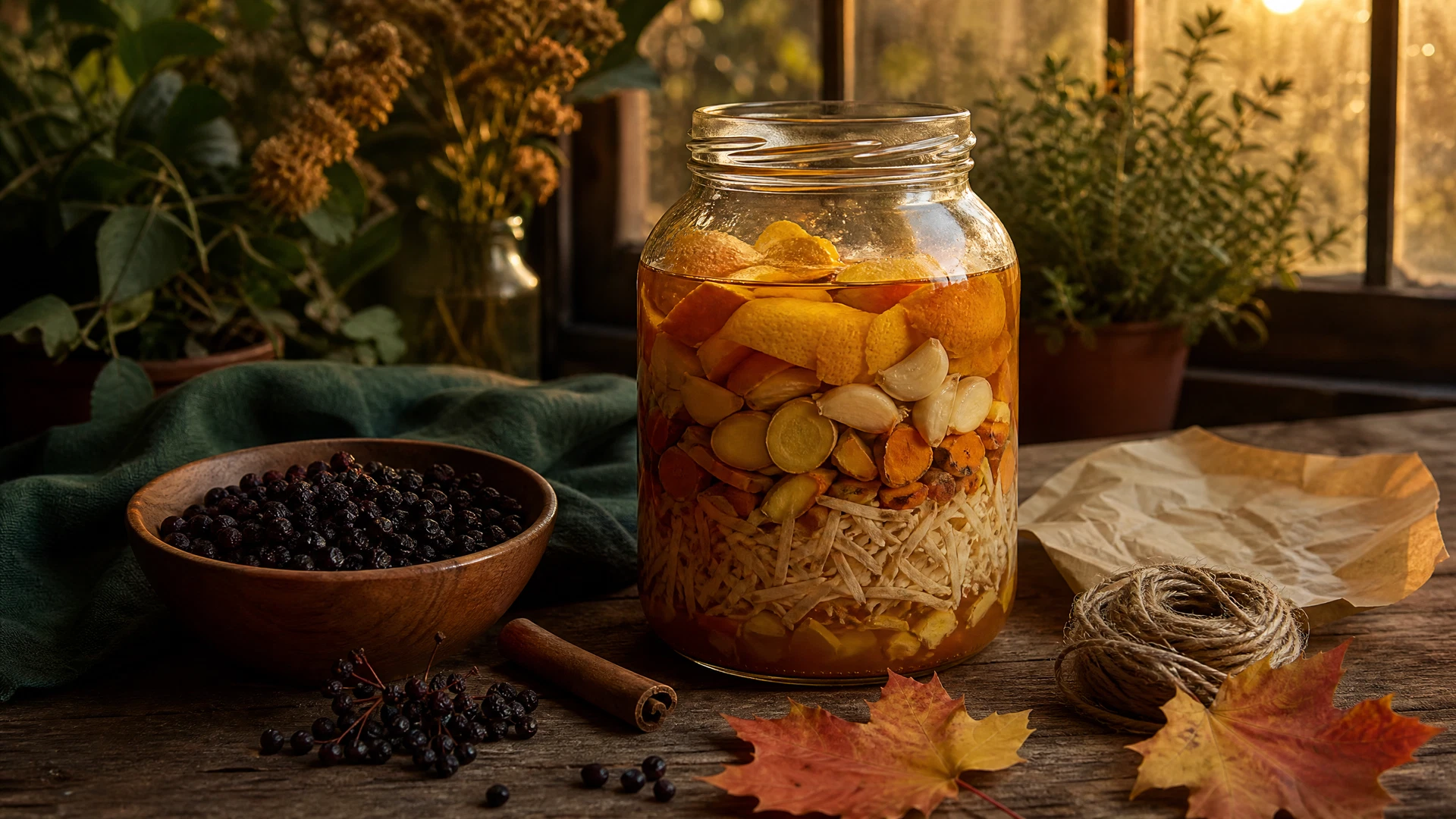
If there is one quintessential autumn project, it is fire cider. This traditional folk remedy is a fiery, pungent, sweet-and-sour vinegar infusion that has been championed by herbalists for generations. It is the ultimate expression of preparing in advance. You chop the roots in October, let them steep in the dark for a month, and press them out just in time for the deep chill of December.
Fire cider is not a delicate tea; it is a robust, warming tonic designed to stoke the digestive fire and keep the circulation moving when the world outside is freezing. The traditional base includes horseradish, garlic, onion, ginger, and hot peppers, all steeped in raw apple cider vinegar and finished with a generous pour of raw honey.
For women navigating hormonal shifts, we often adapt this classic recipe to be slightly gentler on the system while still providing that necessary warmth. Our hormone-friendly fire cider incorporates turmeric for its soothing properties and omits the harshest peppers, making it a supportive daily tonic rather than a shock to the system.
Taking a spoonful of fire cider every morning is a ritual of resilience. It wakes up the digestion, clears the sinuses, and reminds the body that it has the fire it needs to face the cold. It is a staple of autumn herbal recipes, a jar of liquid gold sitting on the counter, quietly gathering strength.
Project Two: The Elderberry Shield Tonic
As the school-run germ economy ramps up, our attention naturally turns to immunity. But in the herbal tradition, we do not think of the immune system as an army to be commanded or a fortress to be defended. Instead, we think of it as a garden to be tended. We do not "boost" our immunity; we give our bodies what they have been asking for, providing the deep nourishment required to maintain balance in the face of seasonal challenges.
Elderberry is perhaps the most beloved of all autumn berries for this exact purpose. Rich, dark, and deeply complex, elderberries have been reached for by herbalists for centuries when the first signs of a chill appear. They are traditionally used to support the body’s natural defenses, offering a gentle, consistent strength rather than a sudden jolt.
Our seasonal shield tonic is a rich syrup made from dried elderberries, warming spices like cinnamon and clove, and raw honey. It is a decoction that fills the kitchen with the smell of autumn, a sensory experience that is itself a form of medicine.
Taking a spoonful of this tonic, either straight or stirred into a cup of hot water, is a way of wrapping the body in a protective layer. It is not a cure for the common cold, but rather a daily practice of fortification. It is the herbal equivalent of zipping up a warm coat before stepping out into the wind.
Project Three: The Evening Reishi Ritual
As the days grow shorter and the dark comes early, our evening routines must shift. The long, lingering twilights of summer are gone, replaced by a sudden, heavy darkness that demands we slow down. This is the time for deep restoration, for tending to the nervous system after the demands of the day.
For this, we turn to reishi. Reishi is a remarkable mushroom, revered in traditional practices as a profound nourisher of the spirit and a grounding force for the nervous system. It is not a quick fix for a bad mood; it is a slow, steady builder of resilience, traditionally used to support those who feel frayed, depleted, or overwhelmed by the demands of modern life.
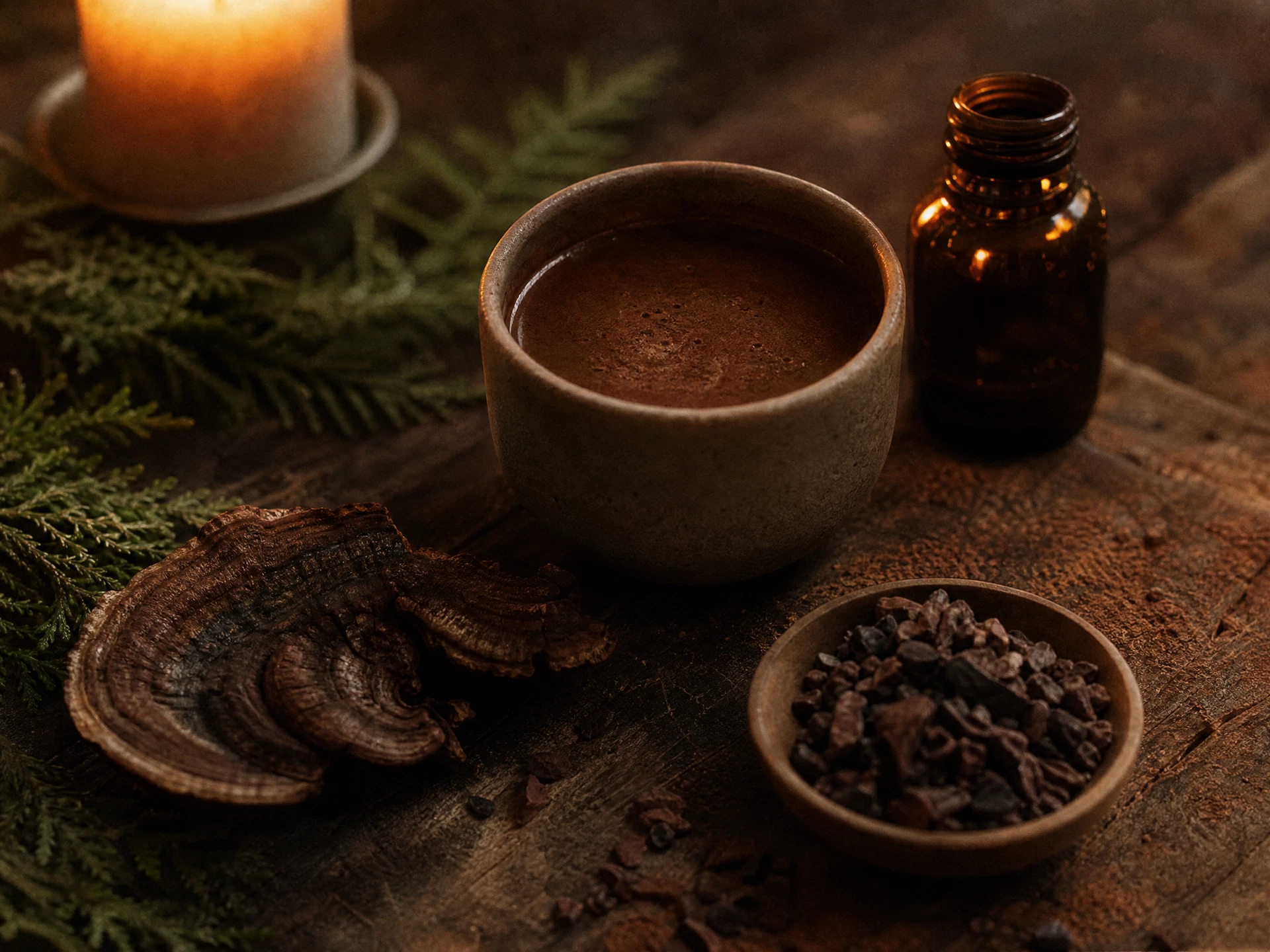
Our deep sleep reishi cocoa is the perfect evening ritual for the autumn months. It combines the grounding, slightly bitter depth of reishi decoction with the rich, comforting embrace of raw cacao and a touch of maple. It is a drink that asks you to sit down, to wrap your hands around the warm mug, and to let the day go.
This is the seasonal flagship of our evening routines. When the wind is howling outside and the house is quiet, a cup of reishi cocoa is a profound act of self-care. It signals to the body that the work is done, that it is safe to rest, and that the deep, restorative sleep of autumn is welcome.
The Deep Nourishment of Broth
While we are focused on teas, tonics, and syrups, we cannot overlook the foundational medicine of the autumn kitchen: broth. When the air is dry and the body feels brittle, a long-simmered broth is the ultimate form of deep hydration and mineral replenishment.
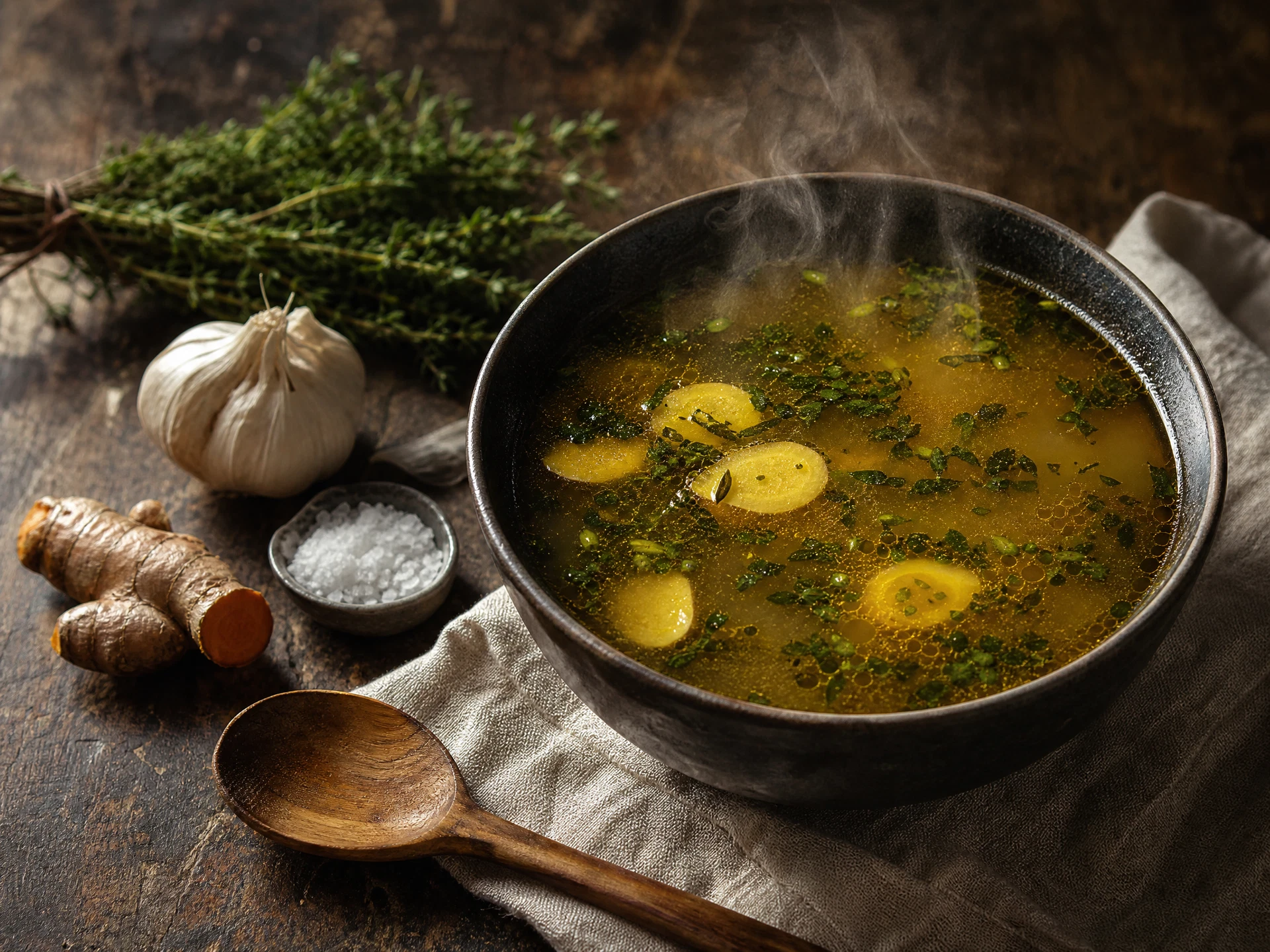
Our nervous system reset broth is a staple for the days when you feel entirely wrung out. It is built on a base of mineral-rich roots, seaweed, and warming spices, simmered slowly until the water itself becomes heavy with nourishment. Drinking a mug of this broth in the mid-afternoon, when the light begins to fade and the energy dips, is a way of returning to yourself. It is grounding, savory, and deeply comforting.
Embracing the Turning of the Wheel
The transition into autumn is an invitation to change our pace. It is a reminder that we are not meant to bloom all year round. The earth requires a season of rest, of drawing its energy inward, and so do we.
By embracing the herbalist’s logic of autumn—by putting up our fire cider, simmering our elderberry tonics, and finding comfort in our evening reishi rituals—we align ourselves with the natural rhythm of the world. We stop fighting the darkness and instead learn to find the warmth within it.
These autumn herbal recipes are more than just instructions for making drinks; they are practices of presence. They require us to chop, to stir, to wait, and to taste. They ask us to be in our bodies, in our kitchens, and in the season exactly as it is.
As you navigate this transition, remember that your body has its own deep wisdom. If you are feeling the pull to slow down, to sleep more, to crave heavier, warmer foods, listen to that pull. It is not a sign of laziness; it is a sign of attunement.
And, as always, if you find that the seasonal transition brings with it persistent anxiety, deep fatigue that rest does not touch, or physical symptoms that feel overwhelming, please know that herbs are companions, not replacements for medical care. Conditions like thyroid disease, anemia, or severe seasonal affective disorder warrant real medical attention. We encourage you to involve a trusted clinician in your care, someone who can look at the full picture of your health and help you find the balance you deserve.
The earth already made the medicine. We just help you find it. Pull up a chair, put the kettle on, and let the season turn.
Keep reading with us
Pull up a chair.
Start with 7 Tonics Every Woman Should Know, then a letter each week.